The integrity of form
The "life-support system" that sustains urban operations has long been isolated by high walls, hidden beyond the public eye.
Unlike museums being chased by cameras or commercial complexes swamped by crowds, let alone residential buildings bearing the joys and sorrows of individuals.
They are sewage treatment plants, waste incineration plants, substations, and pumping stations—the "digestive system" and "circulatory system" of modern cities
Traditionally, these facilities were enclosed by high walls and pushed to the urban periphery by the "NIMBY effect," becoming gray zones on maps that were reluctant to be labeled.
With infrastructure functions being extremely demanding and forms almost entirely dictated by equipment layouts, does architecture still have room for expression?
01
Xidong Waste-to-Energy Power Plant Upgrade and Expansion Project
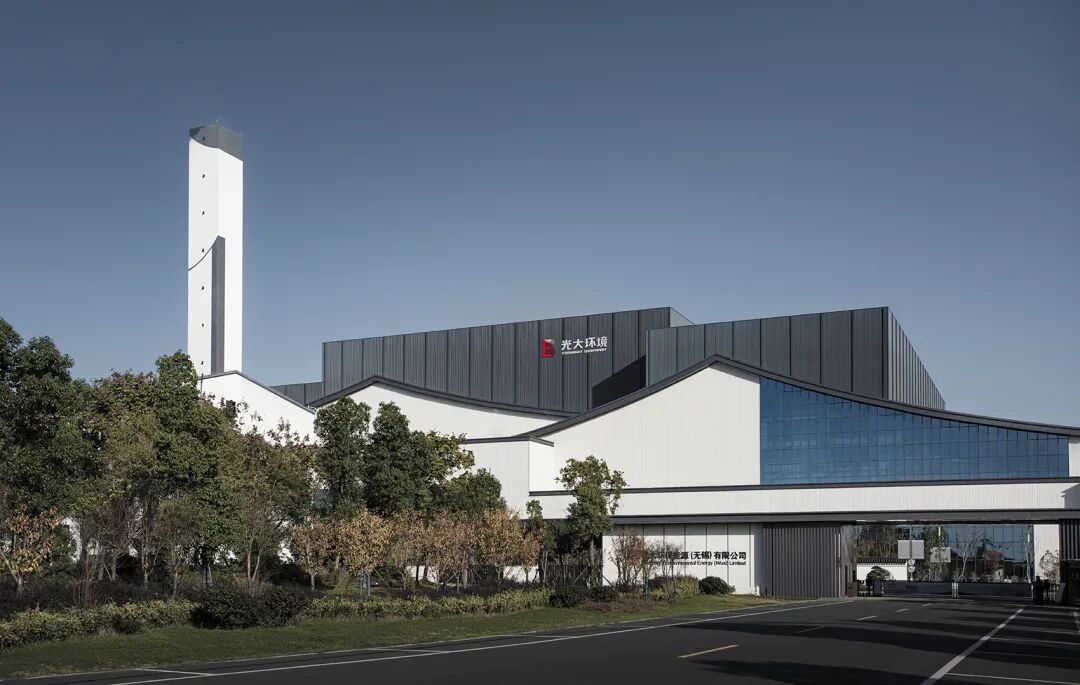
The project is located in Xishan District, Wuxi, adjacent to the Phase I factory building and surrounded by an ecological green park.
The scale required for industrial megastructures creates a stark contrast with the dimensional language of traditional Jiangnan residential architecture. The conventional approach involves concealing such facilities underground or in suburban areas, isolating them with green belts, or anonymizing them through "deindustrialized" packaging.
However, the design team adopted the opposite approach: instead of letting industrial architecture imitate gardens, they allowed garden grammar to emerge from industrial logic.
The premise of this choice is a deep understanding of functional constraints—viewing function as the starting point for form generation.
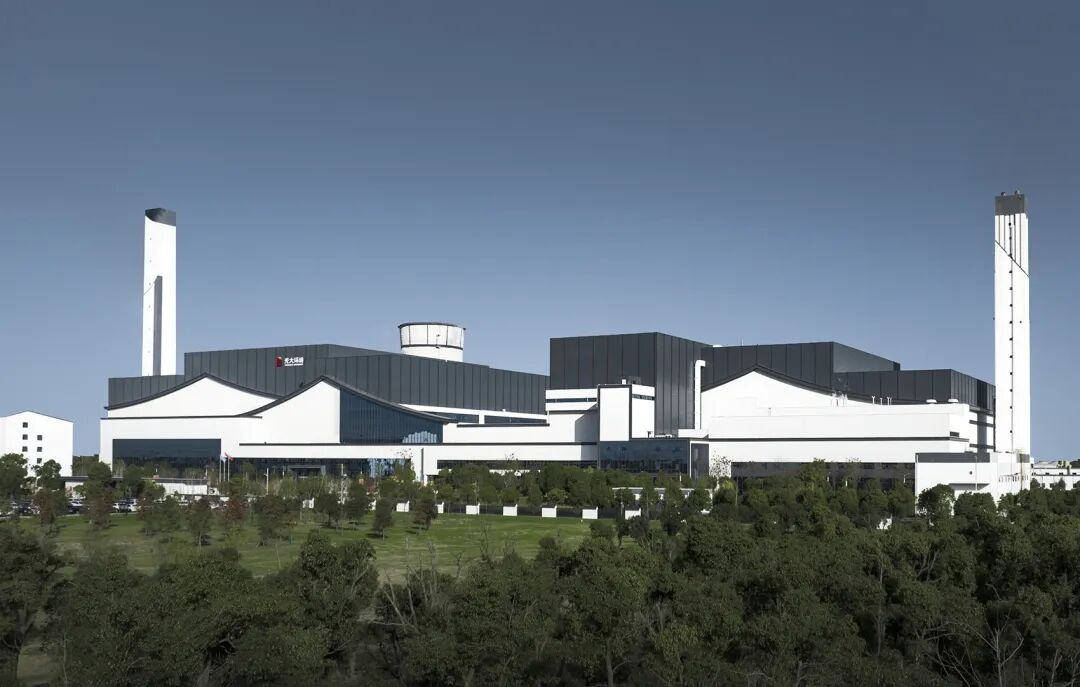
▲Overall real scene
The sloping roof contour of the main plant building is the most distinctive formal feature. This form is a precise alignment between the spatial requirements of flue gas purification equipment height and the traditional sloping roof style of Jiangnan architecture.
The flue gas generated by the incineration line requires multi-stage treatment, including SNCR denitrification, semi-dry desulfurization, activated carbon adsorption, and baghouse filtration. These purification devices require continuous vertical space.
The minimum net height and span required for these industrial equipment happen to correlate with the roof pitch dimensions of traditional dwellings, exhibiting inherent structural logic similarities.
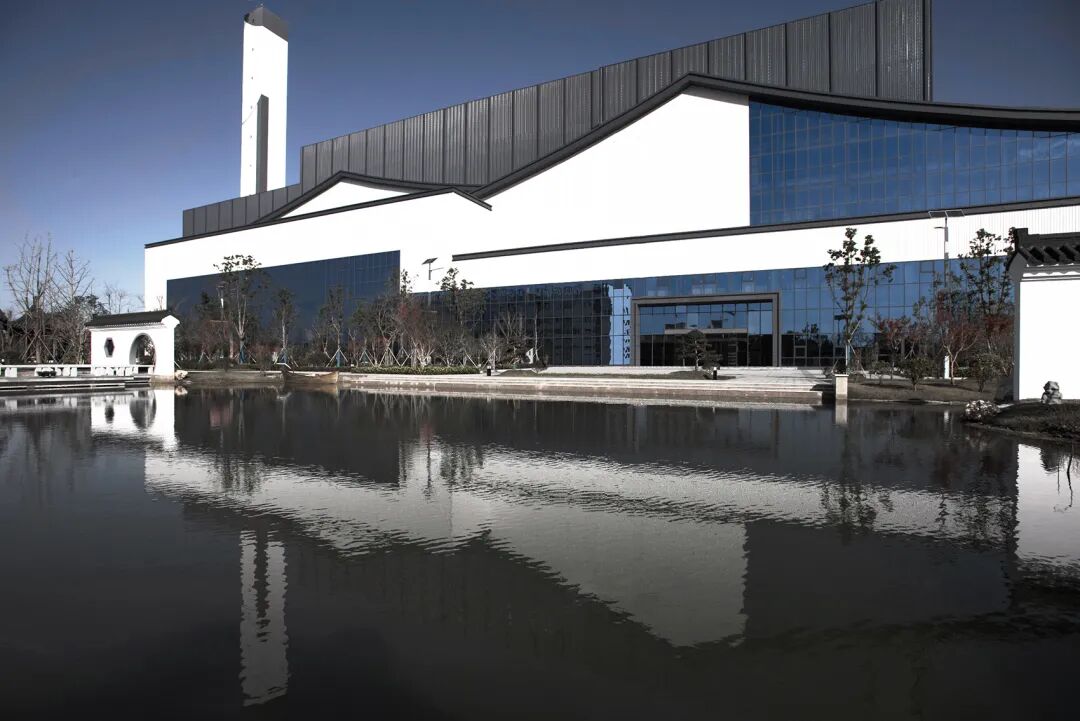
▲Reflection of factory building and water surface
The 60 meter high chimney and cooling tower are dissolved in the continuous sloping eaves contour.
The inclination angle of the slope top is determined by fluid dynamics calculations of smoke emissions, the segmentation of the roof is determined by the layout of equipment maintenance channels, and the height of the eaves is limited by the analysis of the line of sight of surrounding residential buildings.
The form grows from functional constraints, but precisely reproduces the outline of Jiangnan architecture.
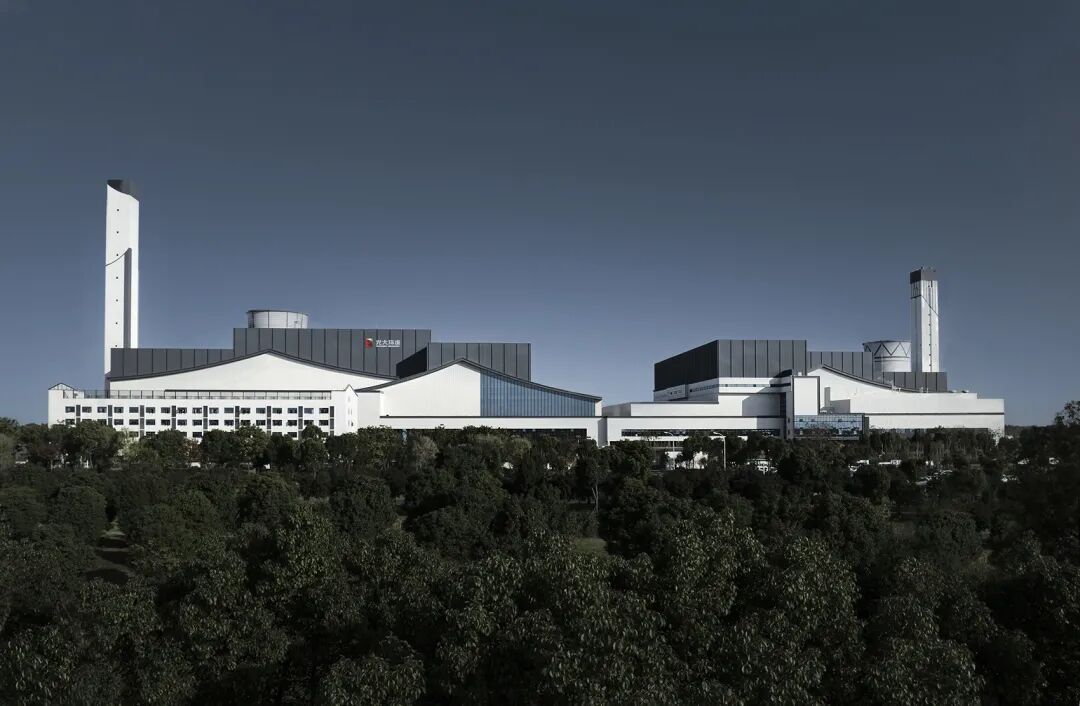
▲Elevation perspective
The selection of light gray aluminum panel curtain wall is based on strict industrial performance requirements.
The corrosive gases generated by garbage incineration require a highly weather resistant surface, and the self-cleaning characteristics of aluminum plates reduce maintenance requirements. The light color tone reflects strong summer light to reduce thermal load.
These technical parameters correspond to the optical performance of "pink walls" in traditional architecture - reflecting light, soft contours, and adapting to rainy climates.
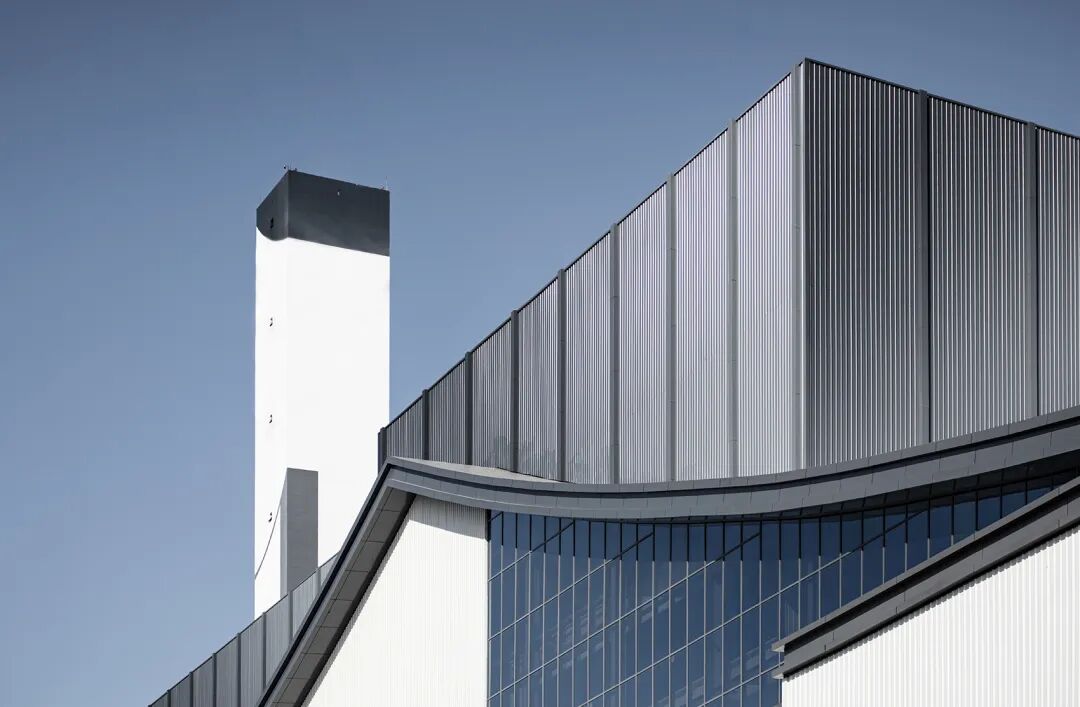
▲Facade material
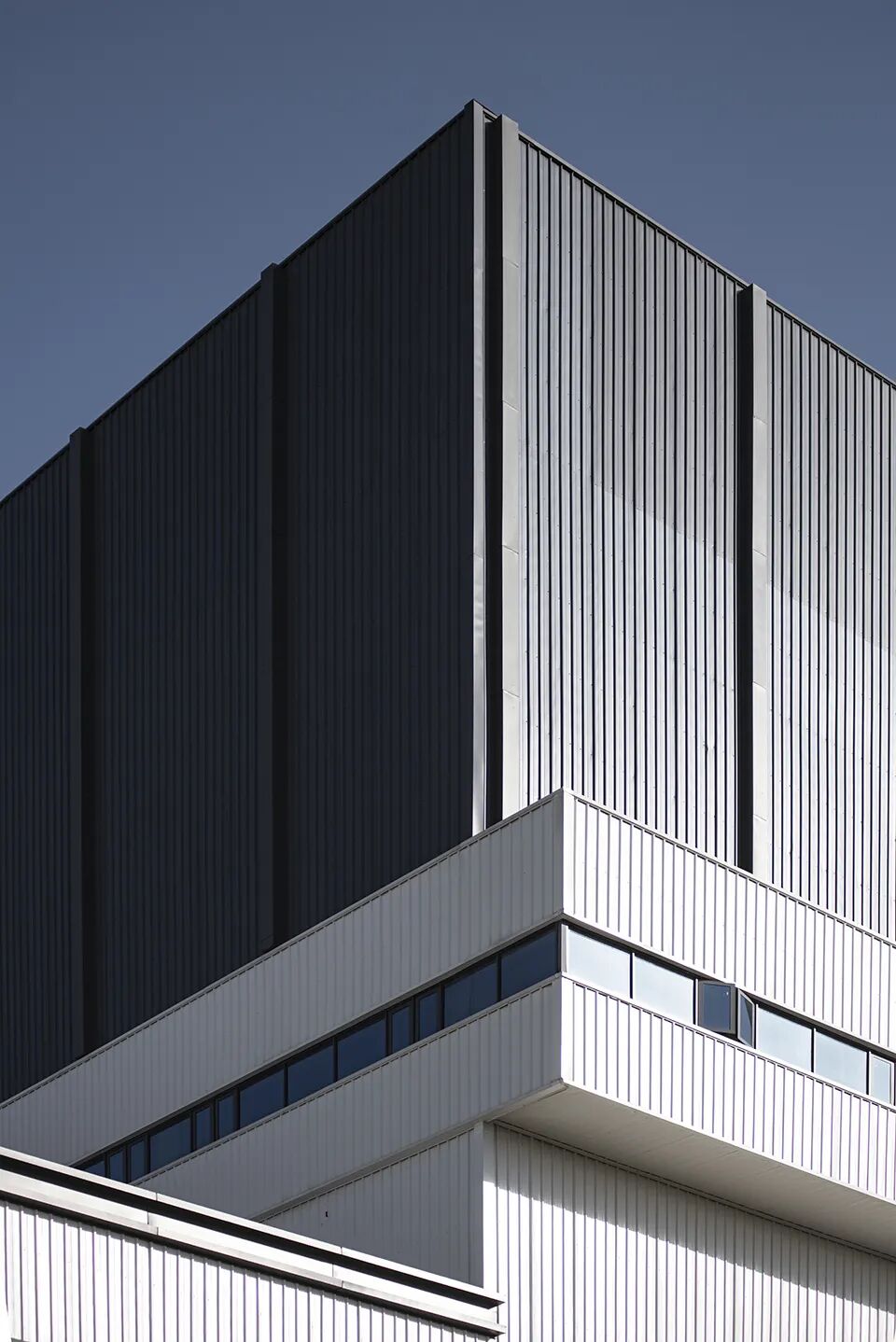
▲Facade material details
02
Expansion Project of Phase II of Yanchunling Garbage Leachate Treatment Station in Haikou City
Garbage leachate, a black liquid that seeps out from landfills, contains high concentrations of organic matter, heavy metals, ammonia nitrogen, and other highly toxic components, known as "sewage in sewage".
The treatment process involves complex processes such as anaerobic fermentation, aerobic aeration, membrane filtration, etc., accompanied by odorous gases and explosion risks, and is usually strictly enclosed underground or in suburban areas far away from people.
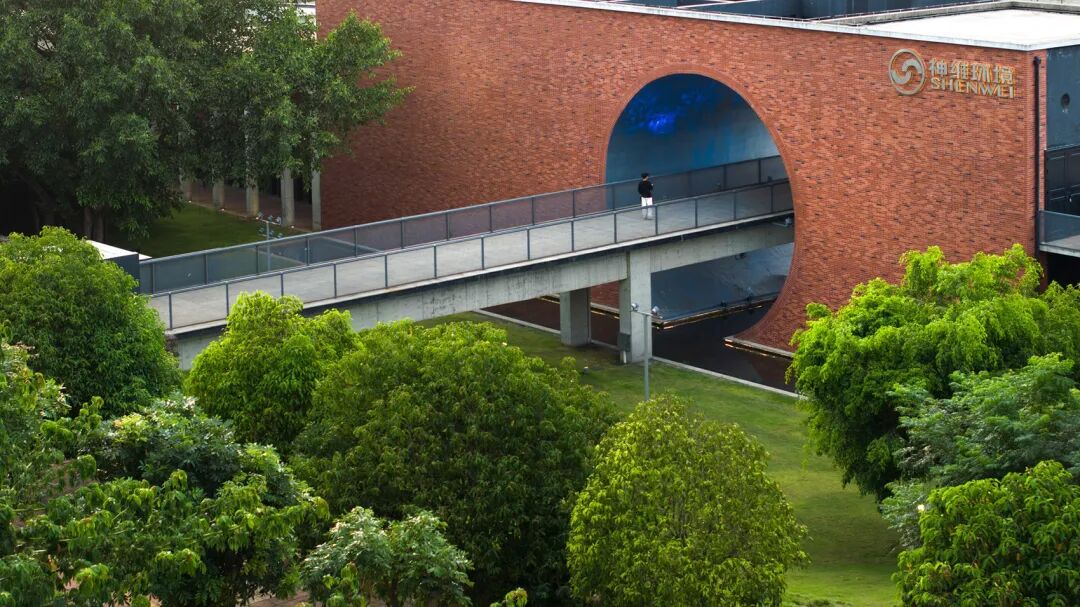
▲Trail
The second phase expansion project requires the integration of full process functions such as pretreatment, anaerobic, aerobic, and deep treatment within a limited land area.
Anti corrosion requirements exclude conventional building materials, explosion-proof regulations limit space forms, odor control requires complete sealing, and equipment maintenance requires sufficient operating space.
These constraints do not leave room for 'formal creation', but instead give rise to extreme forms of expression.
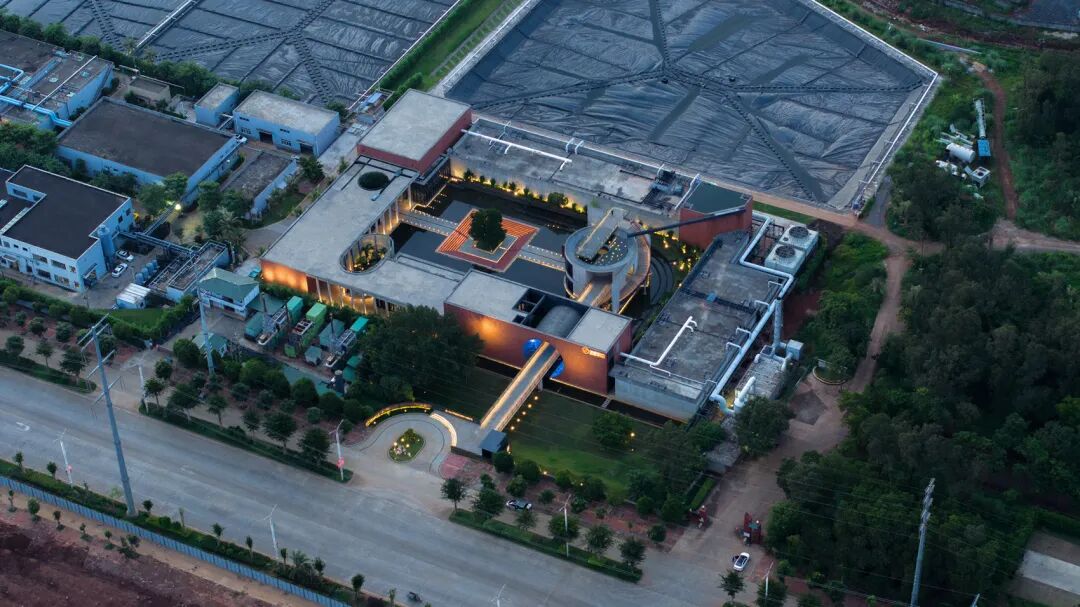
▲Bird's-eye view
The organization of building volume is completely determined by the processing flow.
The pre-treatment workshop receives untreated black leachate, which needs to be completely enclosed - windowless, negative pressure, explosion-proof electrical.
The building is presented as a solid cube, with wall thickness determined by anti-seepage and explosion-proof calculations. The only openings are equipment entrances and emergency escape routes.
The enclosure of this volume is a direct expression of the 'highly toxic' state.
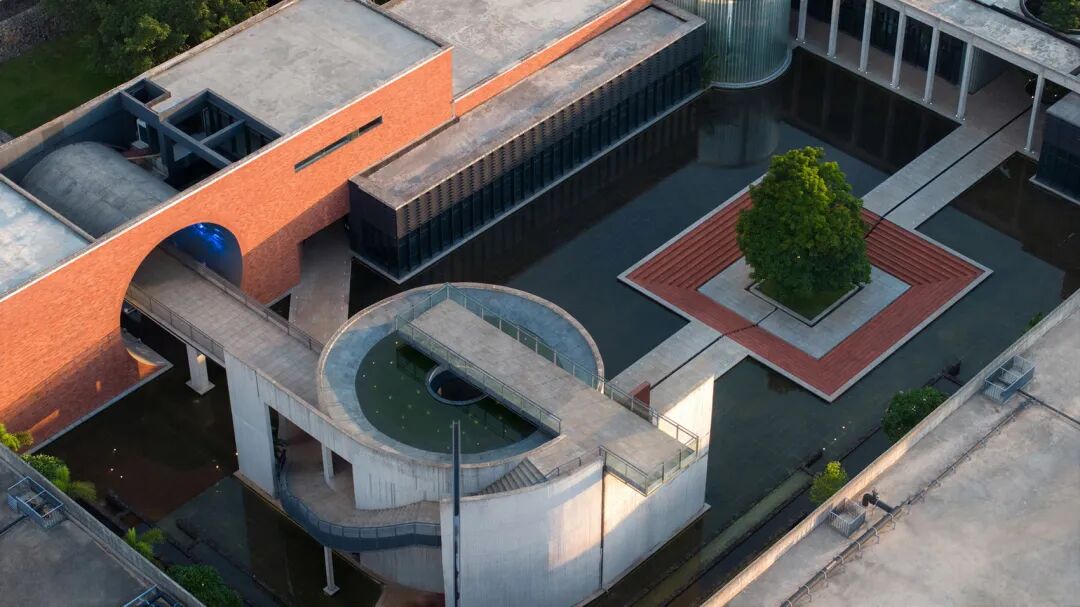
▲Partial bird's-eye view
The anaerobic reaction zone is also closed, but the volume increases. Anaerobic tanks require specific temperature and pressure maintenance, and the building forms a towering cylindrical space with a gas collection device at the top.
The verticality of the building's exterior is determined by the height of the tank, and the metallic texture of the surface is generated by the functional requirements of corrosion-resistant alloy sheets.
The aerobic aeration zone requires the aeration tank to come into contact with air, and the building is opened here to form high side windows and ventilation louvers. The space becomes bright, and the volume extends horizontally, forming a contrast with the previous vertical cylinder.
This' openness' is the physical requirement for oxygen exchange in aerobic processes.
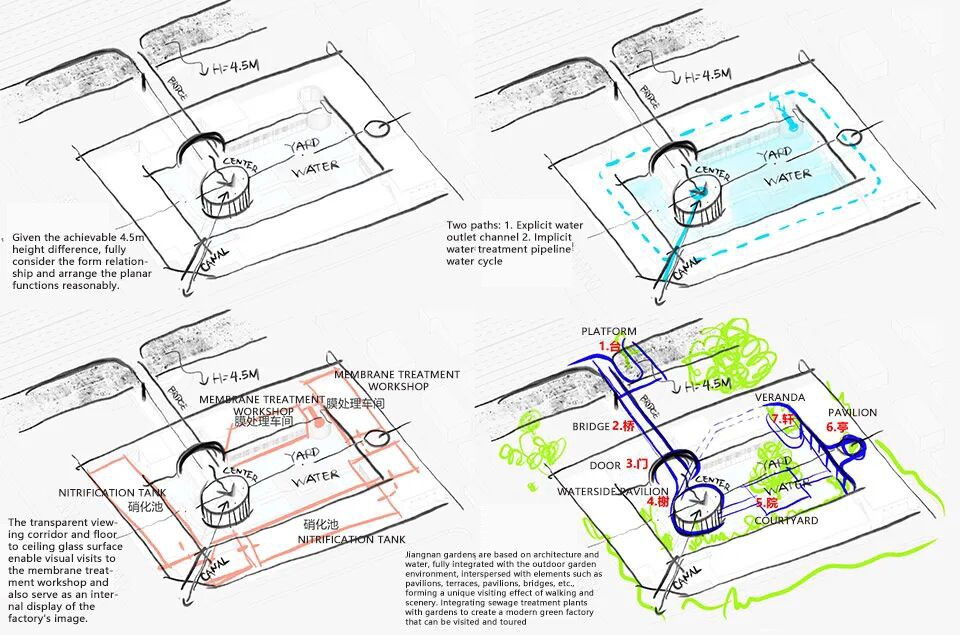
▲Analysis diagram
Deep treatment and fully open effluent area. The membrane workshop and disinfection tank produce clean water that can be discharged, and the building is transformed into a transparent box enclosed by glass.
The public can observe the final purification results, while the previous highly toxic process is strictly isolated in a closed volume.
The transparency of the volume is determined by the cleanliness of the water quality, and the building becomes a direct indicator of changes in water quality.
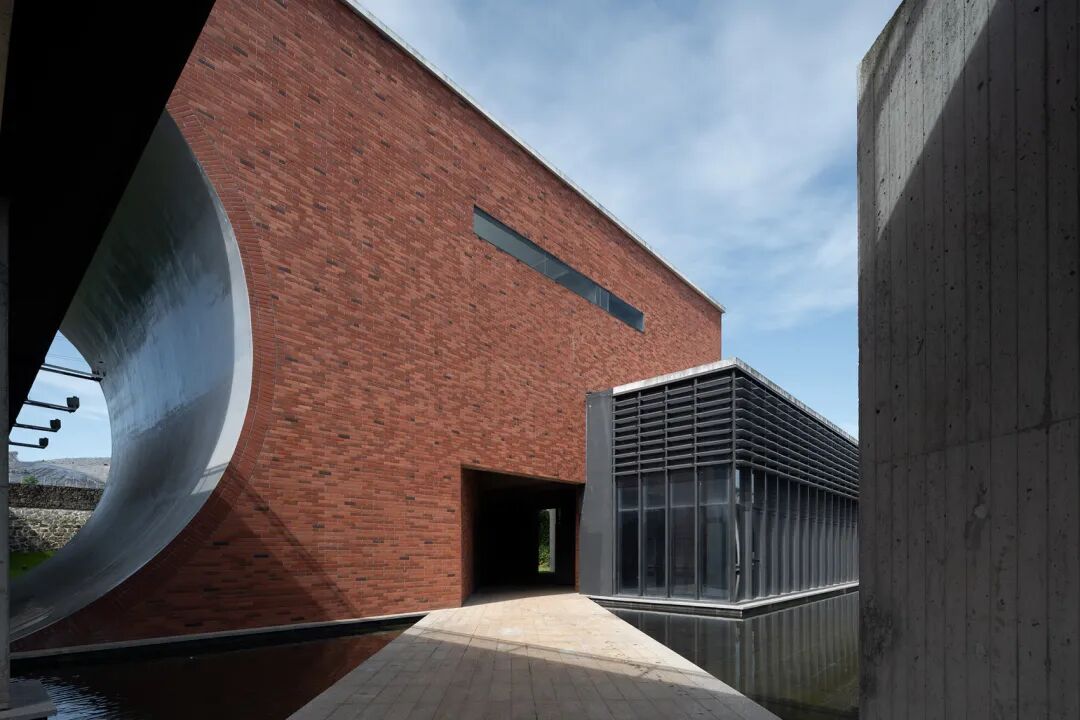
▲Office entrance
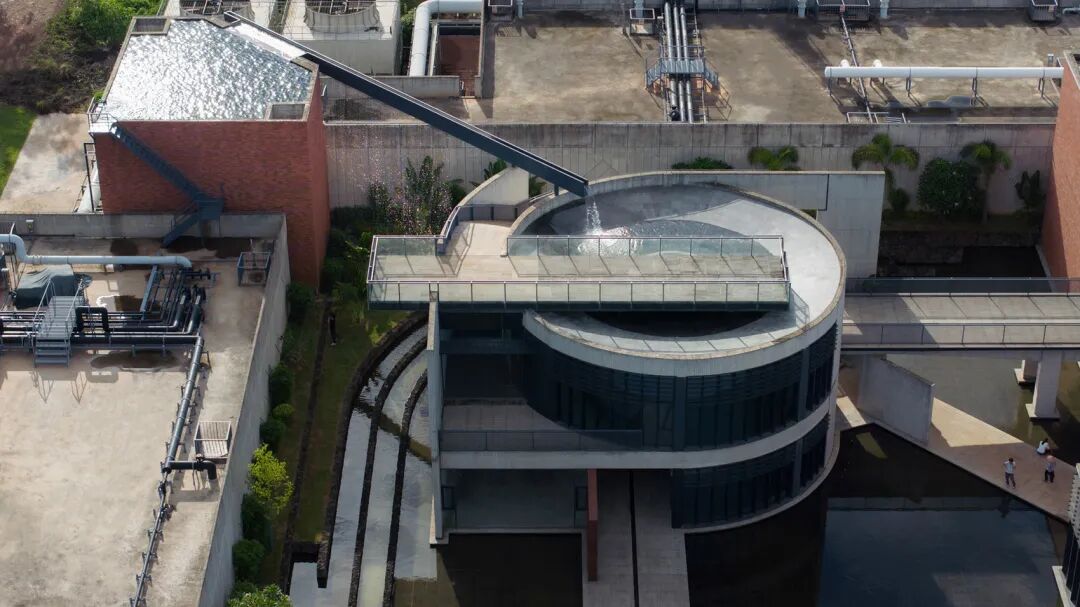
▲Roof pool
The sequence of enclosed, semi open, and open volumes is the direct spatialization of the "toxic and clean" state in the process flow.
The transition from darkness to light is the true correspondence between anaerobic and aerobic biochemical environments. Space experience becomes a visible alternative to invisible microbial processes.
The gradual transition from roughness to refinement is a direct reflection of water quality changes on material performance requirements. The material becomes a material indicator for water quality testing.
03
COPENHILL Garbage to Energy Plant
This industrial facility burns 440000 tons of garbage annually and provides electricity and heating to 150000 households. It is also Denmark's largest year-round artificial skiing center, a sports destination with an 85 meter high climbing wall, and a viewing platform overlooking Copenhagen Port.
This seemingly contradictory combination of functions - garbage incineration and skiing entertainment - is an honest expression and public transformation of the technological system.
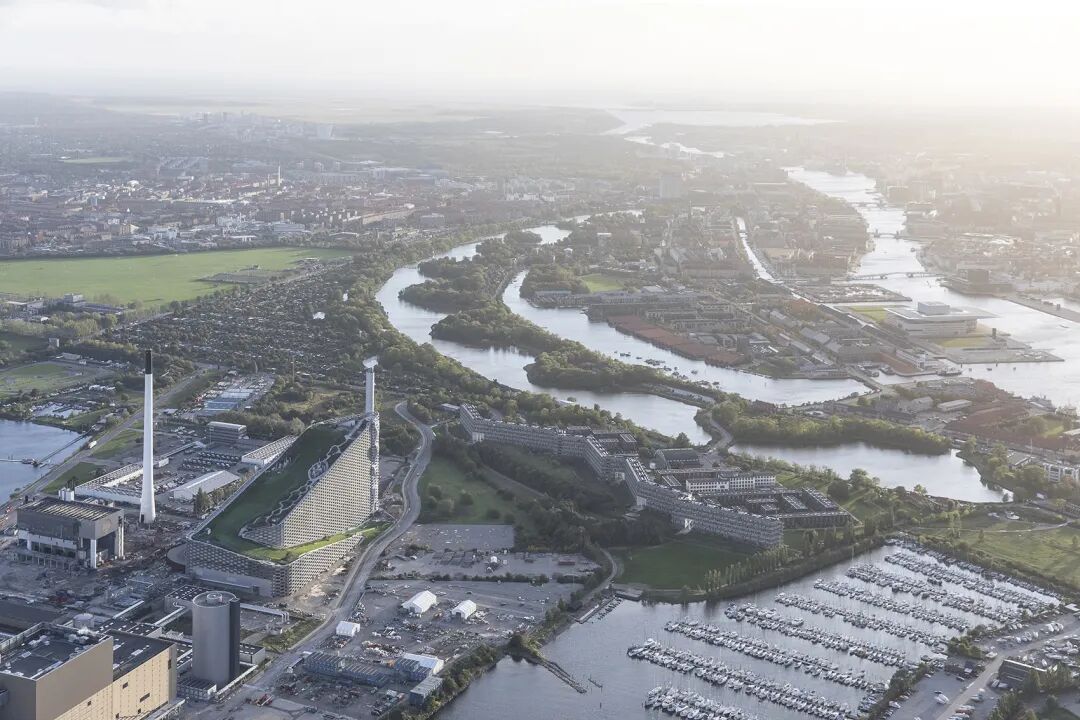
▲Architectural Landscape and Surrounding Environment
Its most recognizable form feature is a 410 meter long sloping roof covering an artificial ski slope that is available year-round. This form is the natural form generated by the heat dissipation demand of the waste incineration power generation process.
Garbage incineration generates enormous heat, which needs to be released through a cooling system. The conventional treatment method is to construct cooling towers or seawater cooling facilities and discharge the heat as waste.
The sloping roof surface becomes a ski slope, and its angle is optimized and determined by the ideal slope of skiing and the technical parameters of heat dissipation efficiency.
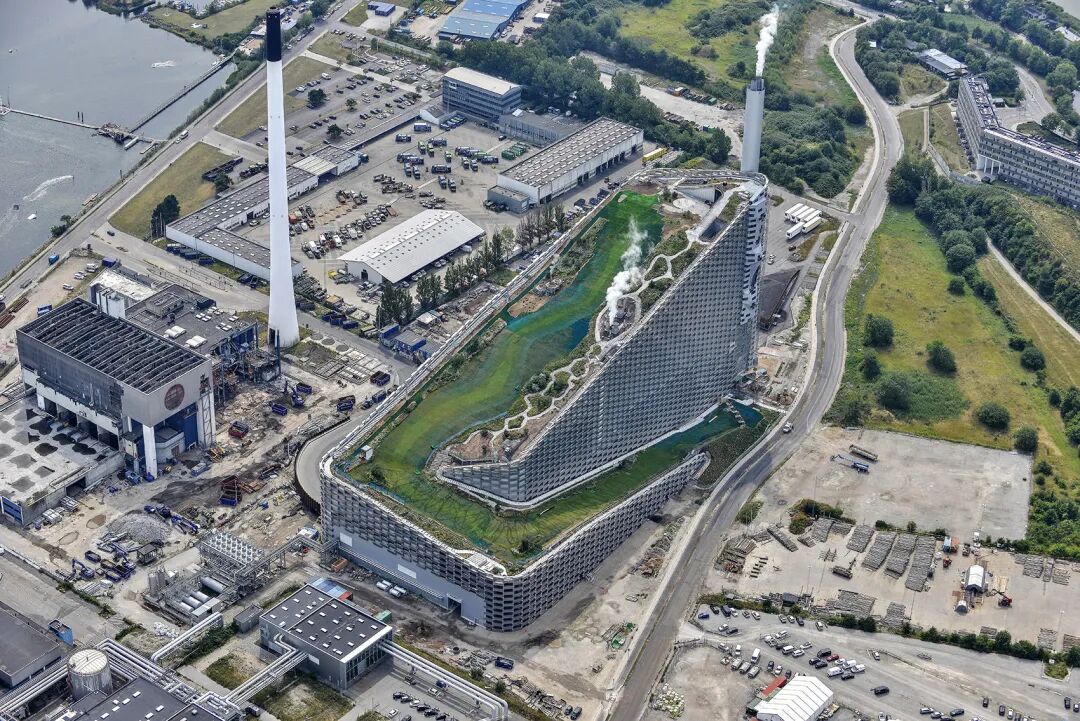
▲Bird's-eye view
The inclination angle of the roof, the thermal conductivity of the surface material, and the energy consumption of the artificial snow making system - these technical variables are integrated with the kinematic parameters of the skiing experience.
The linear extension of the roof is determined by the layout of the incineration line process. The three incineration lines require continuous roof coverage, while the ski slope needs sufficient length and variation to achieve uniformity within a 410 meter volume.
The "mountain" shaped contour of the roof is the result of geometric negotiation among equipment height, smoke emissions, and skiing slope. The building becomes a three-dimensional diagram of the energy system: the incinerator is located at the foot of the mountain, and the flue gas purification rises along the mountainside and is ultimately discharged from the mountaintop.
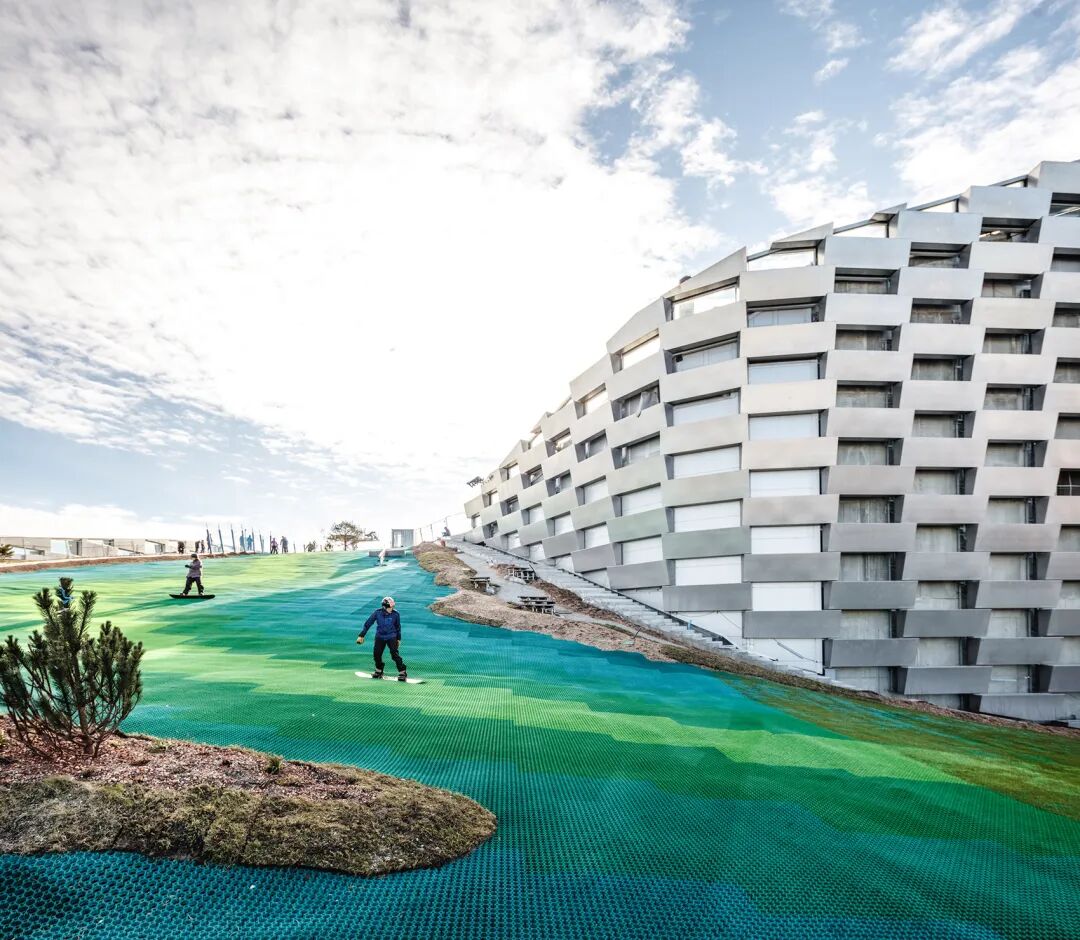
▲Ski trail
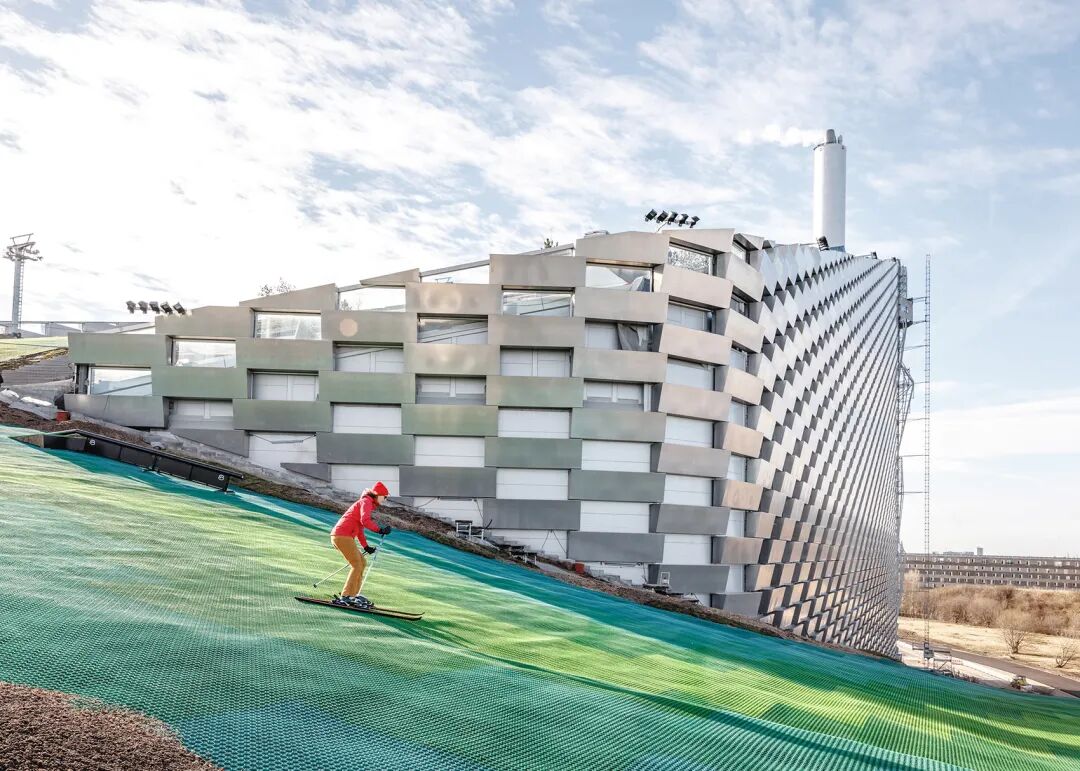
▲Snow trails and building facades
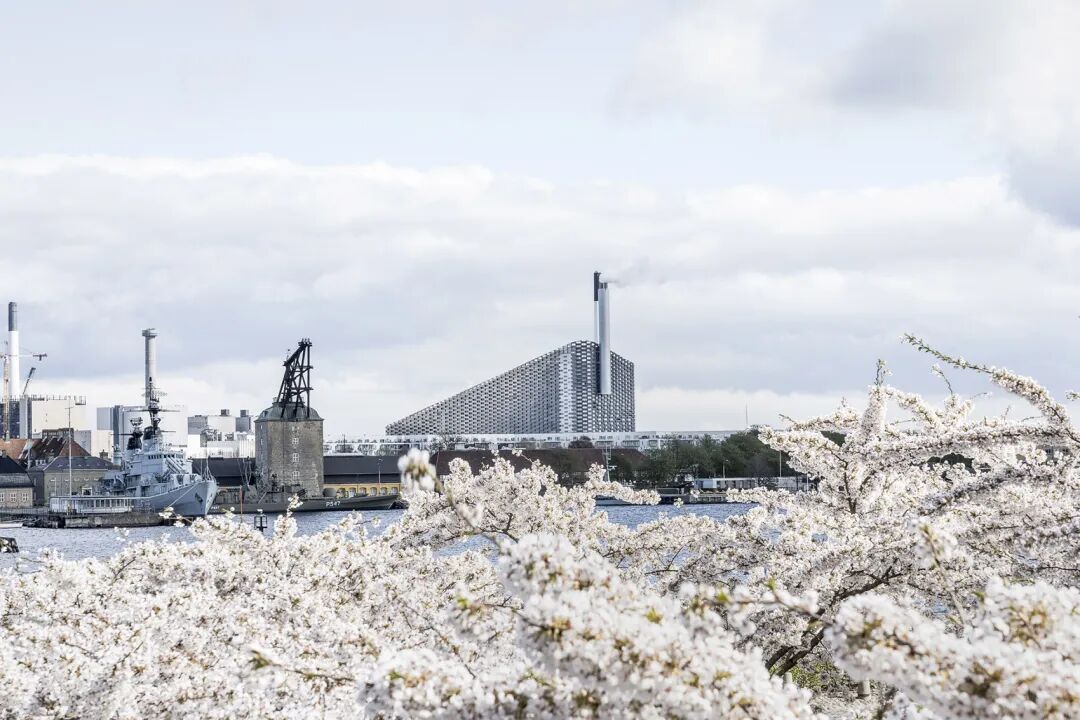
▲Industrial waterfront area
Facade treatment breaks the closed tradition of industrial buildings.
The large glass curtain wall at the bottom directly exposes the incinerator and turbine room, allowing the public to observe the entire process of garbage truck unloading, grab operation, and flame combustion.
This transparency is achieved through carefully designed visitor flow lines, where the public maintains a safe distance from the equipment, but the visual connection is fully open.
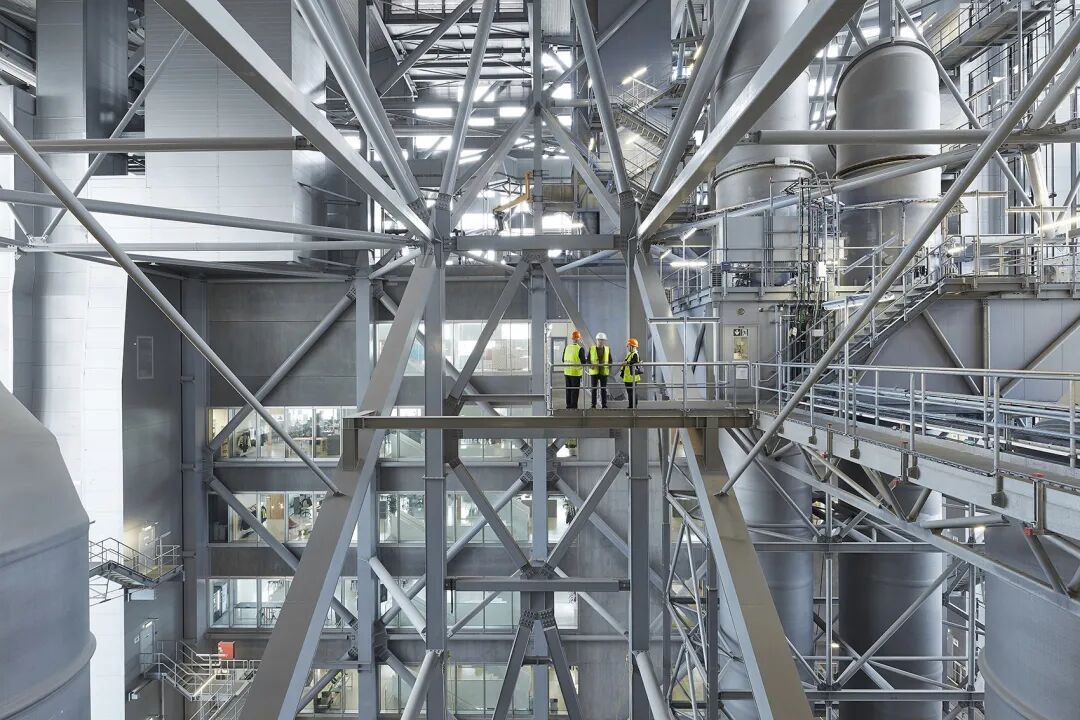
▲Inside the factory
04
Vuosaari Bioenergy Heating Plant
The concept of 'function as form' is uniquely expressed in the Nordic context, and unlike radical publicization strategies, this building chooses a restrained, detached, and precise industrial aesthetic.
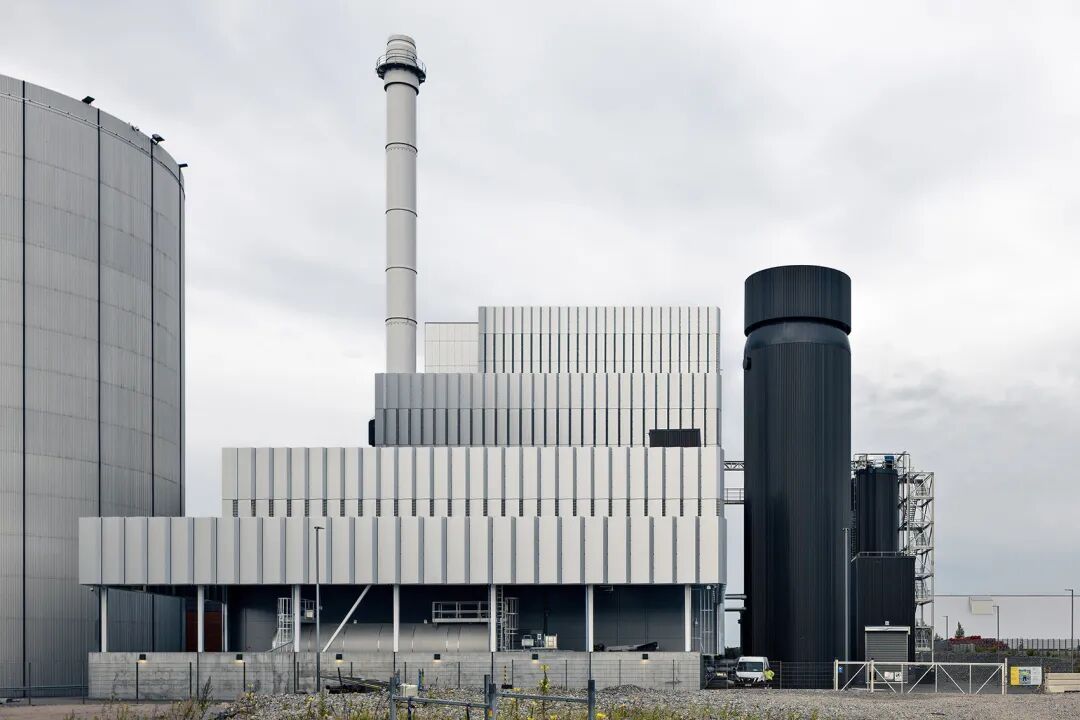
▲Project Overview
The site is located at Helsinki's most important freight port, surrounded by cranes, warehouses, container yards, and logistics facilities, where there is no pressure from "hidden" industrial buildings.
Biomass energy heating is different from garbage incineration. It burns wood particles and agricultural waste without producing highly toxic gases, but there is a risk of dust explosion and fire, resulting in sustained odor and noise.
It serves the regional heating network and is the "hot heart" of urban infrastructure, without the need for daily public participation.
These functional features determine the public boundaries of the building and are necessary for maintaining safe distances.
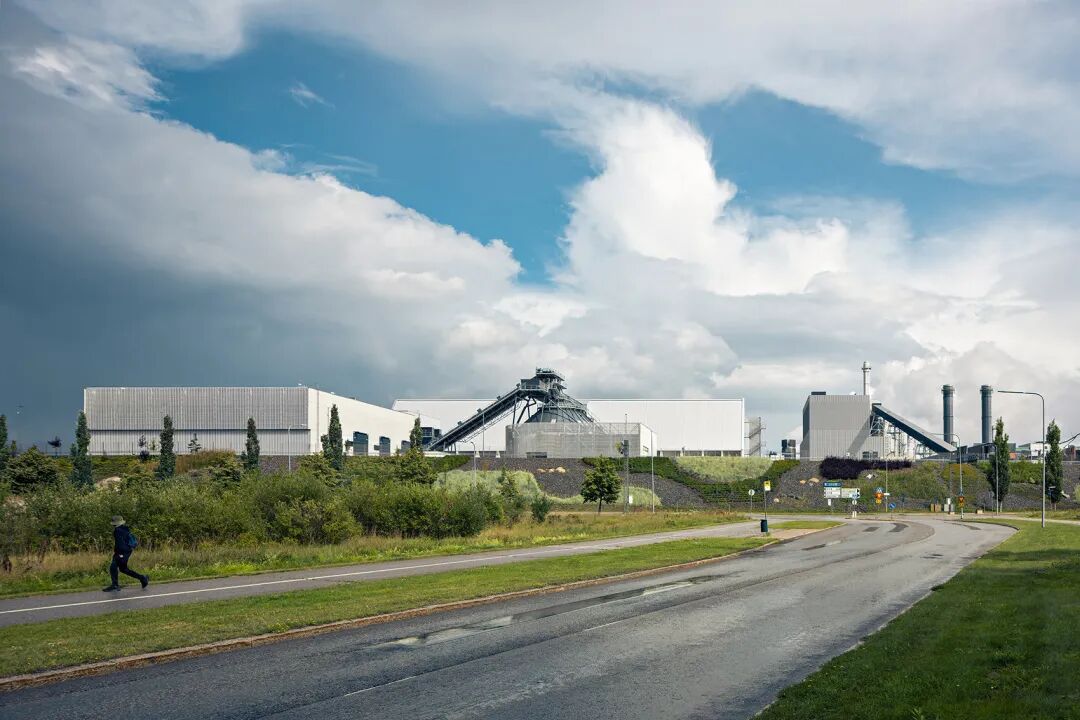
▲Overview
The building is presented as a dark gray concrete cube, providing sufficient space for biomass fuel storage and incineration systems.
Wood particles and agricultural waste have a large volume, require moisture resistance, and need to be continuously transported to incinerators.
The cubic volume provides the maximum internal volume and the minimum external surface area, which directly translates into energy efficiency, reduced heat loss, lowered maintenance costs, and optimized logistics flow.
The height of the building is determined by the capacity of the fuel storage tower, the width is determined by the arrangement of the incinerator and turbine, and the length is limited by the layout of the conveyor belt and pipeline system. The purity of the cube becomes the result of functional computation.
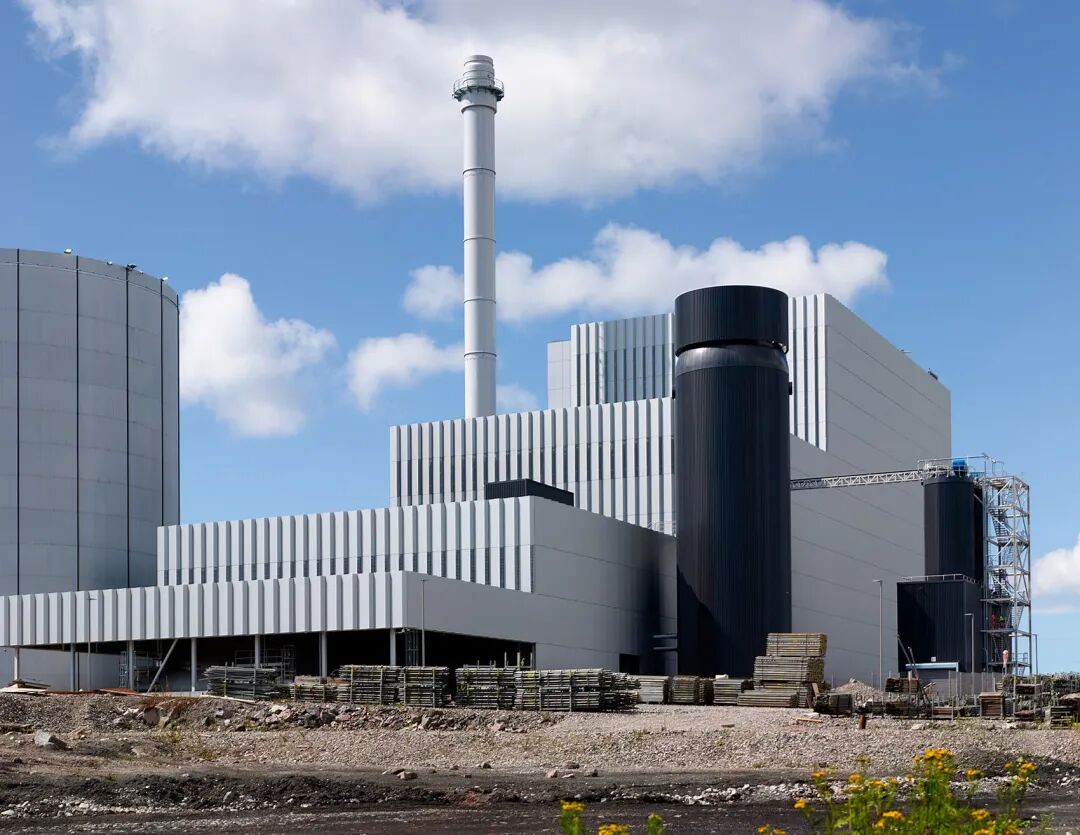
▲Project appearance
The vertical wall responds to a single logic of storage and safety. This' singularity 'is a respect for the essence of functionality, which requires spatial efficiency and safety protection, and the architectural form directly expresses these needs.
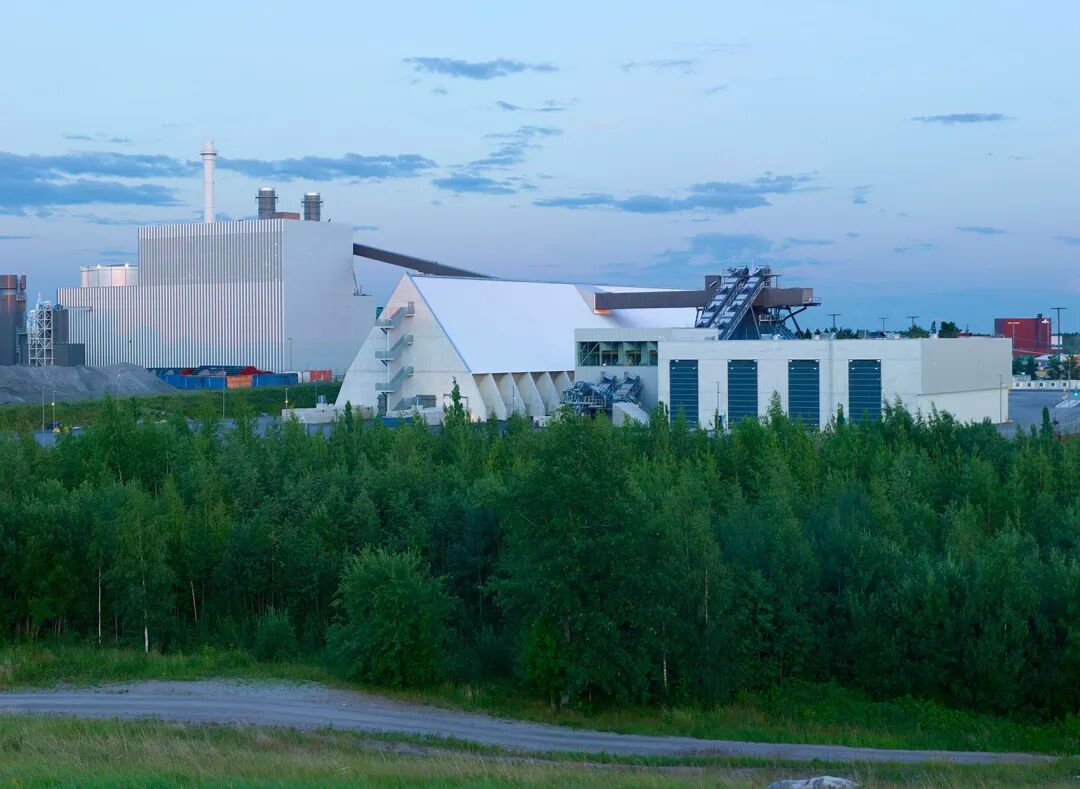
▲Facade
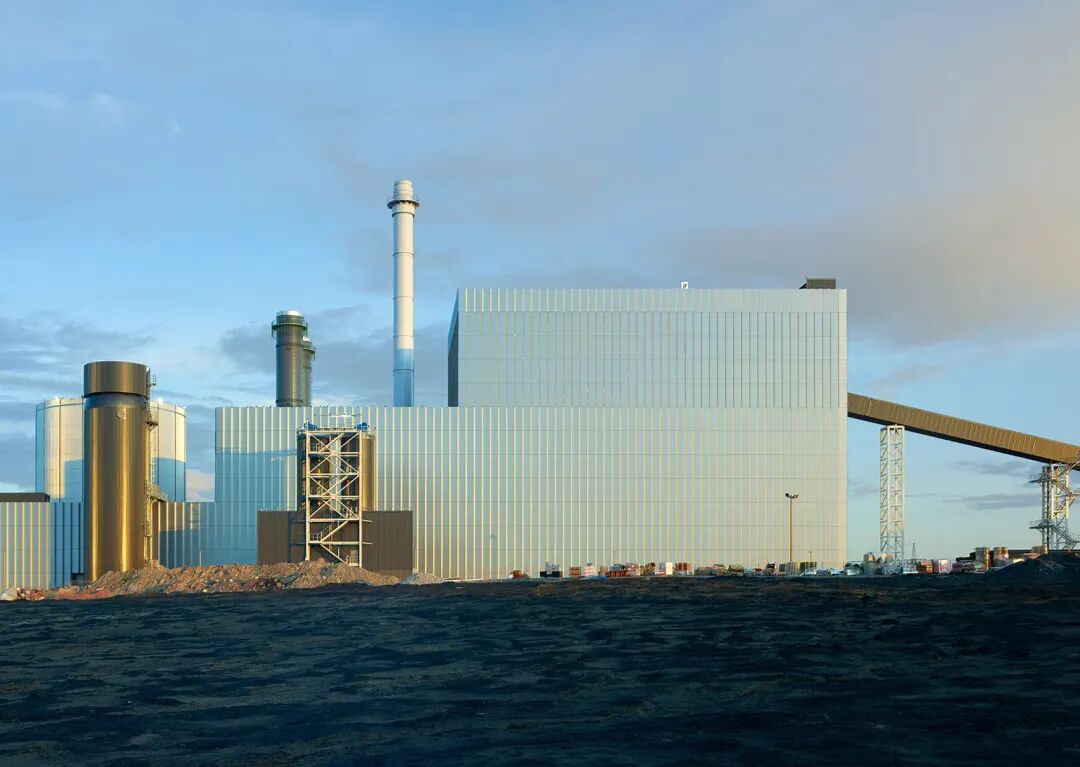
▲Tall and narrow boiler building and biofuel processing system
Conclusion
Function as form "has flexible boundaries: publicness can be strictly isolated, visually readable, or physically engaged; Regionality can be industrial continuity or cultural translation; The function can be a single process or a combination of multiple systems.
But sharing the same methodology, coordinating multiple parties to work together, deriving forms from constraints, and discovering the experiential potential inherent in the technical system itself.
Beauty is not an additional decoration, but a sensory manifestation of truth.
In such buildings, function is form, technology is aesthetics, and infrastructure is landscape.

High quality products, high-quality services and high-quality

Focus on us
HANBERT
Tel: 0757-22682270
Phone: +86-135 314 008 83
E-mail: info@hanbert-tech.com
Address: 1612,4th,building,ZhiyePlaza,Daliang,Foshan,Guangdong P.R.of china
Copyright © 2021-2026 HANBERT All Rights Reserved. 粤ICP备2021118030号  Power by:
 Hanelink.com