
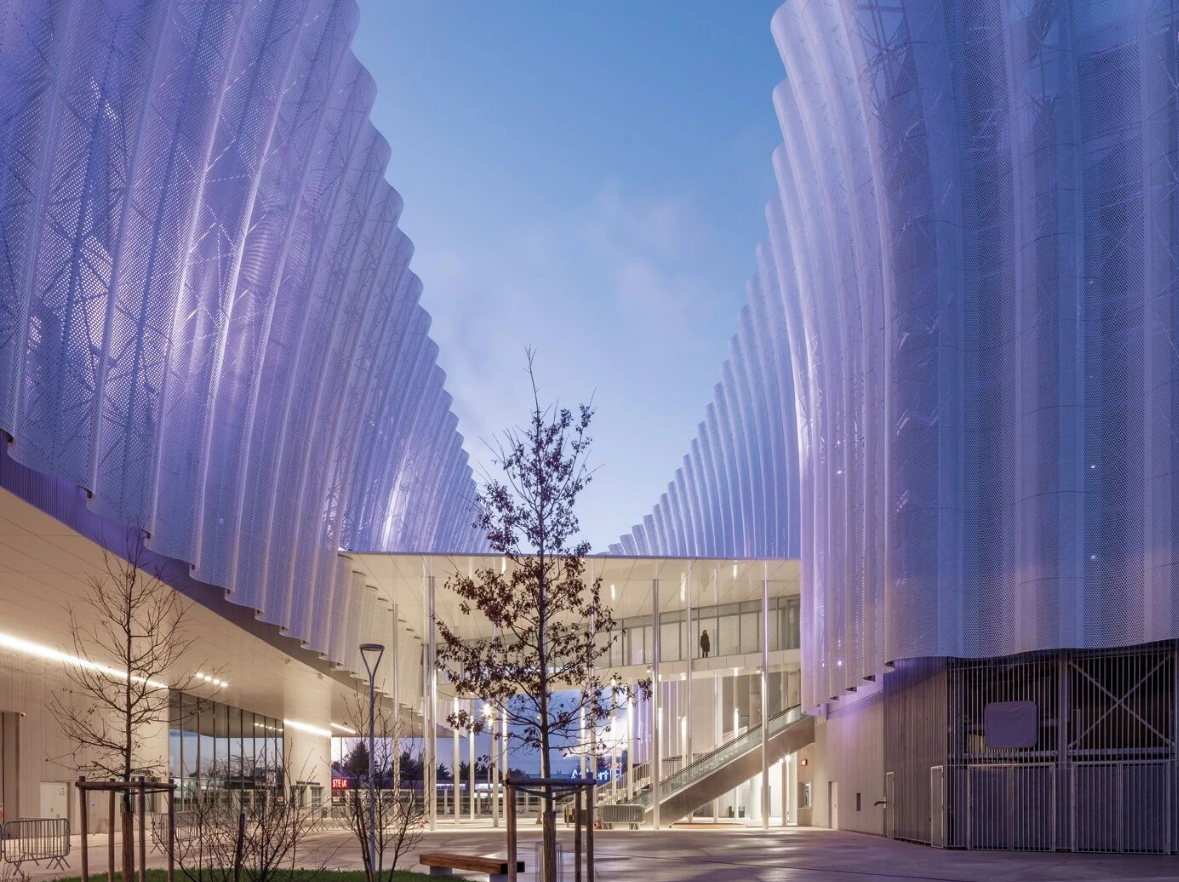
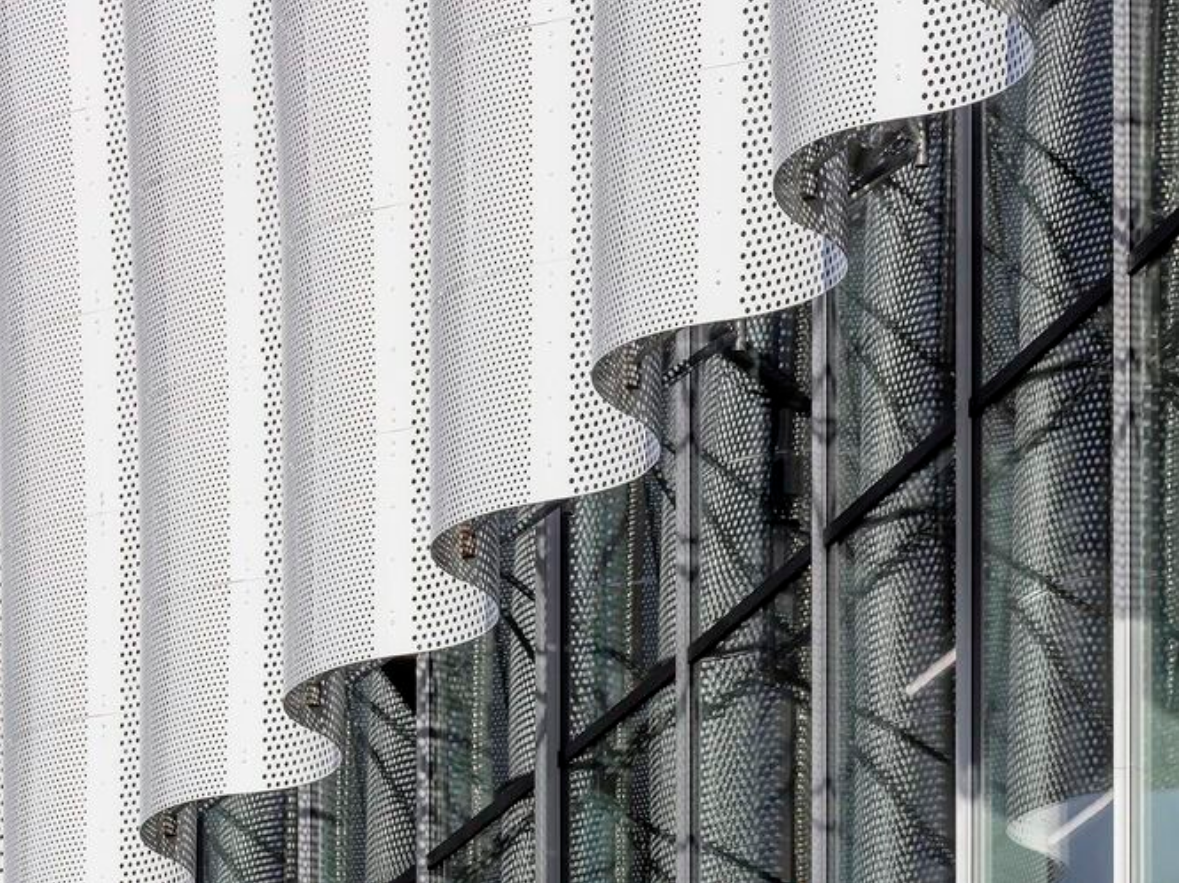
Pain point: With the increasing application of perforated aluminum plates in public and residential buildings, the surface of these plates is more prone to noticeable wave deformation, accompanied by localized bulging, dents, warping, and even twisting.
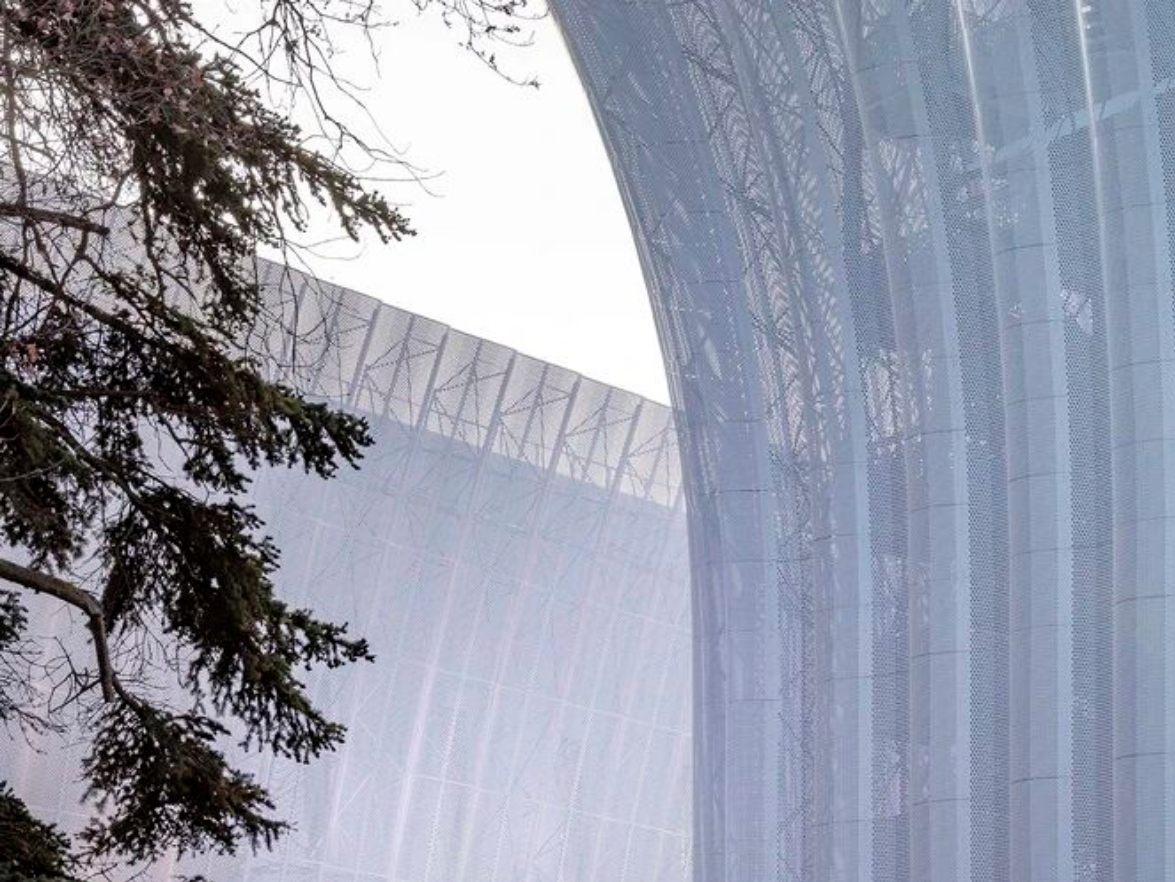
Design Recommendations: For perforated aluminum plates, in addition to "Key Methods for Resolving Aluminum Plate Flatness Issues," specific solutions tailored to their characteristics include: high-strength aluminum substrates, scientifically optimized perforation paths, post-perforation stress relief (mechanical leveling), and reinforced frames.
1、Use high-strength aluminum base material
Preferentially use aluminum substrate 5052-H32, as this state of material inherently possesses superior strength and internal stress stability, making it more resistant to deformation than pure aluminum and other aluminum alloys.
The strength of 5052-H32 is 2.26 times and 1.48 times that of 1100-H24 and 3003-H24, respectively. Higher strength means it is less prone to irreversible plastic deformation during processing (punching, bending) and installation, thereby better maintaining its initial flatness after processing and during long-term use.
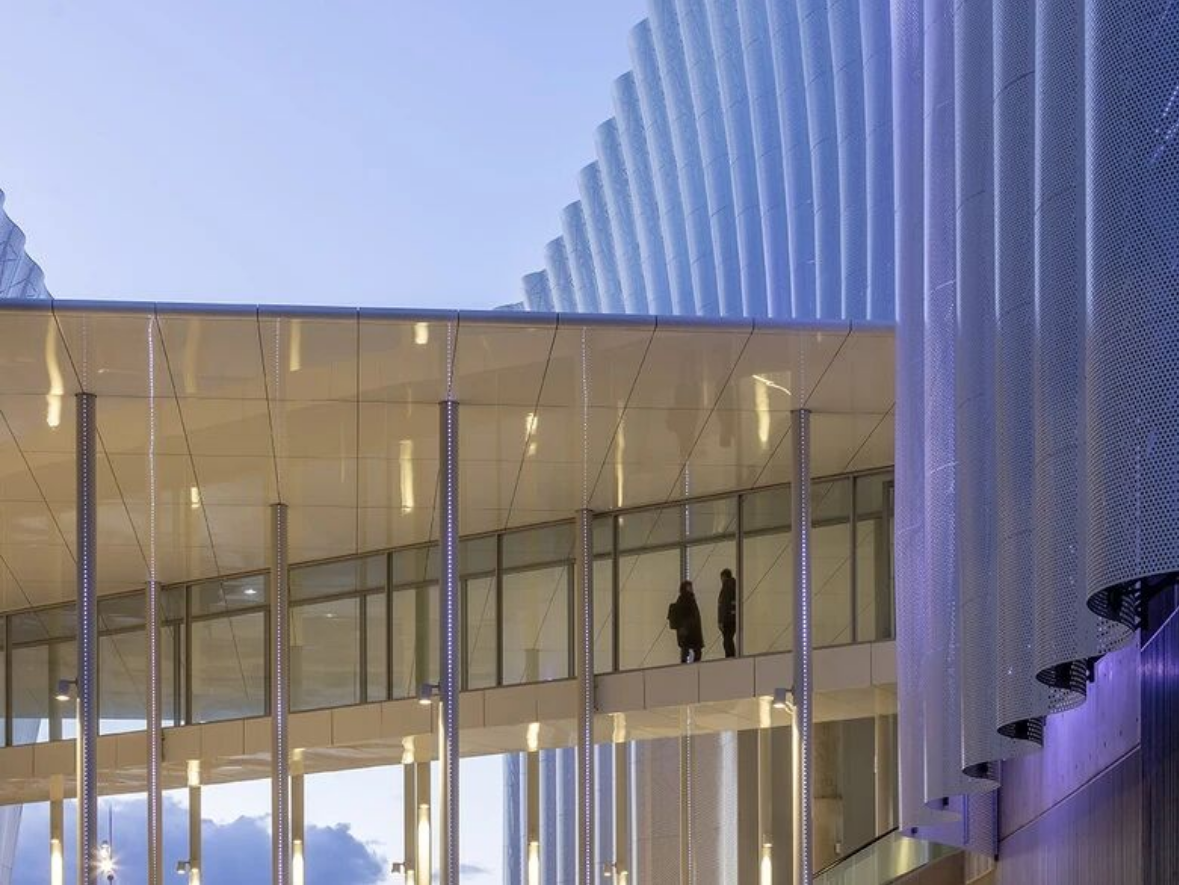
2、 Scientific punching process
This is of utmost importance in preventing deformation during the perforation process.
Equipment and molds: Large equipment ensures a smooth stamping process and uniform force distribution, thereby reducing vibration and avoiding micro deformation. Sharp molds reduce stamping stress and avoid sheet distortion.
Punching sequence and direction: Adopting a "symmetrical, progressive, and alternating" punching path. Ensure to avoid deformation such as sheet distortion and warping caused by uneven material stress release and heat accumulation.
3、 Strengthening ribs and reinforcing frames
For large-sized (over 1.5X3.0m) or extremely high porosity (>30%) aluminum plates, it is difficult to ensure installation flatness solely based on the stiffness of the plate itself.
Back reinforcement ribs: Reasonably arrange longitudinal and transverse "U" - shaped or "mouth" - shaped aluminum reinforcement ribs to greatly improve bending stiffness. Strengthening the frame: Creating a sturdy aluminum frame (usually aluminum square tube or U-shaped groove) around the panel to form a stable load-bearing frame is one of the most effective methods to prevent corner warping and overall deformation.

High quality products, high-quality services and high-quality

Focus on us
HANBERT
Tel: 0757-22682270
Phone: +86-135 314 008 83
E-mail: info@hanbert-tech.com
Address: 1612,4th,building,ZhiyePlaza,Daliang,Foshan,Guangdong P.R.of china
Copyright © 2021-2026 HANBERT All Rights Reserved. 粤ICP备2021118030号  Power by:
 Hanelink.com