
Located at 270 Park Avenue in Manhattan's core, this is J.P. Morgan's new global headquarters and a significant addition to Foster + Partners' skyline in New York. Standing at 423.1 meters tall, the building redefines the vertical profile of Midtown, becoming the sixth tallest skyscraper in New York. It not only symbolizes the power and future vision of the enterprise but also represents a city's dialogue between tradition and innovation.
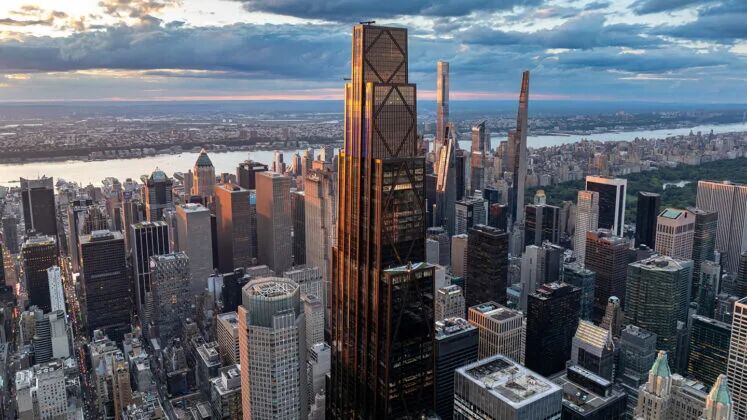
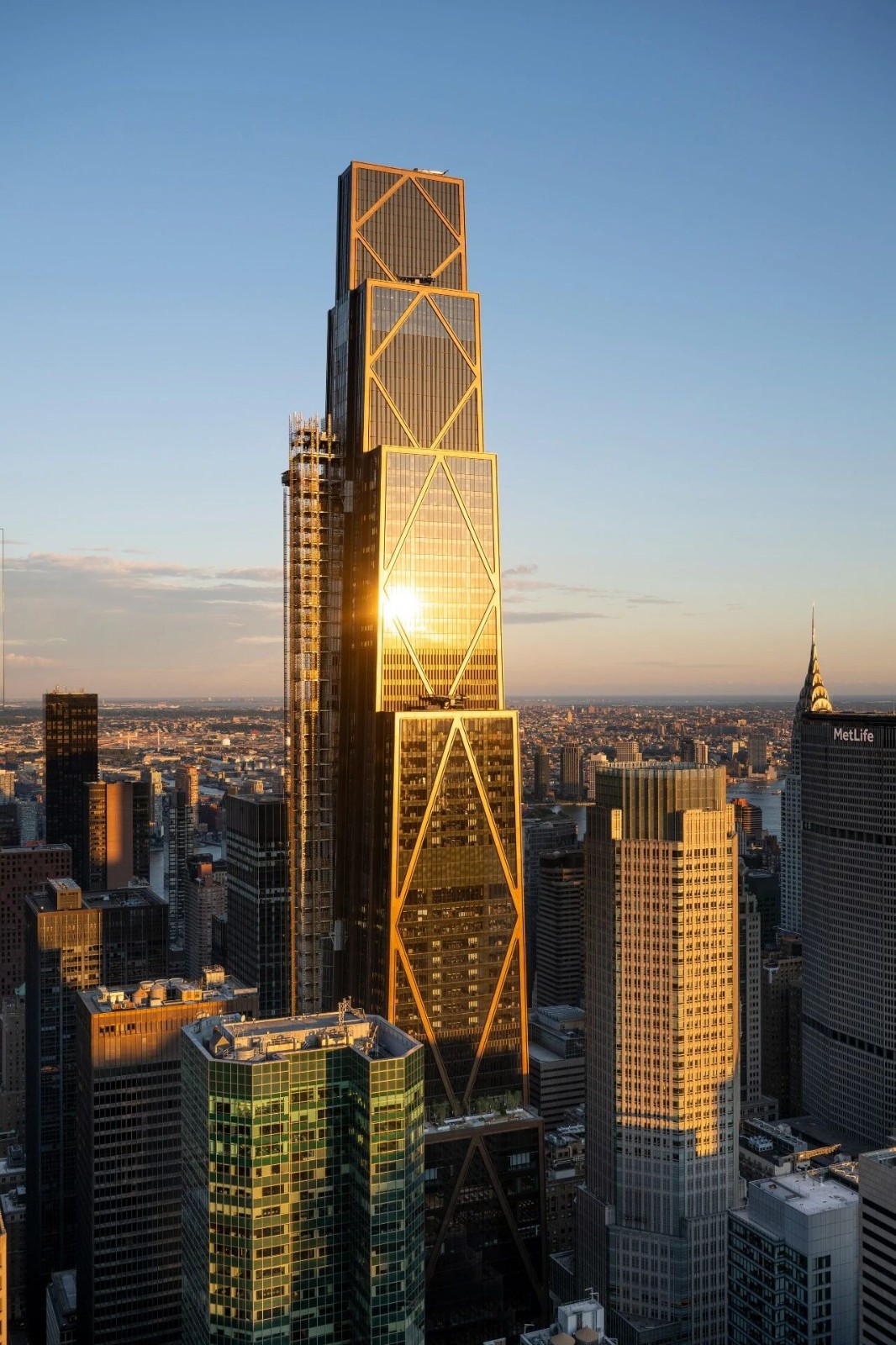
The birth of the new headquarters originated from the renewal of the old landmark. The base was originally a Union Carbide Building designed by SOM in the 1960s. As the company grew in size, the original building could no longer accommodate the large number of employees at JPMorgan Chase. Faced with controversy and discussion, the new building responds to contemporary needs with a completely new volume.
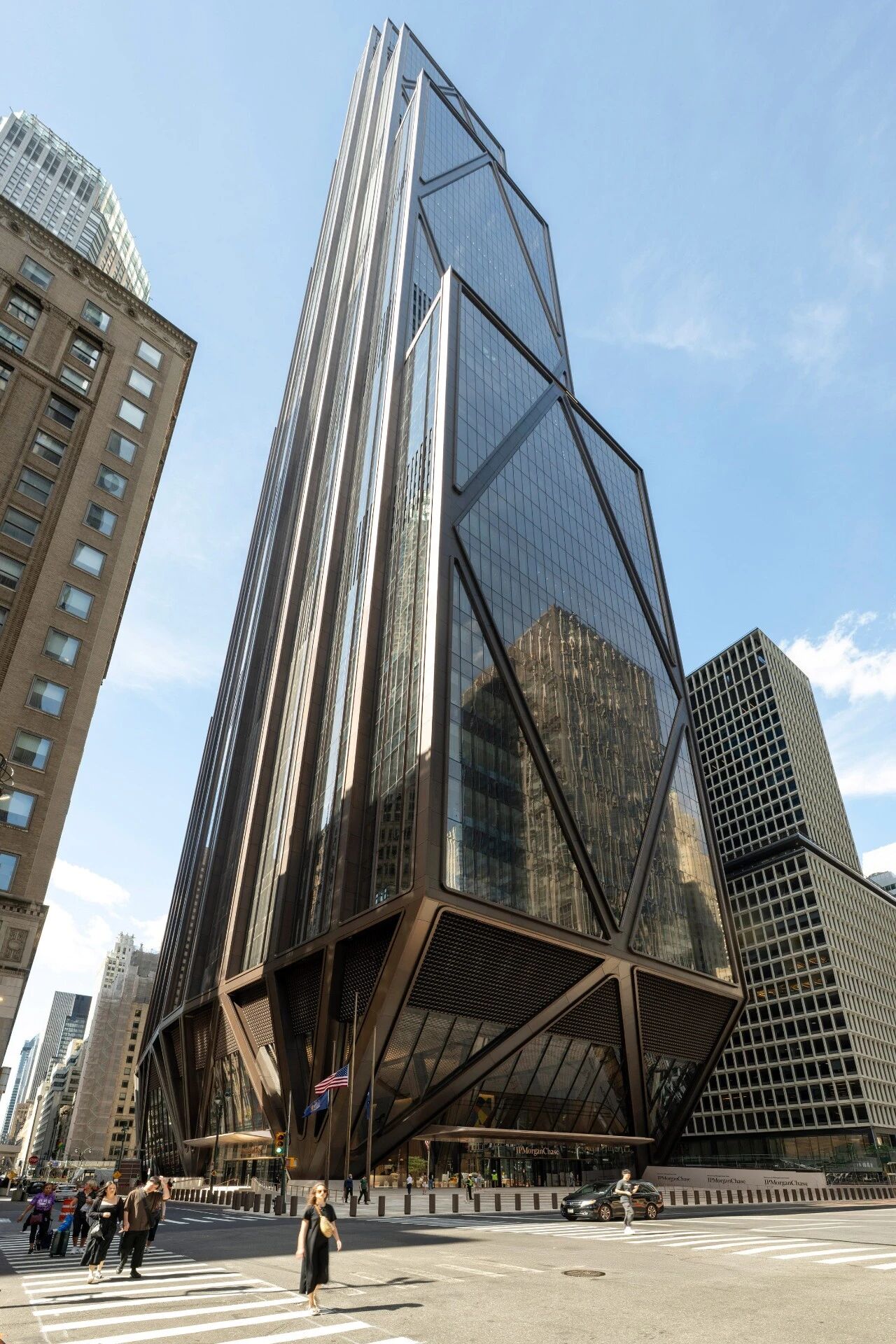
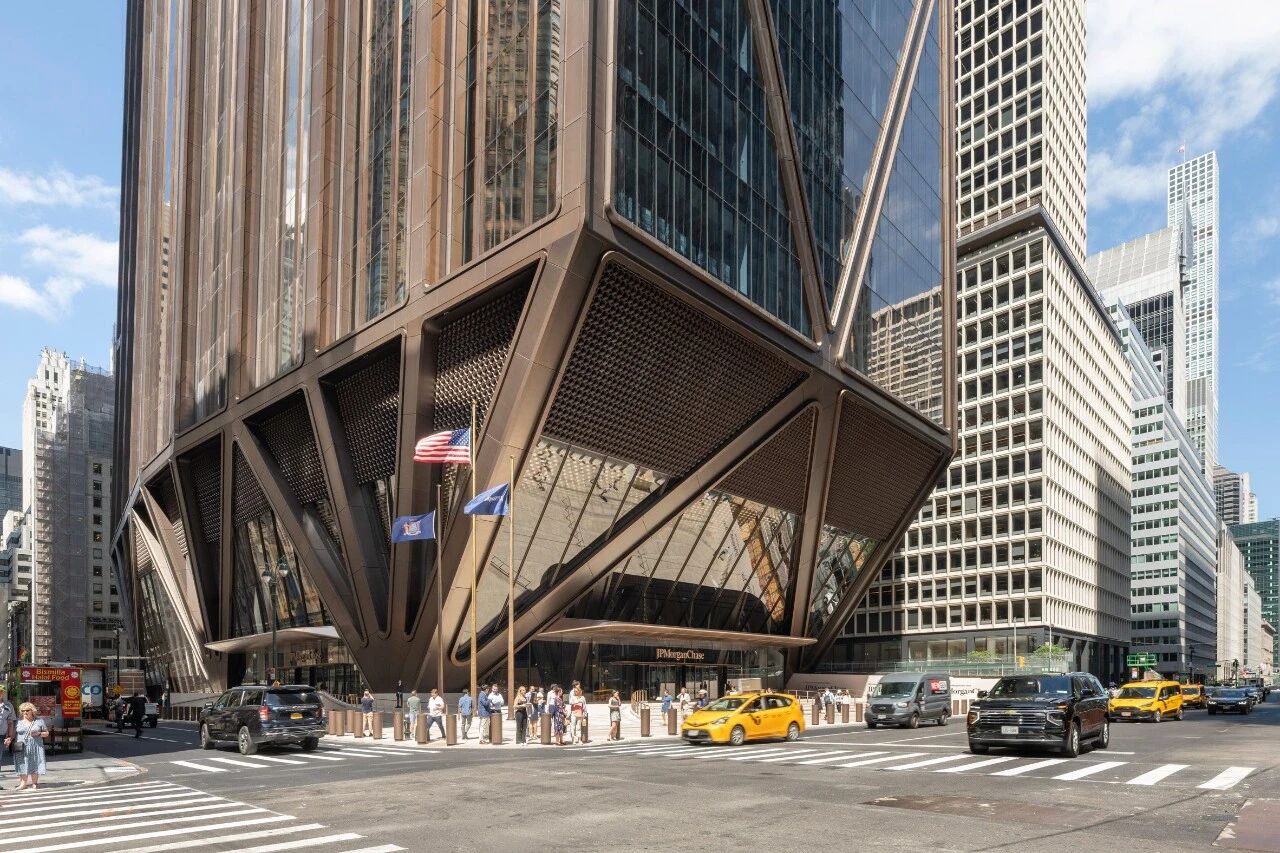
The tower recedes in a stepped manner towards the sky, and its exterior features a sharp contrast between antique bronze metal diagonal grids and transparent glass curtain walls, making it highly recognizable among the dense skyscrapers of Manhattan and accurately capturing its unique silhouette from a distance.
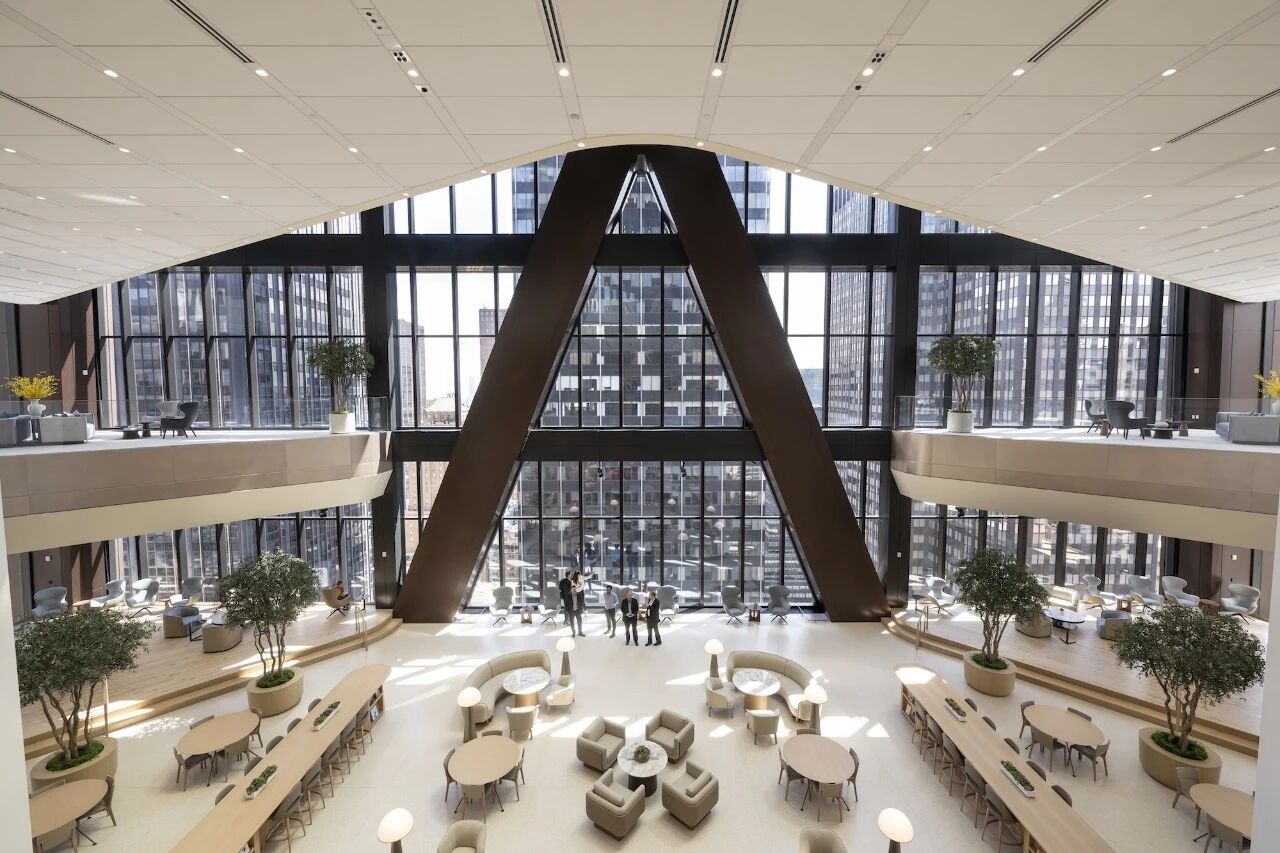
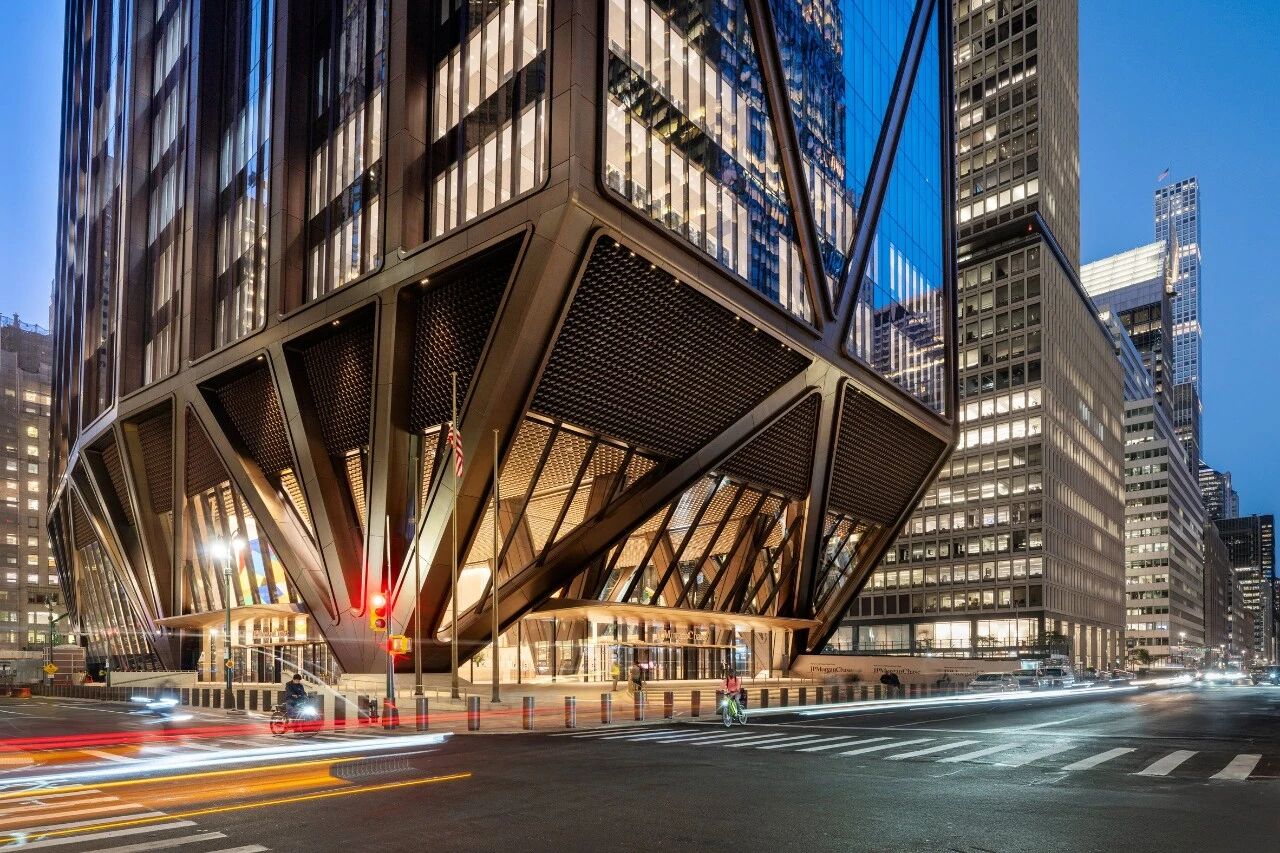
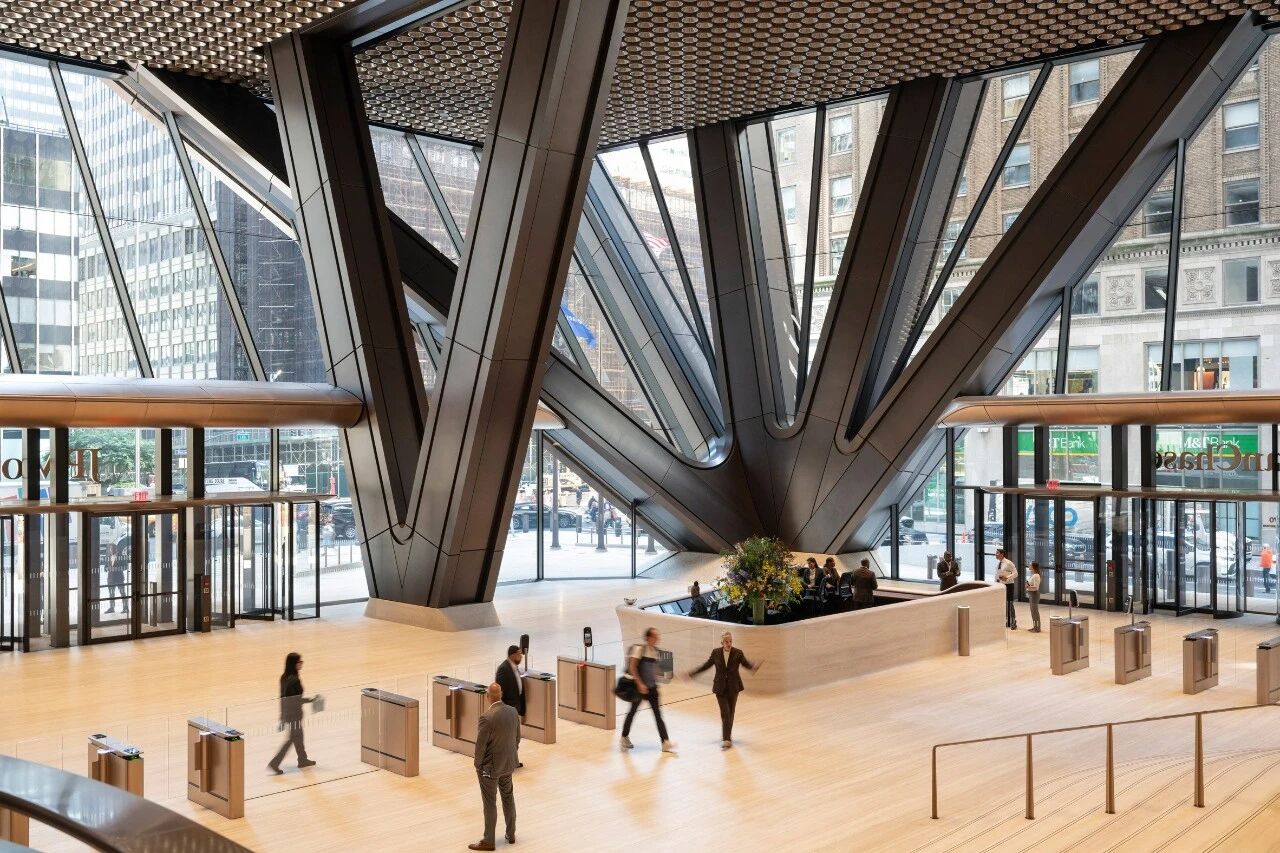
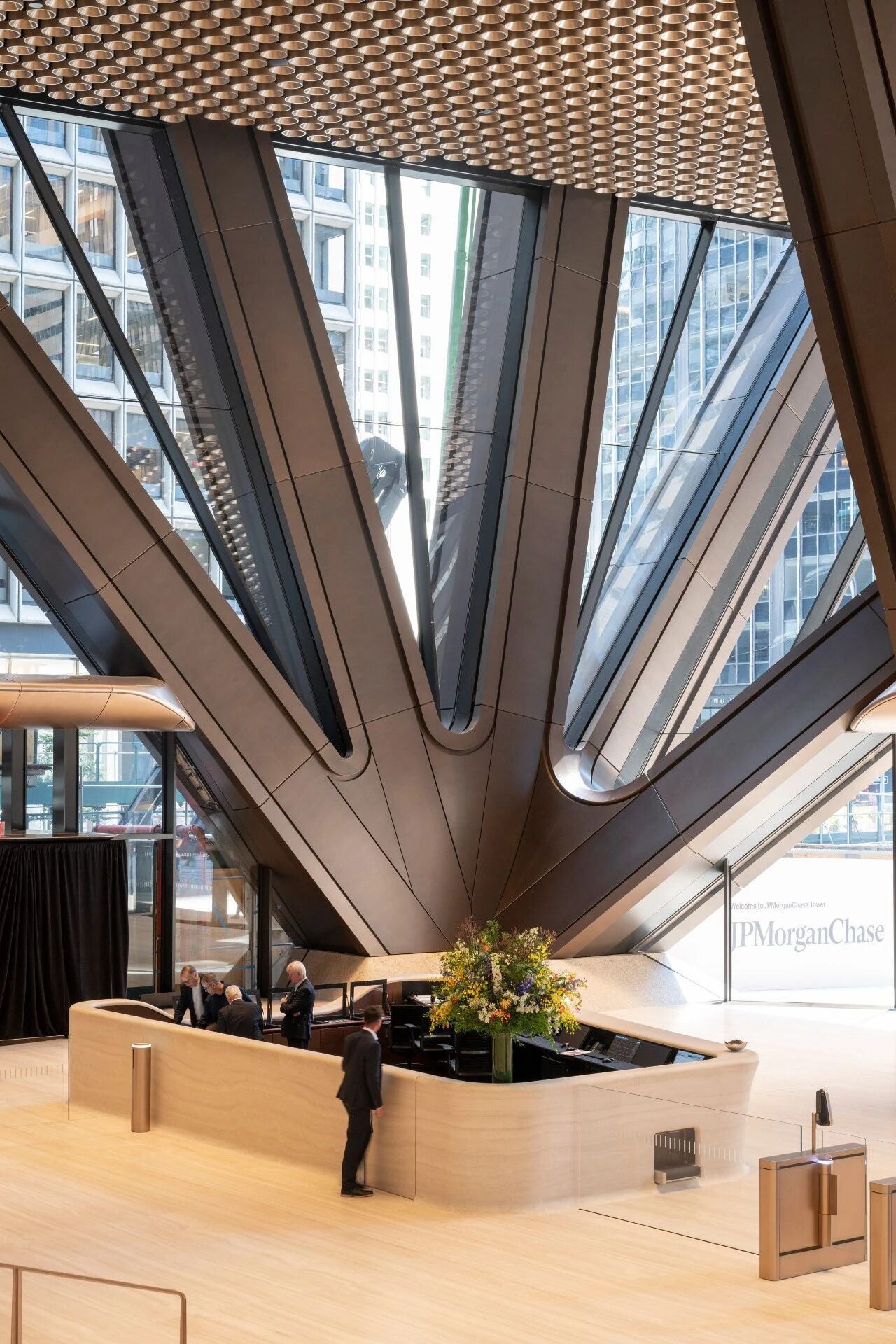
Foster pushed structural mechanics and aesthetics to the extreme in his design. He moved the core tube to one side of the building, allowing the base to be supported by a large-scale fan-shaped column system, making the tower seem to be gently suspended above the ground.
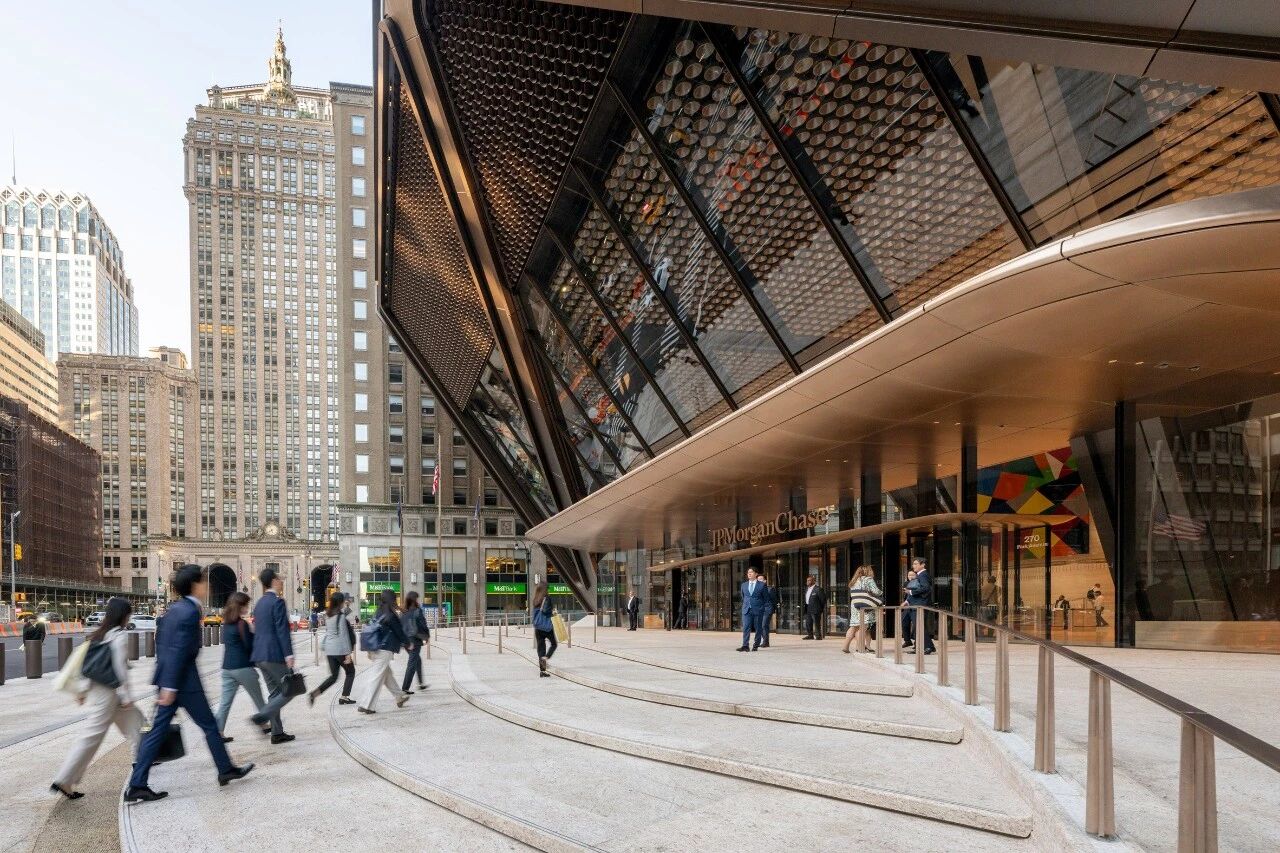
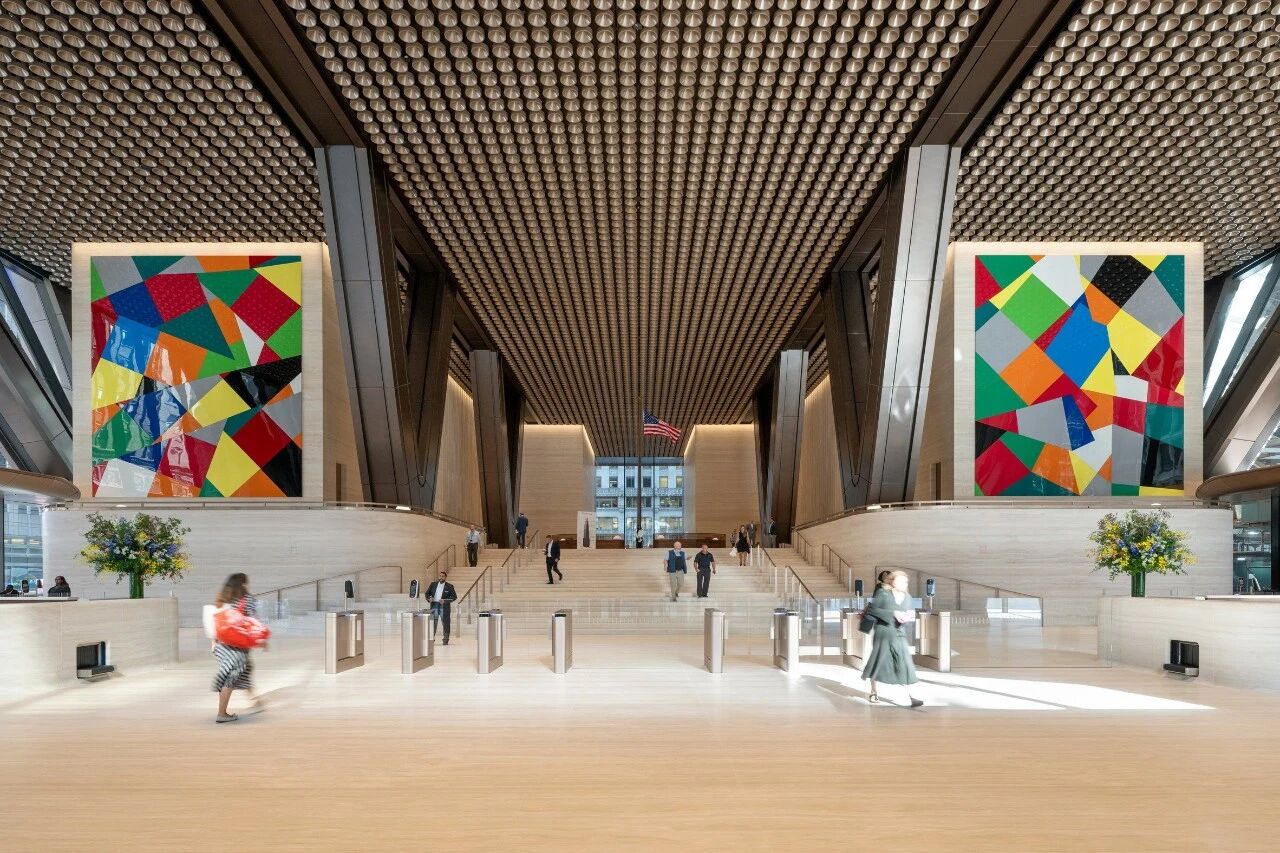
This strategy allows the street level to create spacious public spaces, including city gardens for relaxation. The new headquarters provides the public with more than twice as much open space as the predecessor building, reflecting a rare urban goodwill in Manhattan where every inch of land is precious.
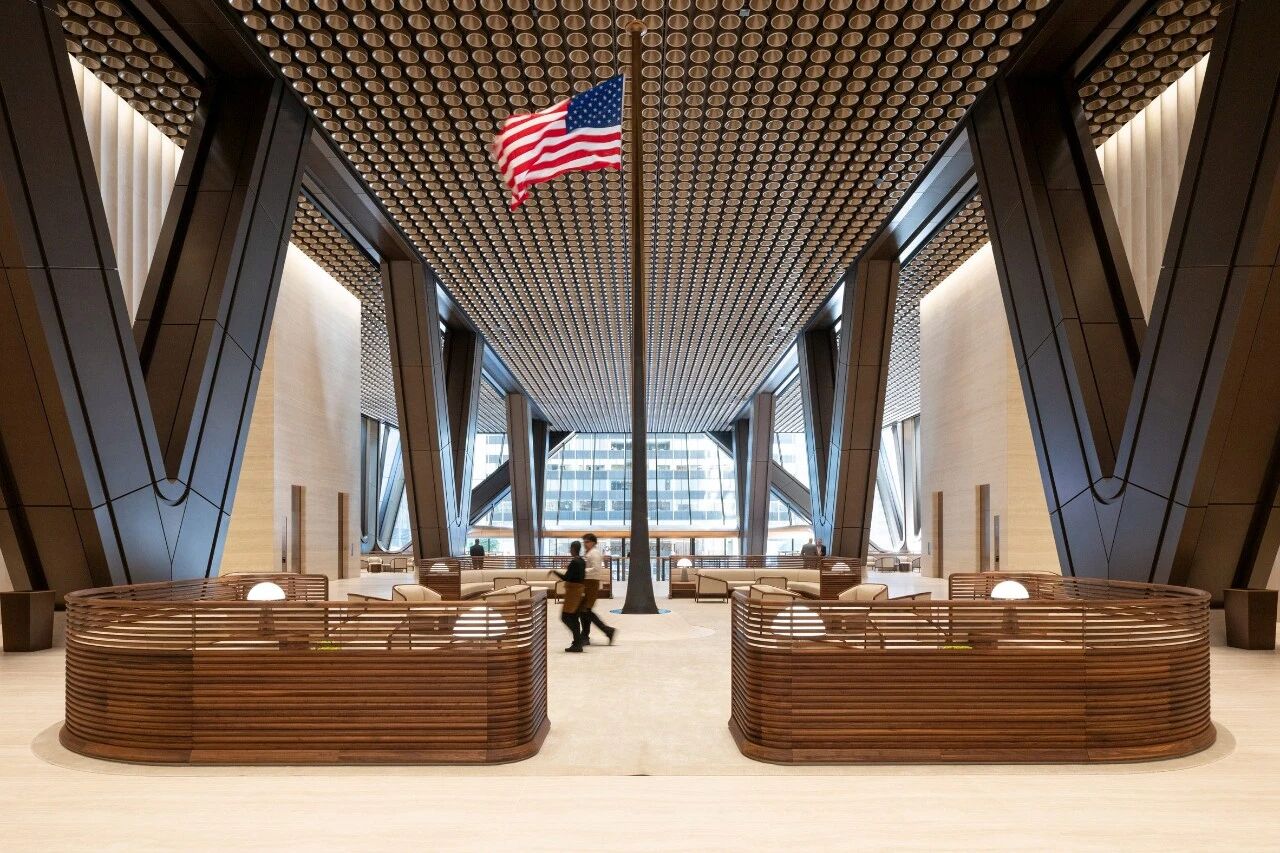
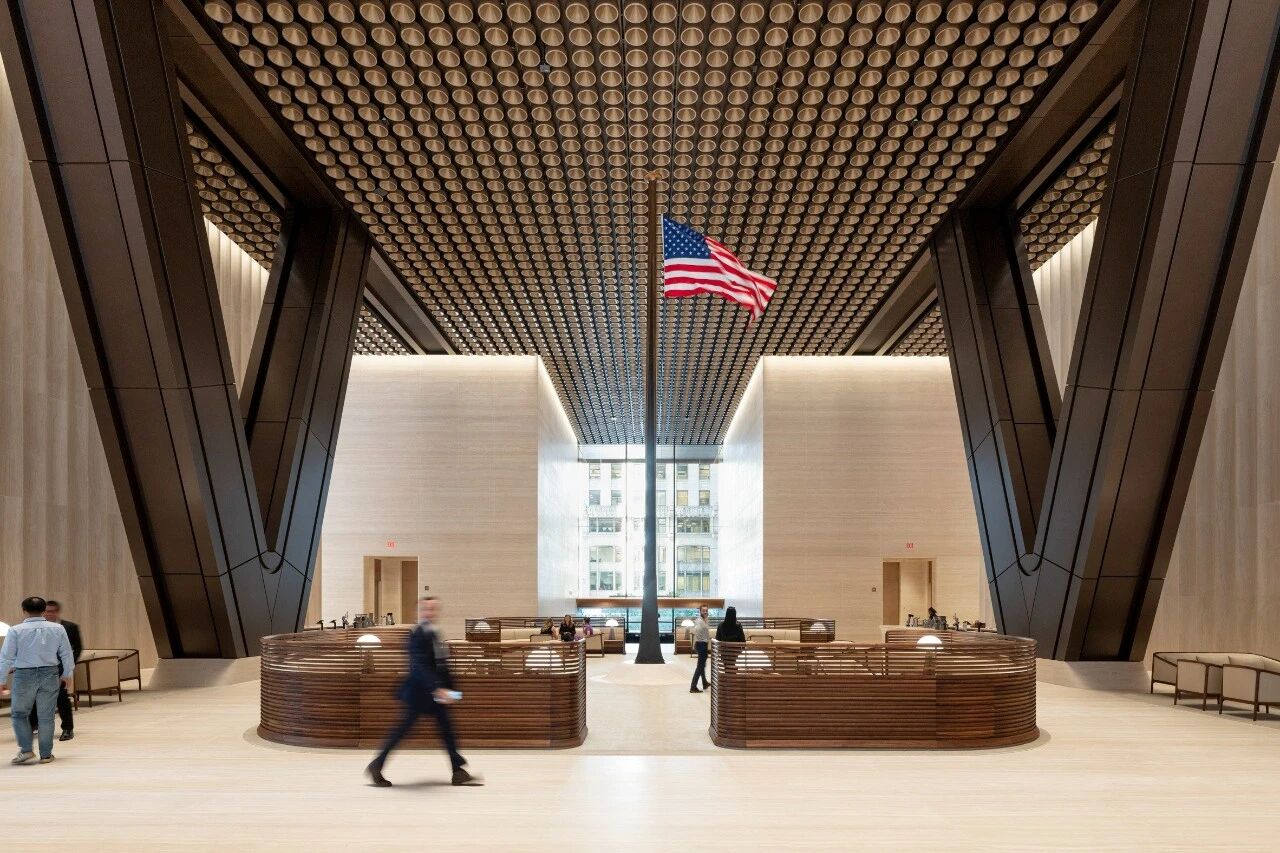
。The detailed expression of architecture continues the geometric order. From the circular grille at the back of the pedestal to the lighting system that echoes the logic of the exterior facade structure in the high ceiling of the lobby, every detail maintains a consistent language. The flag device in the center of the lobby was designed by Foster, which uses artificial airflow to maintain a floating state, and together with the light colored limestone floor, creates a stable, bright, and ceremonial spatial atmosphere.
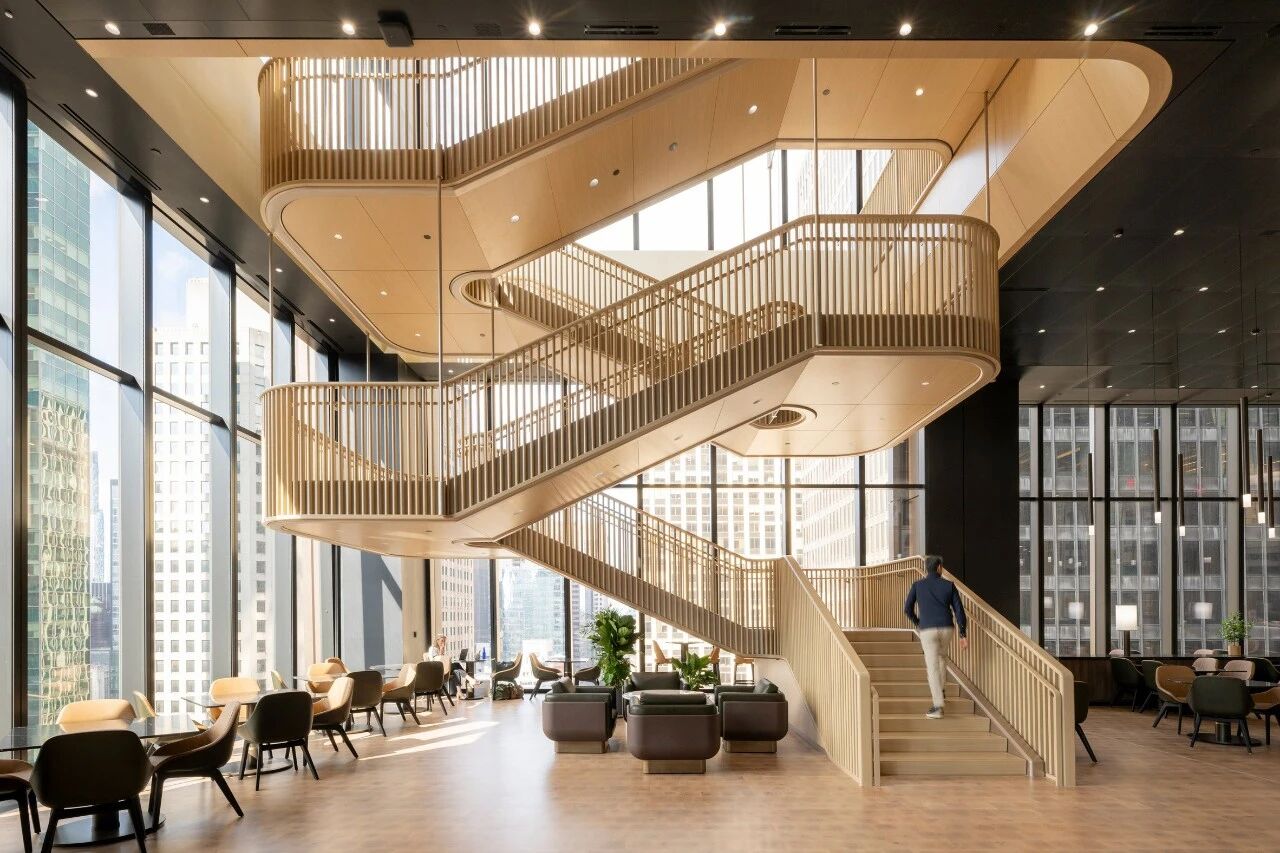
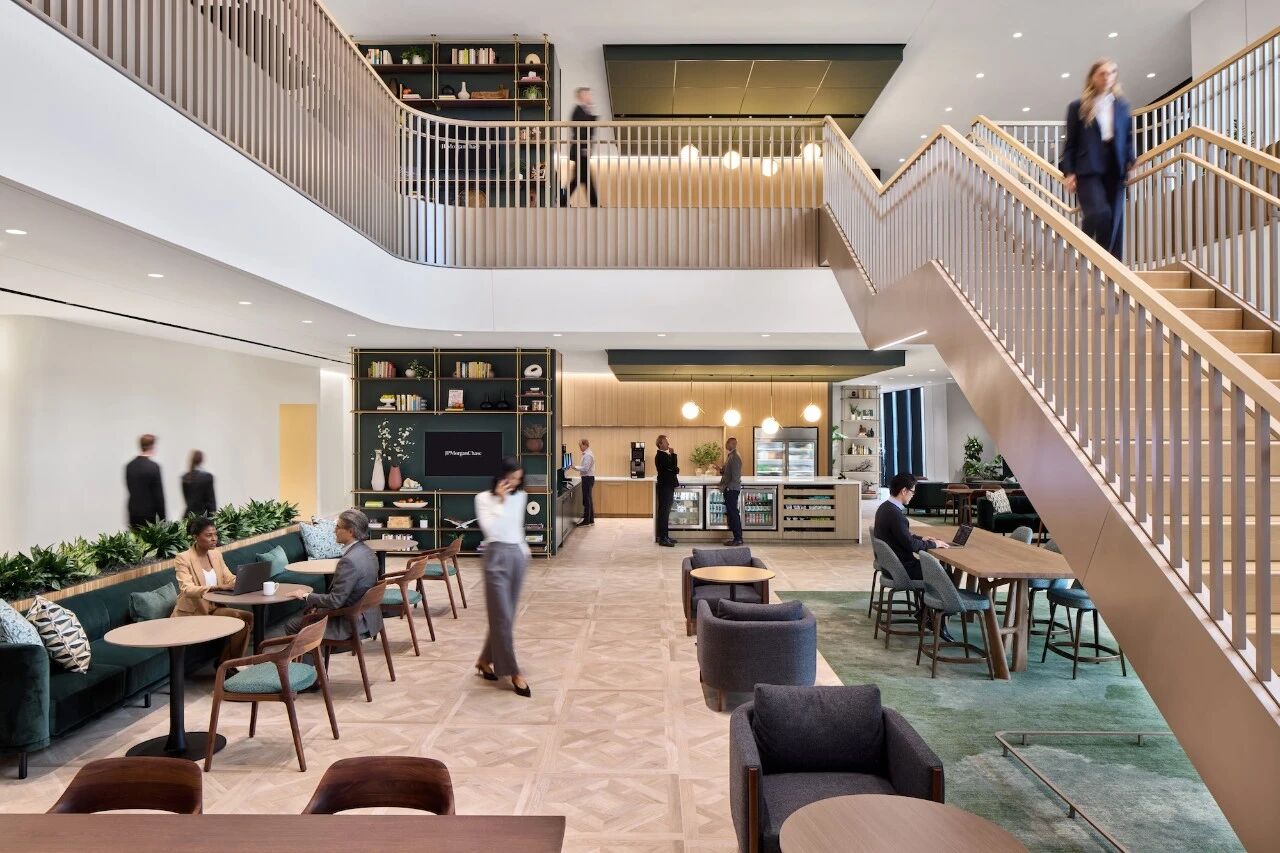
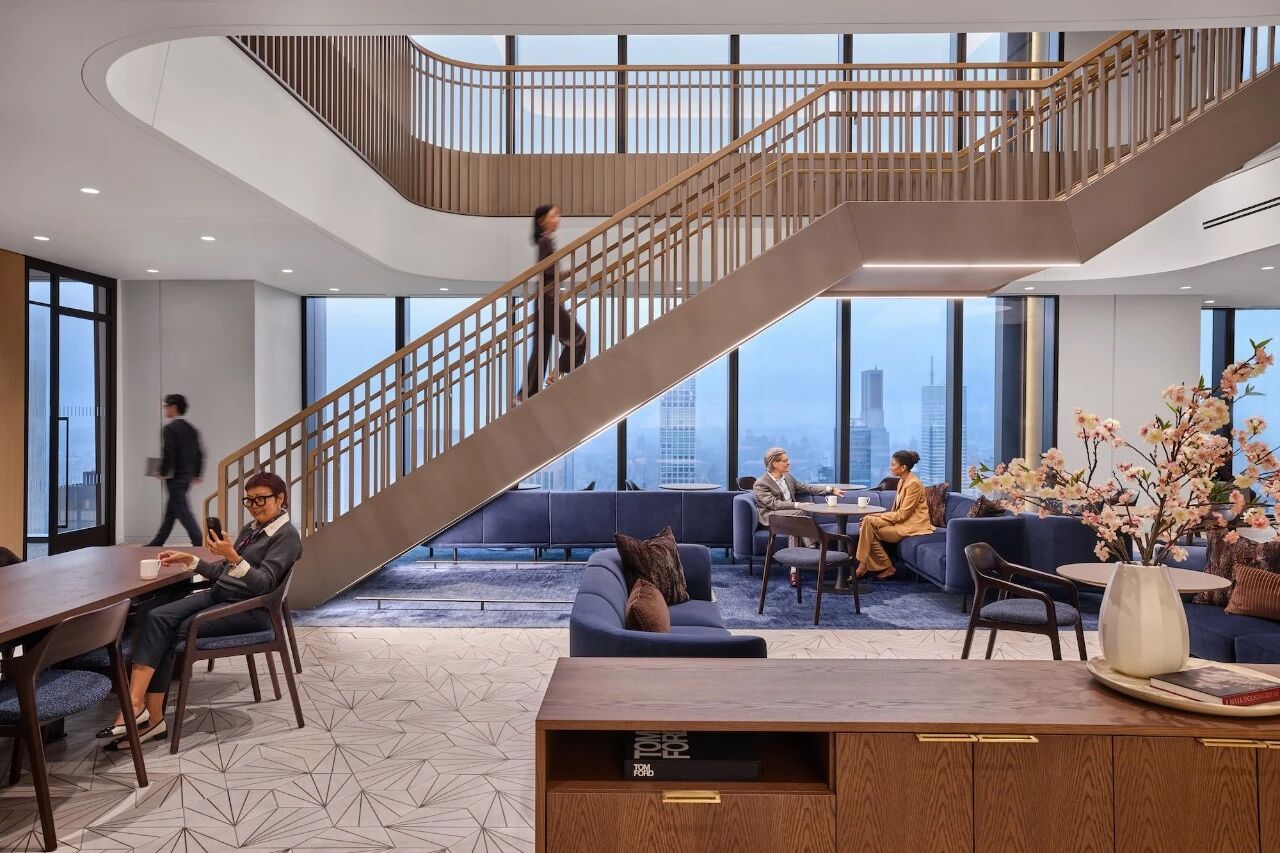
270 Park Avenue has also been designated as a true 'city within a city'. After passing through the lobby and trading floors, the structural system gradually shifts towards the center, accommodating diverse office and corporate facilities. Multiple international design teams participated in the internal space planning, among which Gensler organized the office space into multiple "neighborhoods", forming a two-story community that promotes collaboration and social interaction through team layout, mentorship communication spaces, and a double decker high rise coffee shop connecting the upper and lower floors, allowing work and interaction to naturally connect.
The core public area of the building is the multi-level dining space "exchange", which becomes the social hub of the entire building. Foster emphasized the sustainable strategy of the new headquarters, including the comprehensive use of electric energy. This decision was even earlier than the implementation of relevant regulations in New York. In addition, the recycling rate of old building materials is as high as 97%, setting a new benchmark for the recycling of large-scale development projects.
In terms of overall aesthetics, 270 Park Avenue does not follow the silver metal and glass style commonly seen in New York in recent years, but instead echoes the urban context of classic skyscrapers such as the Rockefeller Center with antique bronze structures and receding contours.
The new building responds to historical traditions with modern materials, allowing this financial giant tower to showcase a sense of the future while also paying tribute to New York's architectural heritage.
As Foster said, this building "pushes past efforts to new heights".

High quality products, high-quality services and high-quality

Focus on us
HANBERT
Tel: 0757-22682270
Phone: +86-135 314 008 83
E-mail: info@hanbert-tech.com
Address: 1612,4th,building,ZhiyePlaza,Daliang,Foshan,Guangdong P.R.of china
Copyright © 2021-2026 HANBERT All Rights Reserved. 粤ICP备2021118030号  Power by:
 Hanelink.com