
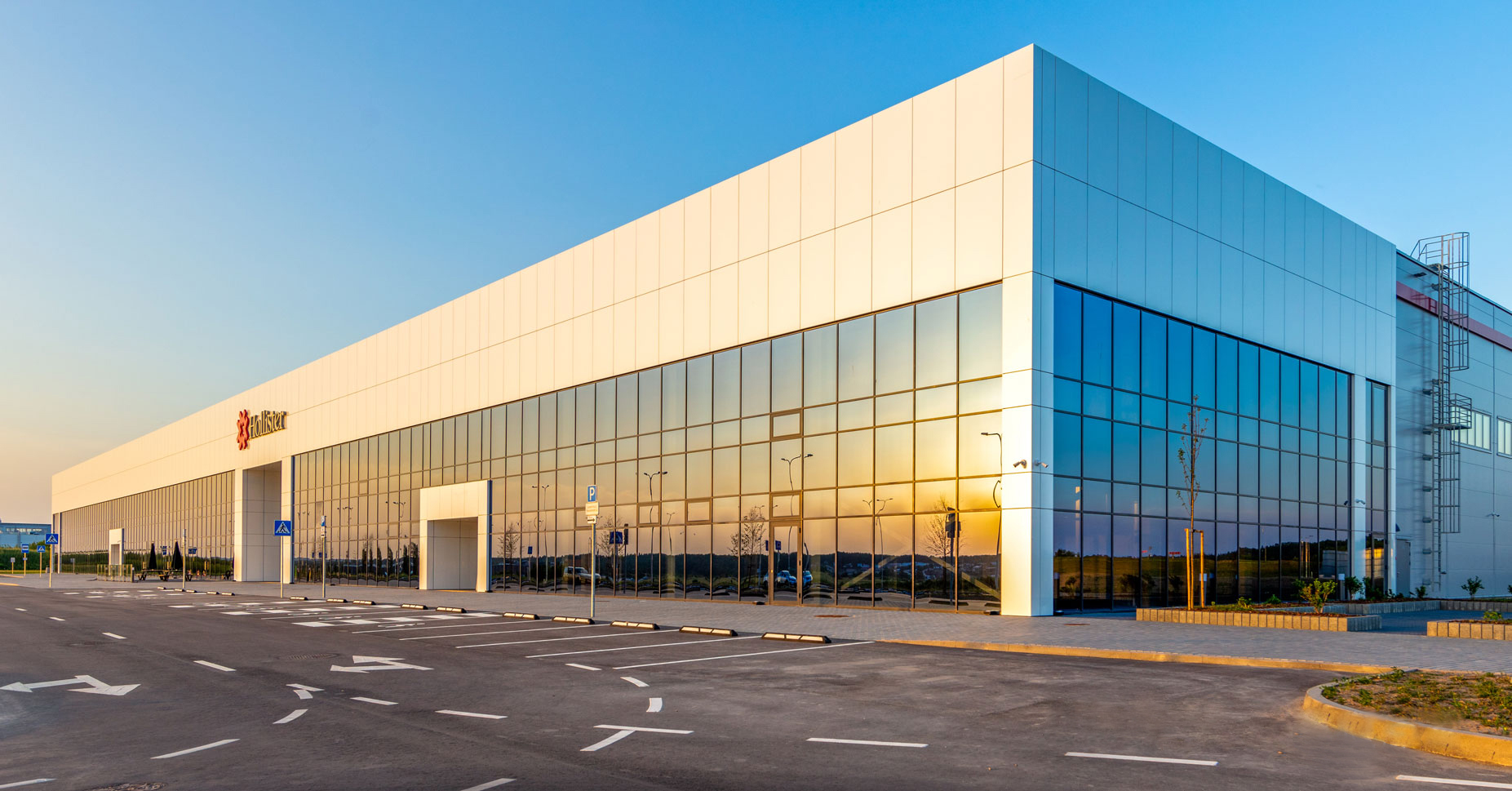
Pain point issue: Currently, most of the aluminum curtain walls in public and residential buildings are deformed. There are obvious wave deformations on the surface of the board, accompanied by bulges, depressions, and warping, and even twisting. The reasons caused by general factors include: calculation and control errors in board deflection, unreasonable design of connection nodes (such as inability to release thermal stress), excessive plate division, improper aluminum plate alloy grades (such as using 1 series pure aluminum or aluminum alloy), and so on.

Design recommendation: In order to reduce the deformation of aluminum curtain walls caused by design reasons, it is necessary to improve their high-quality design requirements. Strict control of board deflection calculation and control errors can be achieved by using deflection limits lower than the standard (especially for large grid aluminum plates), while still using L/100 or looser limits. Under the action of wind pressure, the center of the plate will undergo significant initial deformation, visually resembling waves. For high standard projects, stricter limits (such as L/150-L/200) should be applied to areas with high visibility to strictly control the design of connection nodes. Unreasonable design of connection nodes can be reduced by using movable aluminum plate systems such as fixed distance pressure blocks and hanging joints that can release thermal stress to reduce the use of fixed aluminum plate systems;
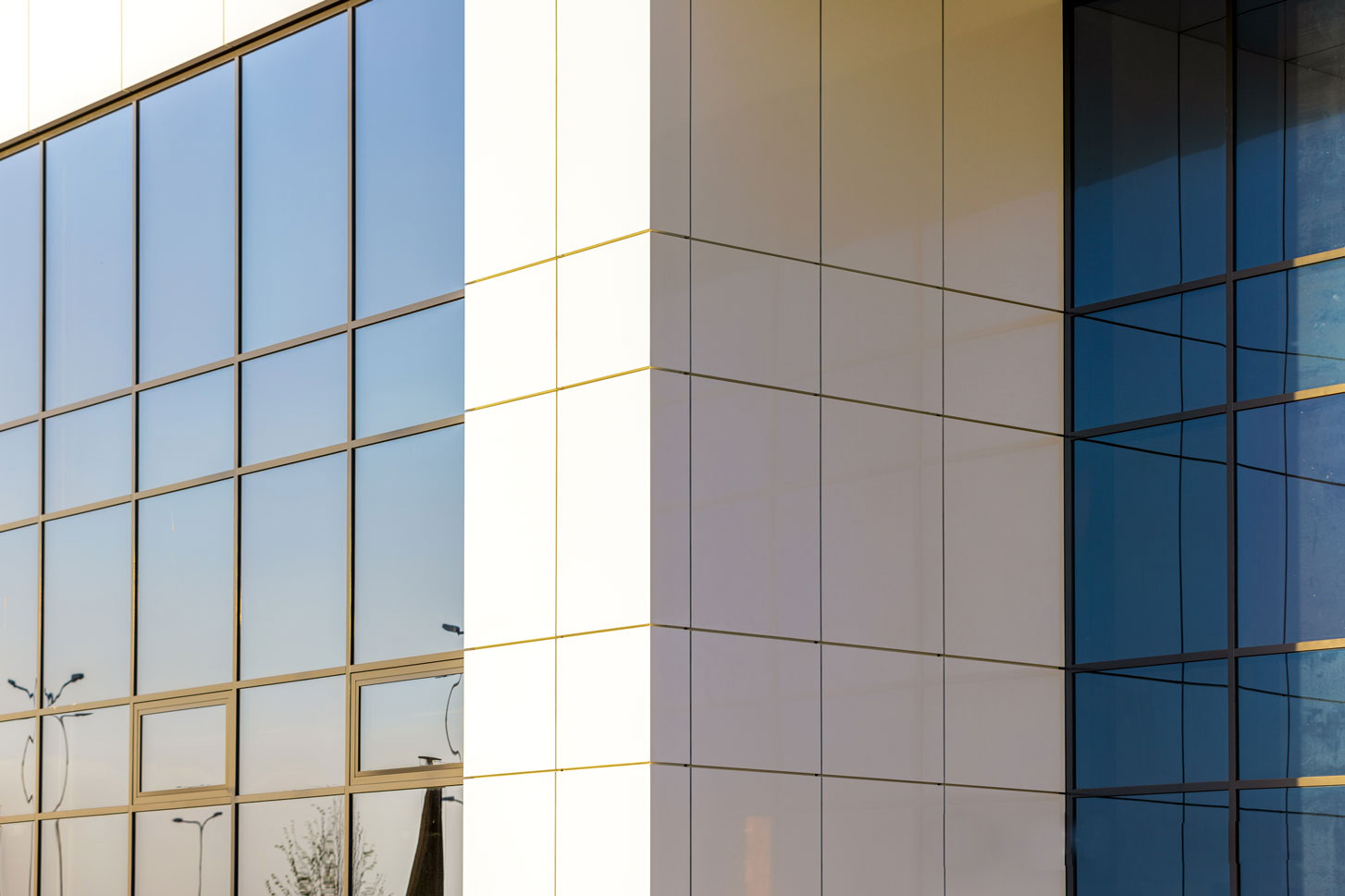
Strictly controlling the excessive division of the panels can be achieved by strictly controlling the height of the panels, with the direction of the floor height using two or three divisions; Strictly control the grade of aluminum plate alloy. It is strictly prohibited to use 1 series pure aluminum or aluminum alloy, and 3 series aluminum alloy or above grade must be used. For large plate partitioning, it is necessary to adopt a more suitable structural state (such as 6061-T6) when necessary.

High quality products, high-quality services and high-quality

Focus on us
HANBERT
Tel: 0757-22682270
Phone: +86-135 314 008 83
E-mail: info@hanbert-tech.com
Address: 1612,4th,building,ZhiyePlaza,Daliang,Foshan,Guangdong P.R.of china
Copyright © 2021-2026 HANBERT All Rights Reserved. 粤ICP备2021118030号  Power by:
 Hanelink.com