
The minimalist design style, with its unique expression techniques and rich connotation features, interprets a new design concept for people. In architectural design, the fa ç ade design of school buildings, with a modern aesthetic of simplicity, presents a minimalist outline and rugged lines, which have also become popular elements in the design industry.
Simplicity does not lack design elements, it does not mean abandoning the rules and simplicity of the original architectural space and decorating the building carrier arbitrarily. But in terms of design, more emphasis is placed on functionality, the completeness of structure and form, and the pursuit of depth in material, technology, and spatial expression.
Calvijn College
-Wiersema architecten-
Calvijn College ©Gerard van Beek
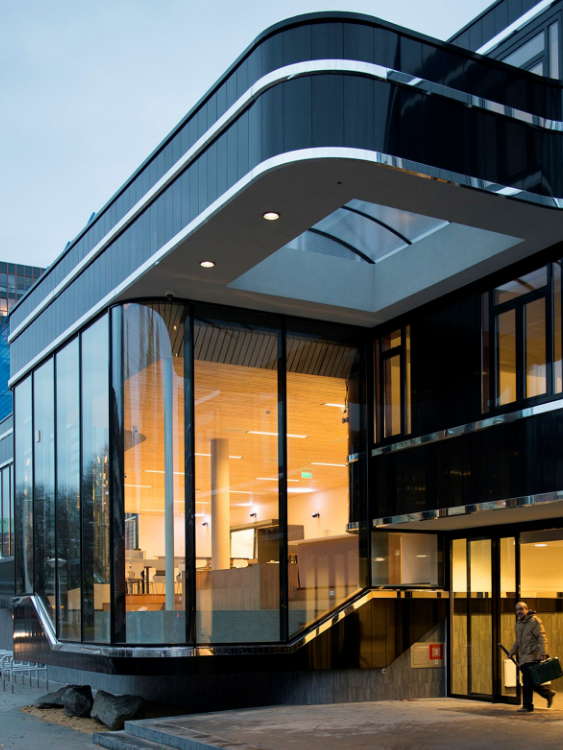
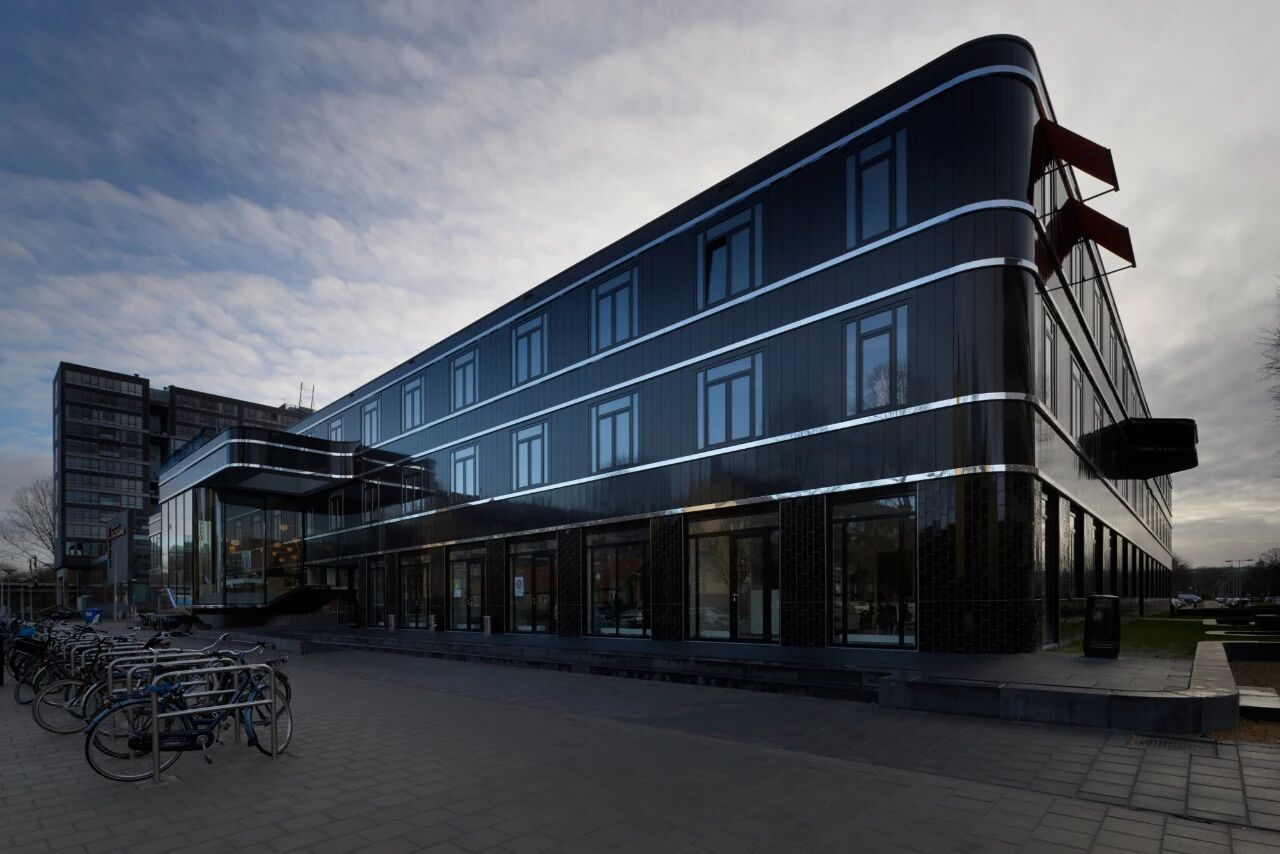
The "exquisite masterpiece" of Kelvin College at the urban scale: the dynamic curved shape created by high gloss black and chrome materials exudes a classic luxurious texture. The image of school buildings is thus in line with the ideal world that students aspire to. This design that incorporates a sense of luxury contrasts sharply with the environment in which the school and its surroundings were once located, and the black mirrored exterior wall design echoes this core background.
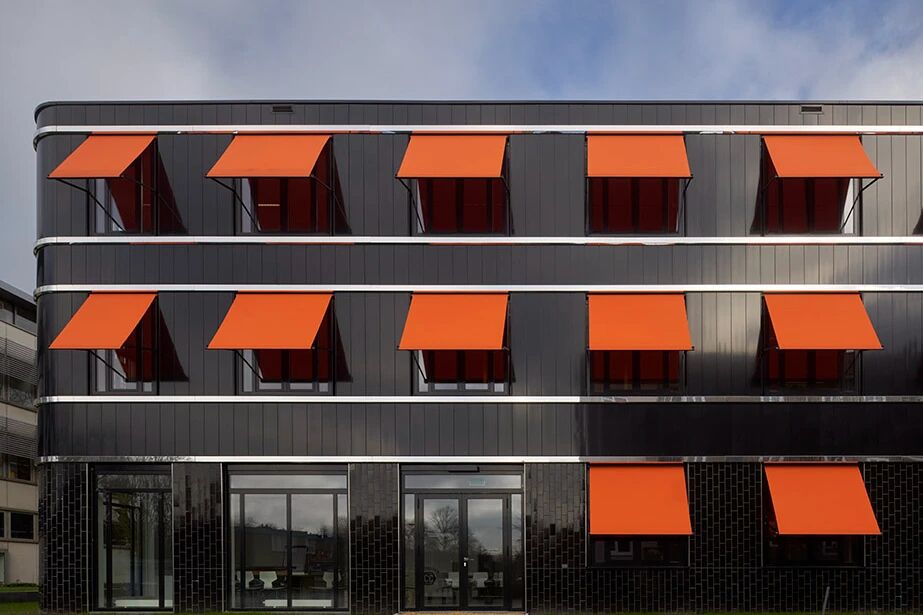
The mirror effect of the exterior wall is divided into three levels: high gloss black aluminum presents 80% mirror reflectivity; glass achieves 100% reflection and transparency; lines present completely pure mirror reflection, with complex and layered light and shadow effects, especially the black mirror part that appears more mysterious.
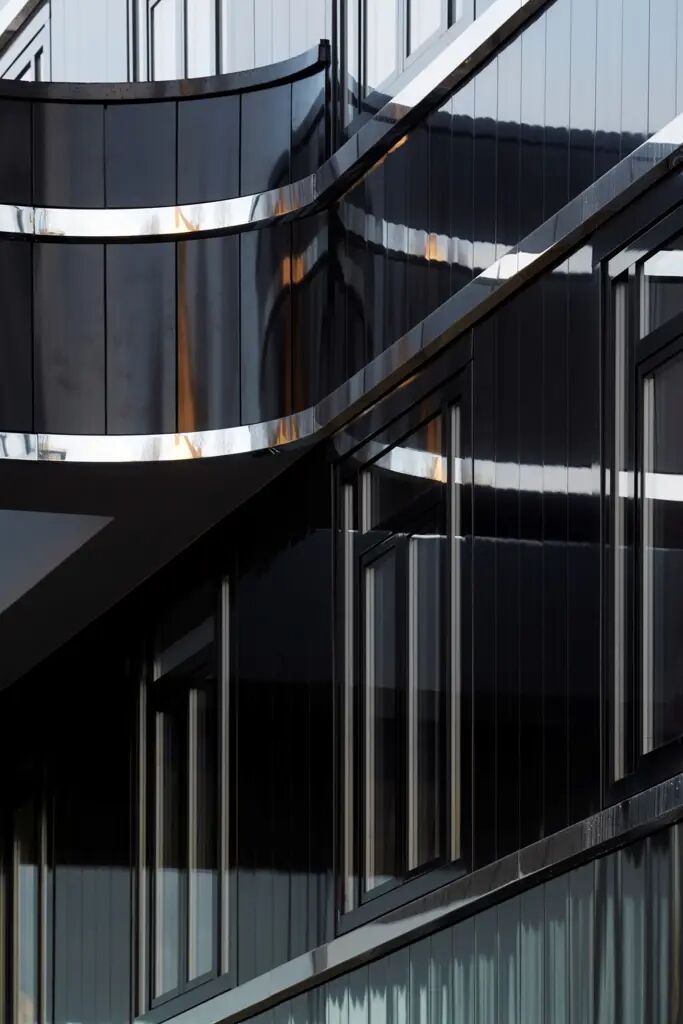
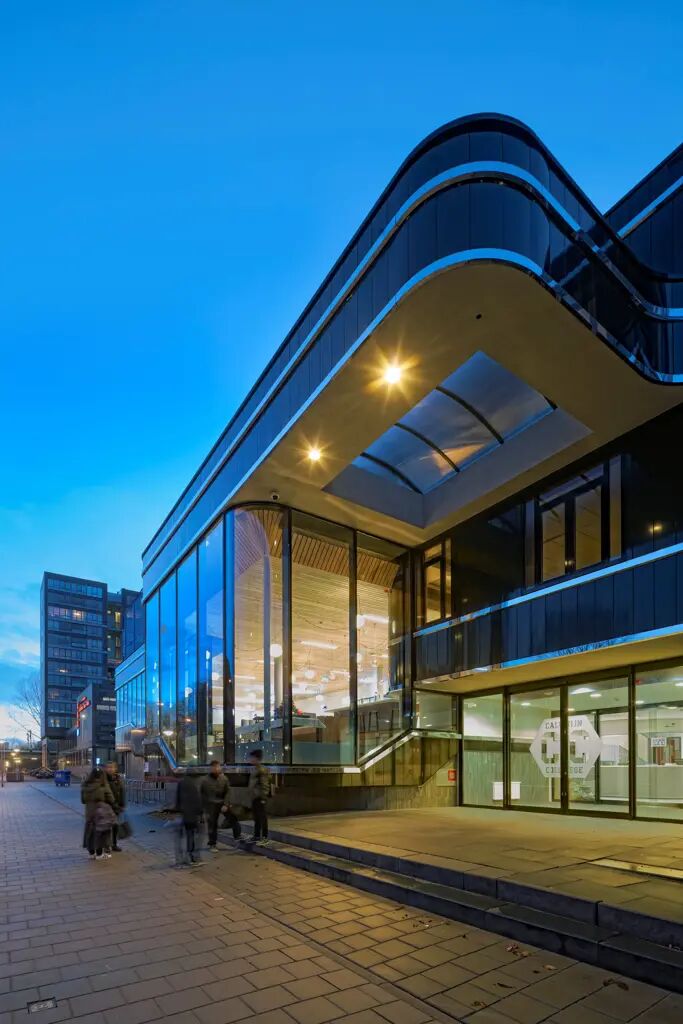
Calvijn College Facade Details ©Gerard van Beek
Pure black would absorb all the light and colors in the surrounding environment, while high gloss black is the opposite, able to fully reflect the colorful surroundings. In the reflection of light and shadow, architecture and environment blend together.
In this context, the contradictory coexistence of "melting" and "merging" in architecture gives it an ultimate sense of restraint and harmonious integration. At the same time, the complex interplay of mirror light and shadow is highly tactile and visually attractive, making the building stand out with a striking presence.
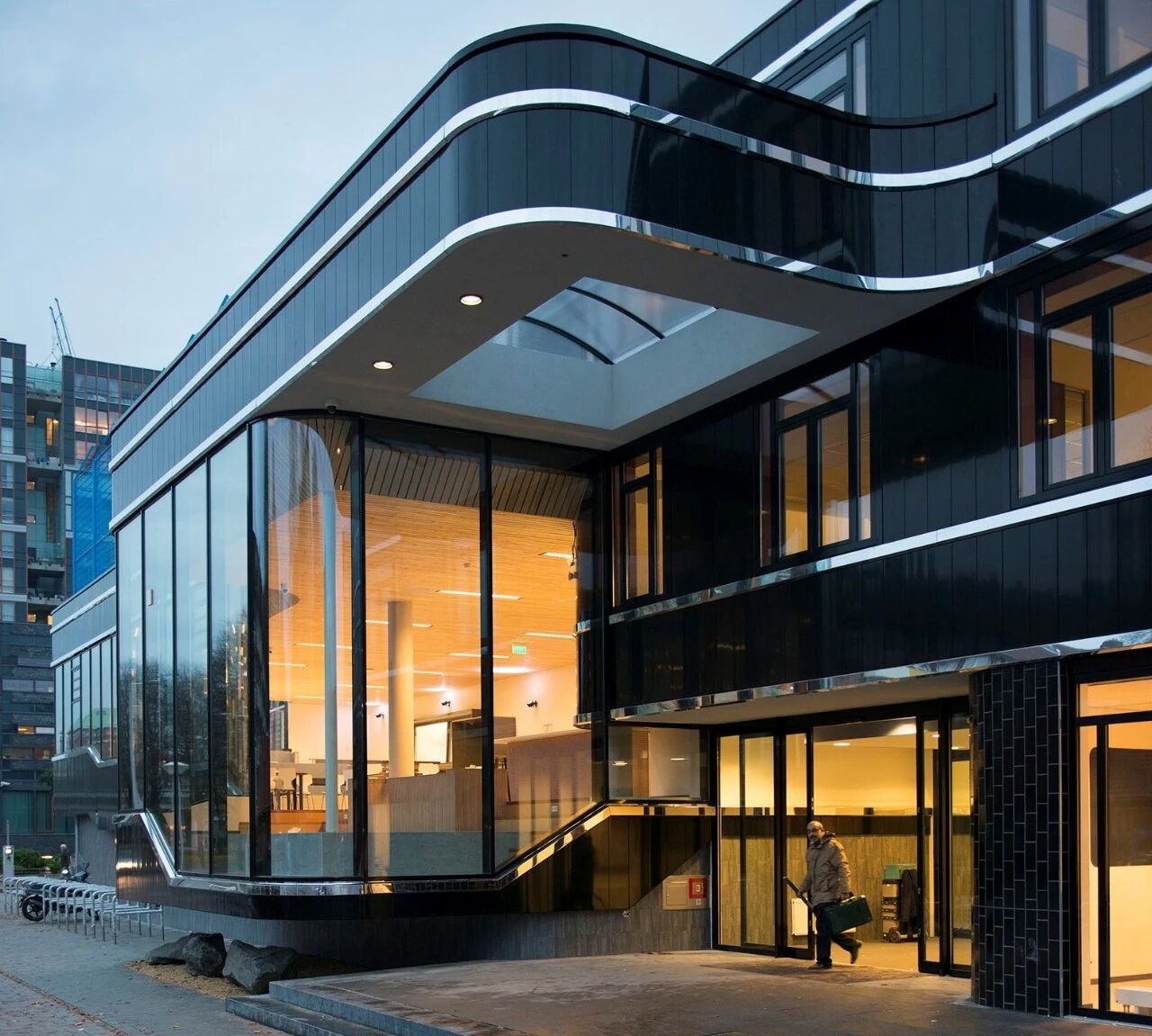

Entrance bay window design ©Gerard van Beek
The transparent design of the protruding window next to the entrance is highly approachable, cleverly connecting the hidden and textured interior space of the hall with the visually stunning exterior walls. This protruding window is a tribute to Ingersoll Watson, the architect of Calvin's old school building, and a direct response to the urban architectural language displayed in his design of the "Autopon Building" at the beginning of the Overtom neighborhood.
The dynamic changes of rich indoor lighting contrast with the classic heaviness and tranquility contained in natural materials. The tone of the space is established by the heavy textured prefabricated smooth concrete high walls and Oregon pine window frames, presenting a coherent vertical rhythm. In addition, the Danish brick walls are paired with coarse grain mortar joints to create a rich and surrounding texture.
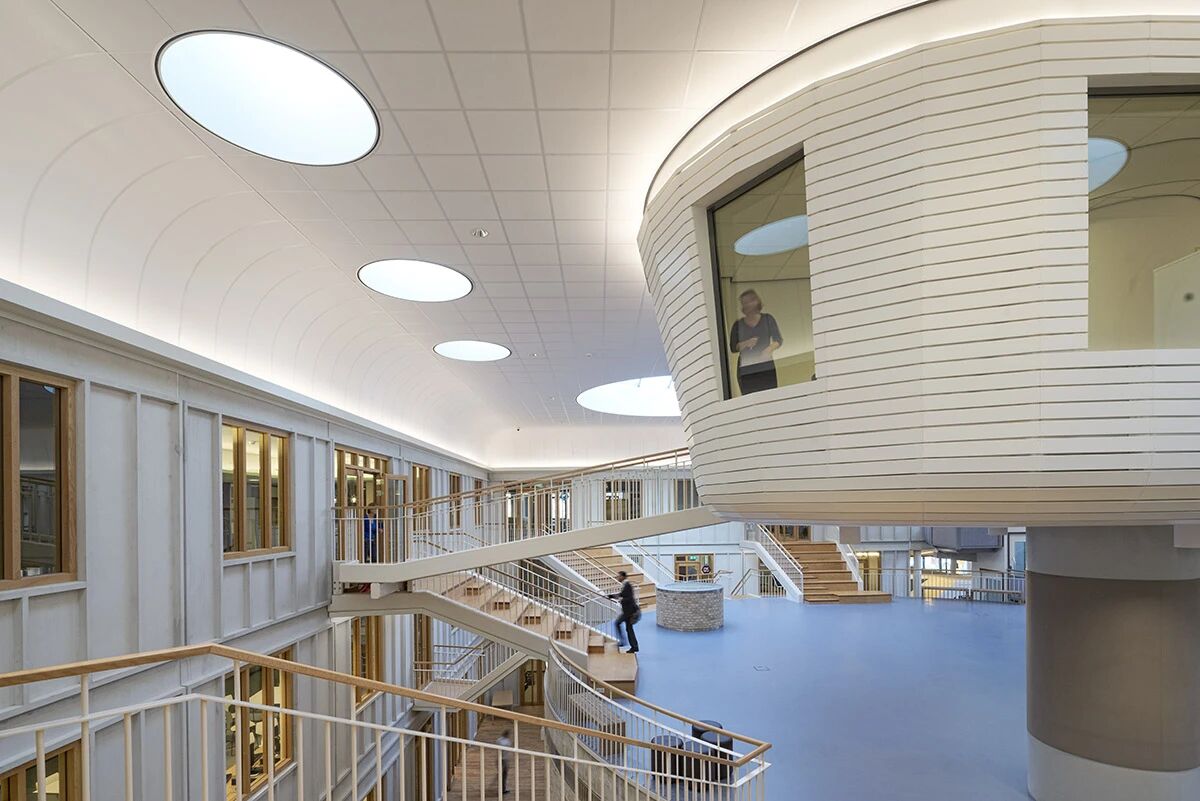

Indoor lighting @Gerard van Beek
The diverse combination of roof lighting and side lighting allows light to flow into the interior from multiple directions. The massive volume of suspended triangular eaves and upright circular studios reflects and divides natural light from large to small areas, creating a symphony of interwoven natural light in the sky.
Johann Schöner Gymnasium
-BAURCONSULT Architekten&Ingenieure –
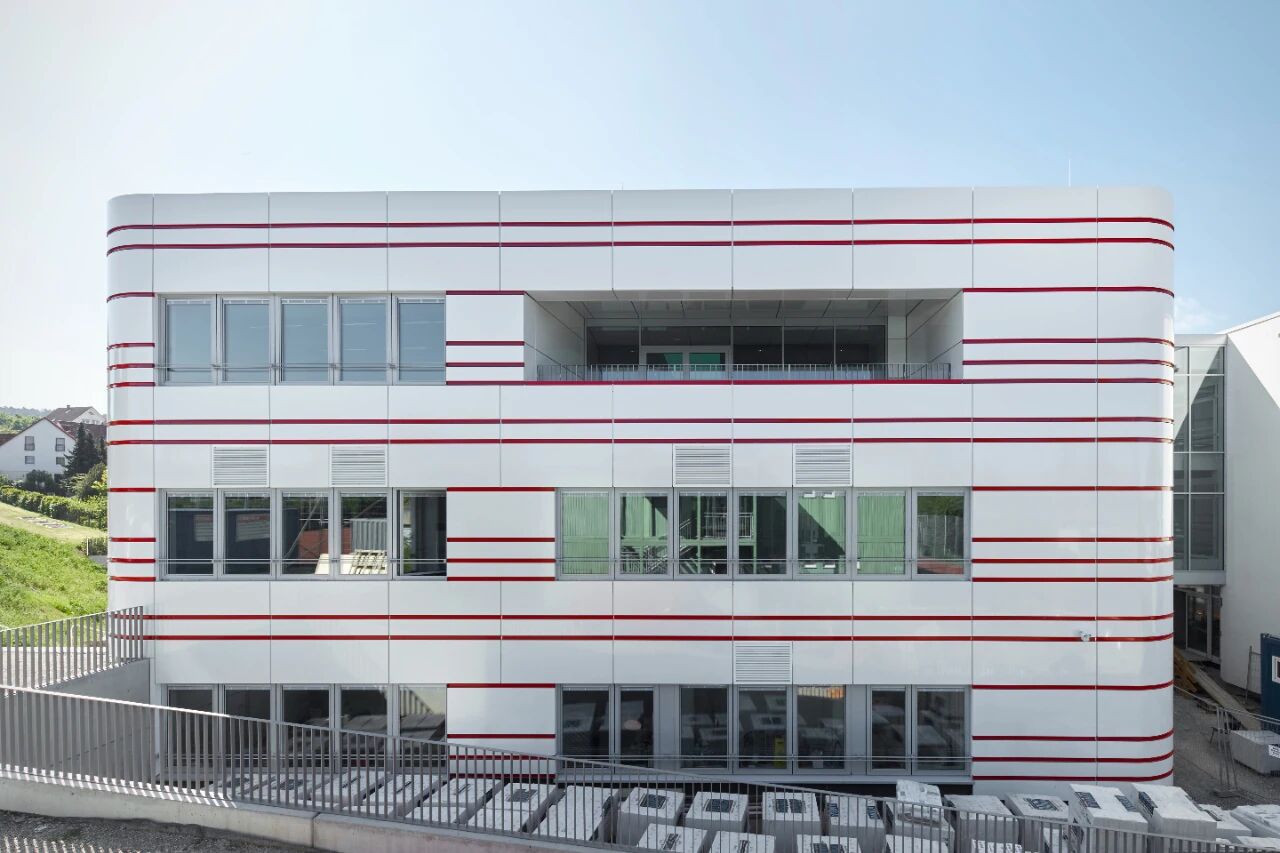

John Shaner College of Arts and Sciences © Gerhard Hagen
John Sch ö ner Gymnasium in Karlstad was founded in the 1970s. Due to the expansion of the class size and the scope of teaching courses at the school, the space and technical facilities of the original campus are no longer sufficient to meet the demand. The school has carried out a comprehensive renovation of the existing school buildings and is simultaneously advancing the expansion project - building a new building that includes a science laboratory and an art classroom.
The design concept of the project is to preserve the ordinary classrooms and administrative office areas in the original school building, and to set up mathematics, information science and technology subject classrooms, and art classrooms in the new building. At the same time, in accordance with the current school building regulations, the original school buildings will be renovated and renovated in multiple construction stages without interrupting normal teaching. The renovation will cover building equipment, fire safety, and teaching facilities.

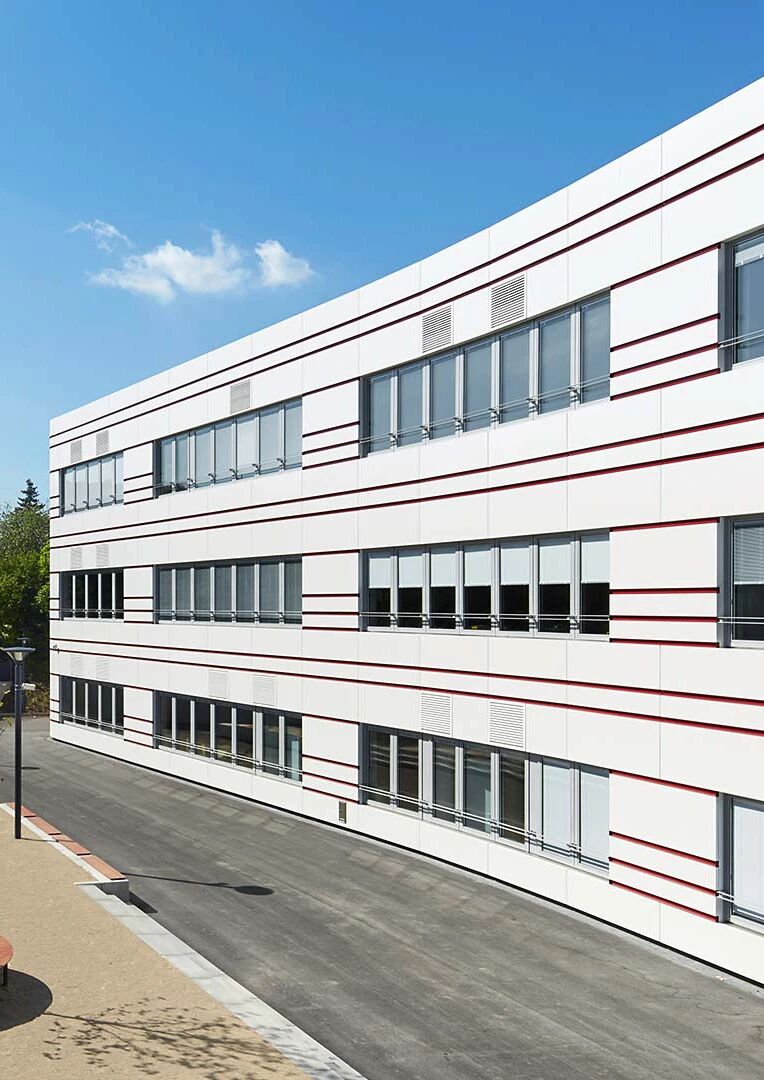
Aluminum composite building facade© Gerhard Hagen
The architect designed the new building as a slender rectangular volume with a slightly curved exterior; Maintain a certain distance between the building and the original school building, while enclosing a new activity area. In order to make the functional attributes of this experimental building clear and distinguishable, the architect used bright white silver aluminum composite material to cover the exterior facade with continuous strips, symbolizing the dynamic vitality unique to scientific research work.
The windows, walls under the windows, and cantilevered roofs at the entrance of the building are all compatible with the circular layout of the strip-shaped facade. The corners of the building are designed with rounded corners, which not only enhances the visual effect brought by the strip-shaped facade, but also optimizes the surface area to volume ratio of the building to reduce energy consumption and achieve high standard energy-saving requirements.
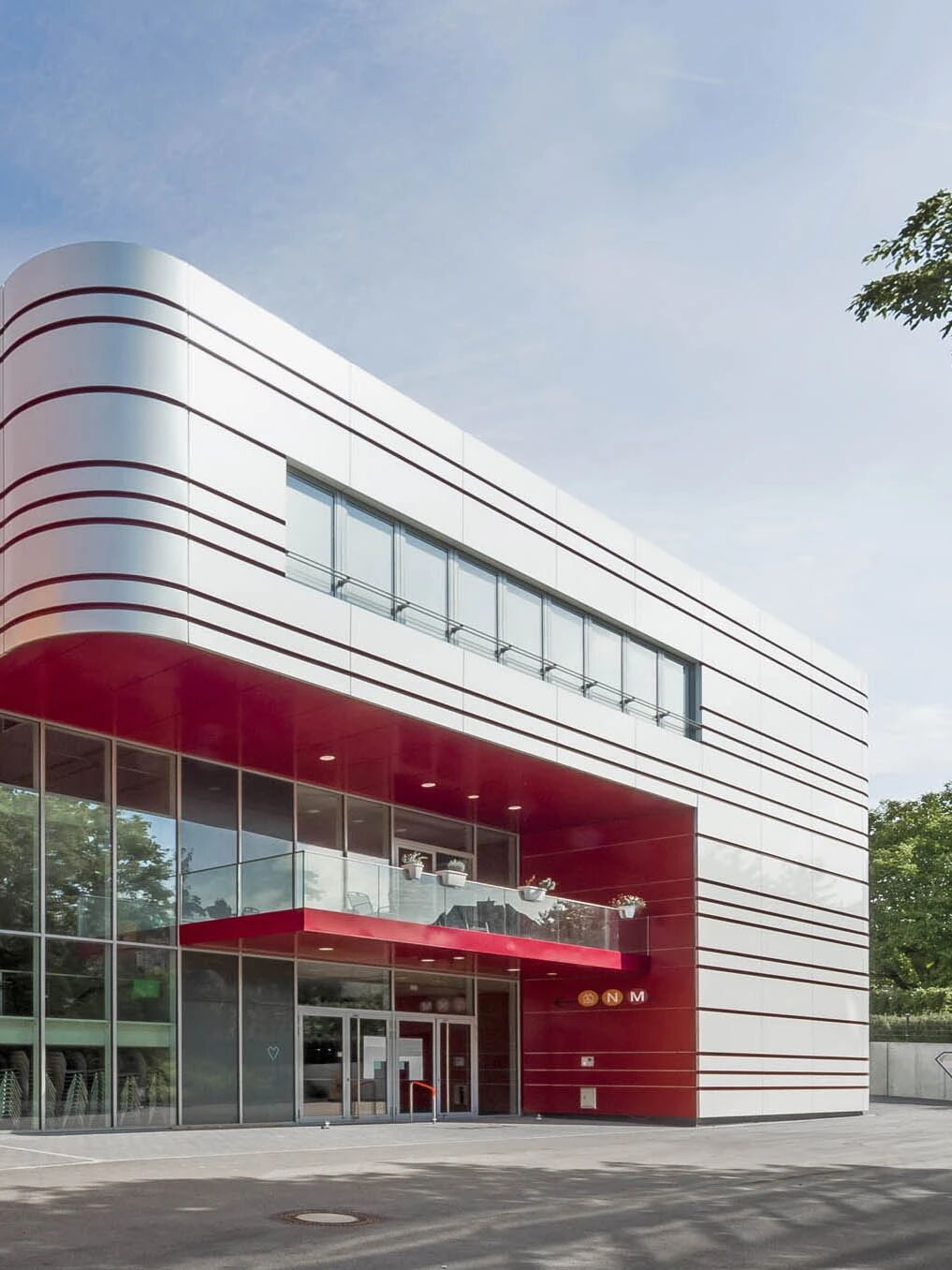

Aluminum composite building facade© Gerhard Hagen
Between the pearl colored panels, slender C-shaped steel profiles run horizontally, connecting the panels as a whole and achieving horizontal segmentation of the building facade. These connecting seams appear as blood red thin lines, ultimately extending to the dark red exterior panels at the entrance of the building.
On the white facade, a striking, cave like blood red entrance connects the interior of the building with the external space. This connection is not only symbolic, but also an actual physical connection.
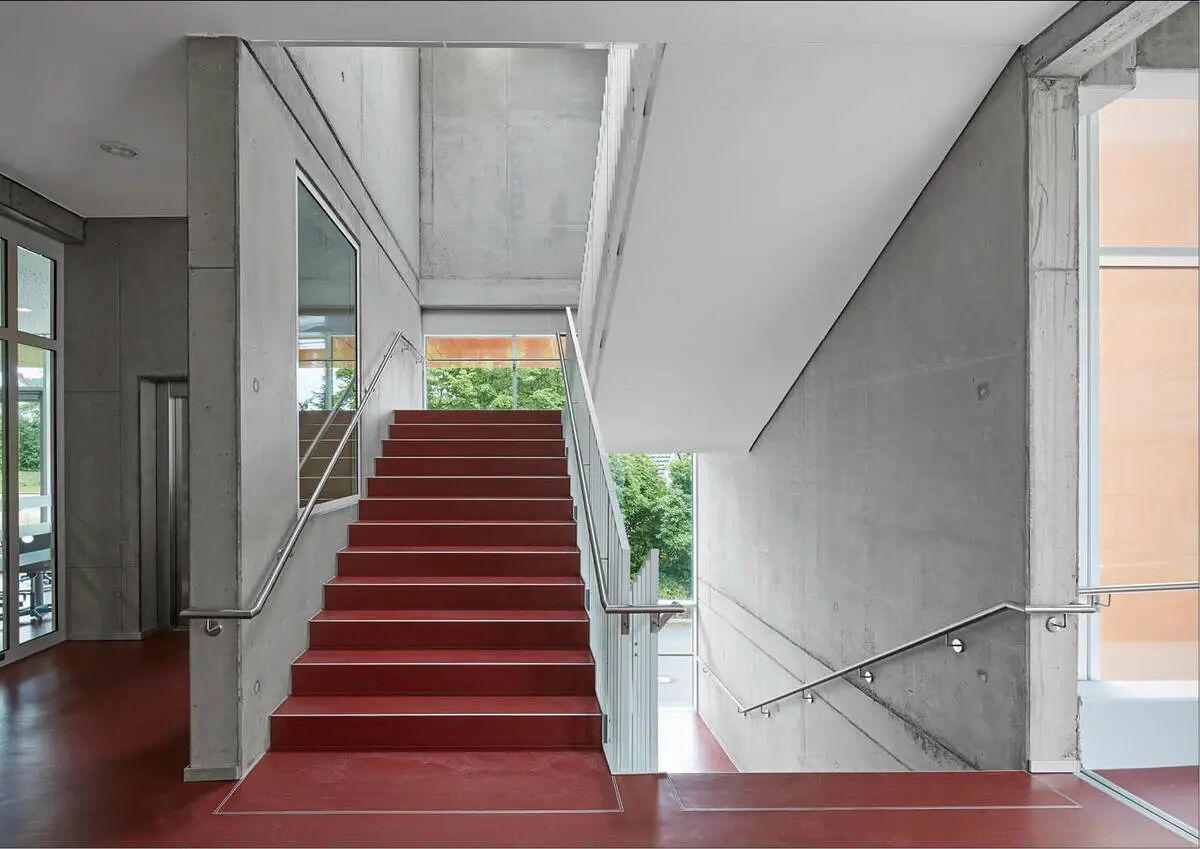

Building entrance and indoor walkway © Gerhard Hagen
The internal courtyard of the campus has also been transformed into an attractive activity space, continuing the color system representing organic matter, inorganic matter, and sterile environment. The ground, partition walls, and doors are in blood red color; The wall is made of stone grey plain concrete; The ceiling and railings are pure white. By combining associative colors with graphic design language, this new building successfully presents complex functional requirements in a concise and clear form.

High quality products, high-quality services and high-quality

Focus on us
HANBERT
Tel: 0757-22682270
Phone: +86-135 314 008 83
E-mail: info@hanbert-tech.com
Address: 1612,4th,building,ZhiyePlaza,Daliang,Foshan,Guangdong P.R.of china
Copyright © 2021-2026 HANBERT All Rights Reserved. 粤ICP备2021118030号  Power by:
 Hanelink.com