

When optimizing the acoustics of indoor spaces, many people often ask if it is necessary to install sound-absorbing materials on all walls. The answer is no. Blindly laying sound-absorbing panels throughout the house is not only a waste of resources, but may also backfire, creating an overly "silent" and uncomfortable acoustic environment. The core of a successful acoustic design scheme lies in targeted processing. By understanding the behavioral patterns of sound in space and cleverly placing sound-absorbing materials at key locations, a clear and balanced auditory experience can be achieved.
© DAMPA
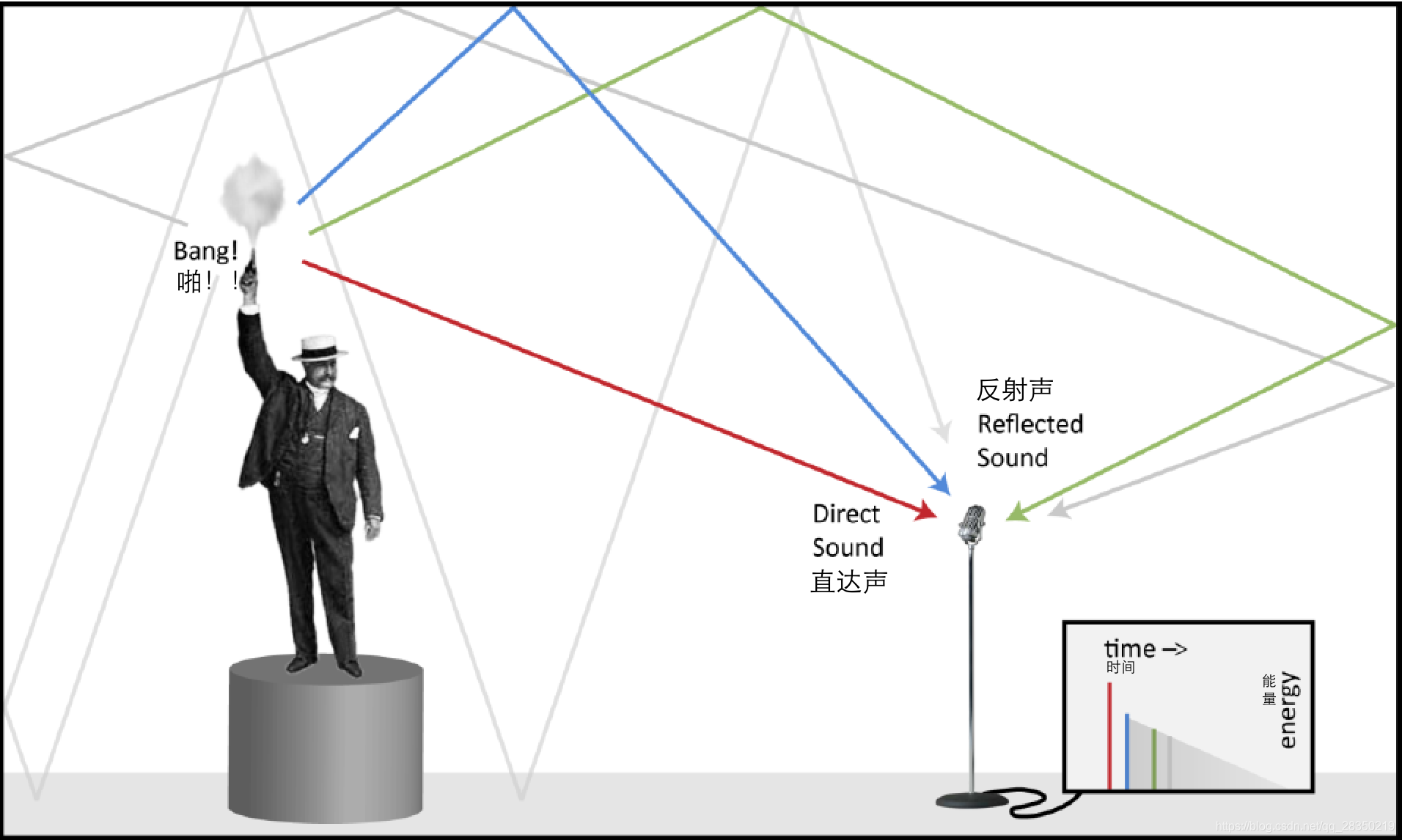
To understand why targeted installation is necessary, it is first necessary to recognize the two main issues in indoor acoustics: echo and reverberation. Echo is caused by a specific strong reflected sound, commonly found between parallel light walls facing each other; Reverberation, on the other hand, is the phenomenon of multiple reflections, mixing, and gradual attenuation of sound in space after it stops. Long reverberation time can make the sound blurry and cluttered, while short reverberation time can make the sound dry and lack vitality. The value of sound-absorbing panels lies in their targeted absorption of harmful reflected sounds, rather than eliminating all sounds.

© Jasper Sanidad
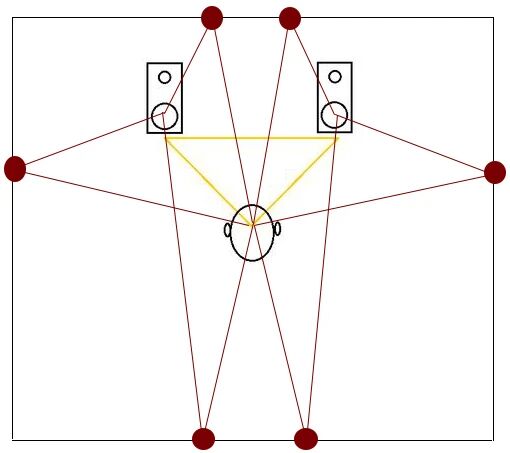
When determining the installation location, there are several "golden points" that deserve special attention. The first reflection point "is the most critical position - it is the point on the wall or ceiling where the sound emitted from the sound source is directly reflected to the listener's position. These points can be accurately found through a simple" mirror method ": sitting in the regular listening position, ask the assistant to hold the mirror and move it along the wall. When the speaker's high pitched unit can be seen from the mirror, the position of the mirror is the first reflection point. Installing sound-absorbing panels here can significantly improve sound clarity and stereo imaging.
©gcaudio
The ceiling, as the largest single reflective surface, requires special attention. The corners where the ceiling meets the wall are prone to standing waves, and installing sound-absorbing ceilings or floating sound-absorbing panels here can significantly reduce the overall reverberation effect. The back wall (the wall behind the listening position) cannot be ignored, as it can absorb the secondary sound waves reflected back from the front, enhancing the spatial and layered sense of sound. In addition, the corners of the room are a high-risk area for low-frequency standing waves, but it should be noted that ordinary thin sound-absorbing panels have limited low-frequency effects. Therefore, thicker and denser specialized low-frequency traps should be considered for this area.

©DAMPA
There is no unified standard for installation ratio, which depends on the room's purpose, original condition, and personal preferences. Home theaters or audiovisual rooms usually do not need to cover more than 40% of the wall and ceiling area, while professional recording studios require more adequate sound absorption and diffusion treatment. The goal of improving speech clarity in offices and conference rooms is often achieved by covering the walls near the ceiling and seating height by 20% -30%. The key is to adopt a distributed implementation strategy: first deal with the most critical first reflection point, then evaluate the effect, and gradually process the back wall and corners as needed to avoid excessive sound absorption at once.
Ultimately, a successful acoustic optimization solution requires a comprehensive consideration of spatial functionality, existing furniture (carpets, curtains, and soft furnishings already have sound-absorbing properties), and personal auditory preferences. Only by combining scientific positioning with gradual implementation can we find the best balance between investment and effectiveness, and create a comfortable and professional acoustic environment.
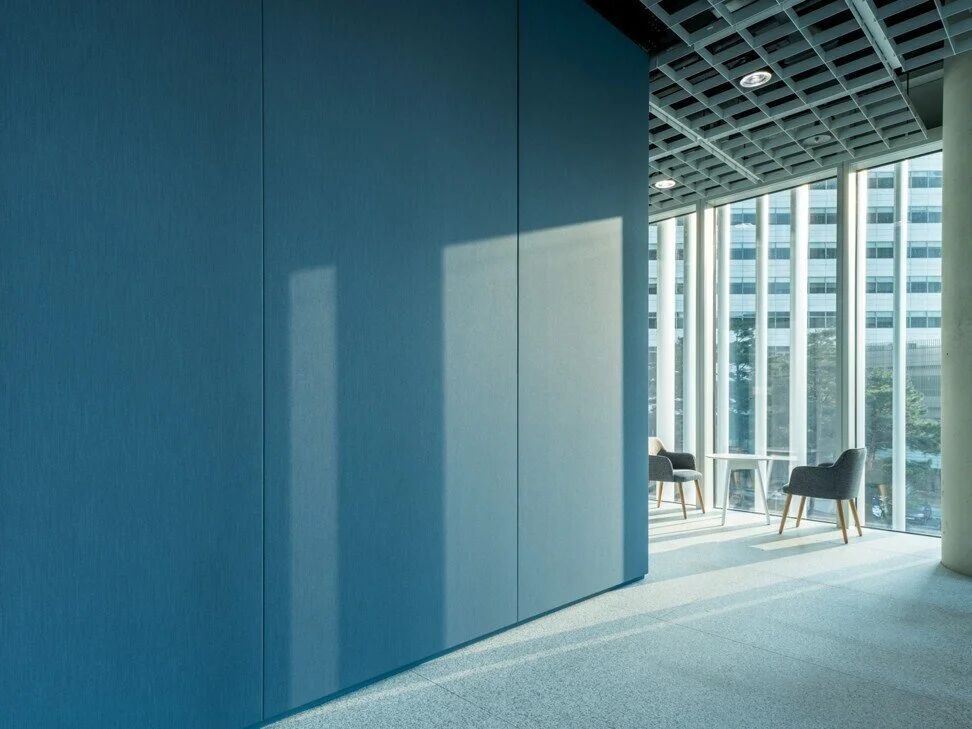
©Raphael Olivier
How to use metal in acoustic solutions
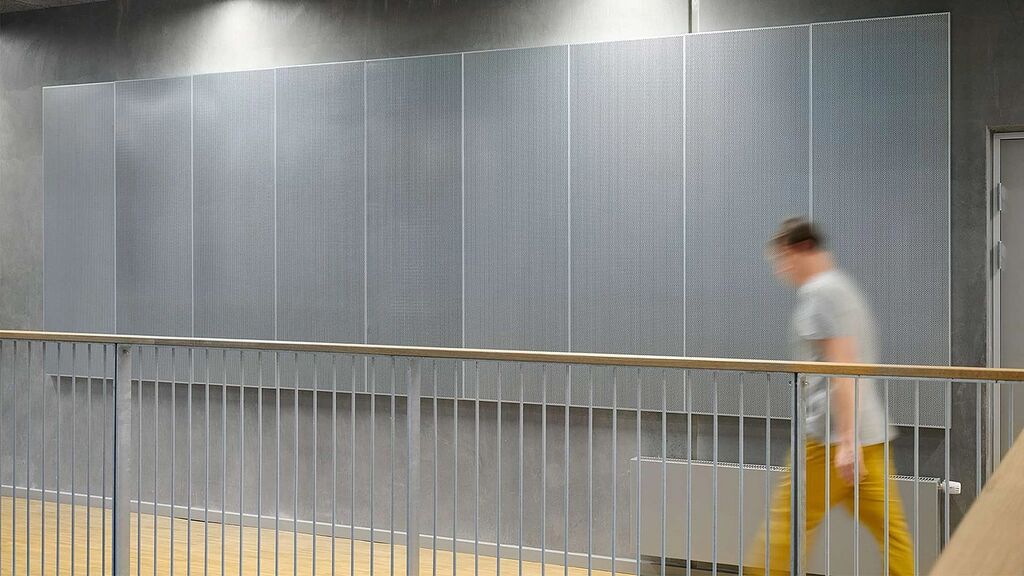
Despite the high reflectivity of metal surfaces, which can lead to prolonged reverberation time and acoustic discomfort, DAMPA has successfully transformed metal into the core material for efficient acoustic solutions through innovative perforation technology. At the same time, it integrates ventilation and temperature control functions to achieve multifunctional integration of the top surface system.
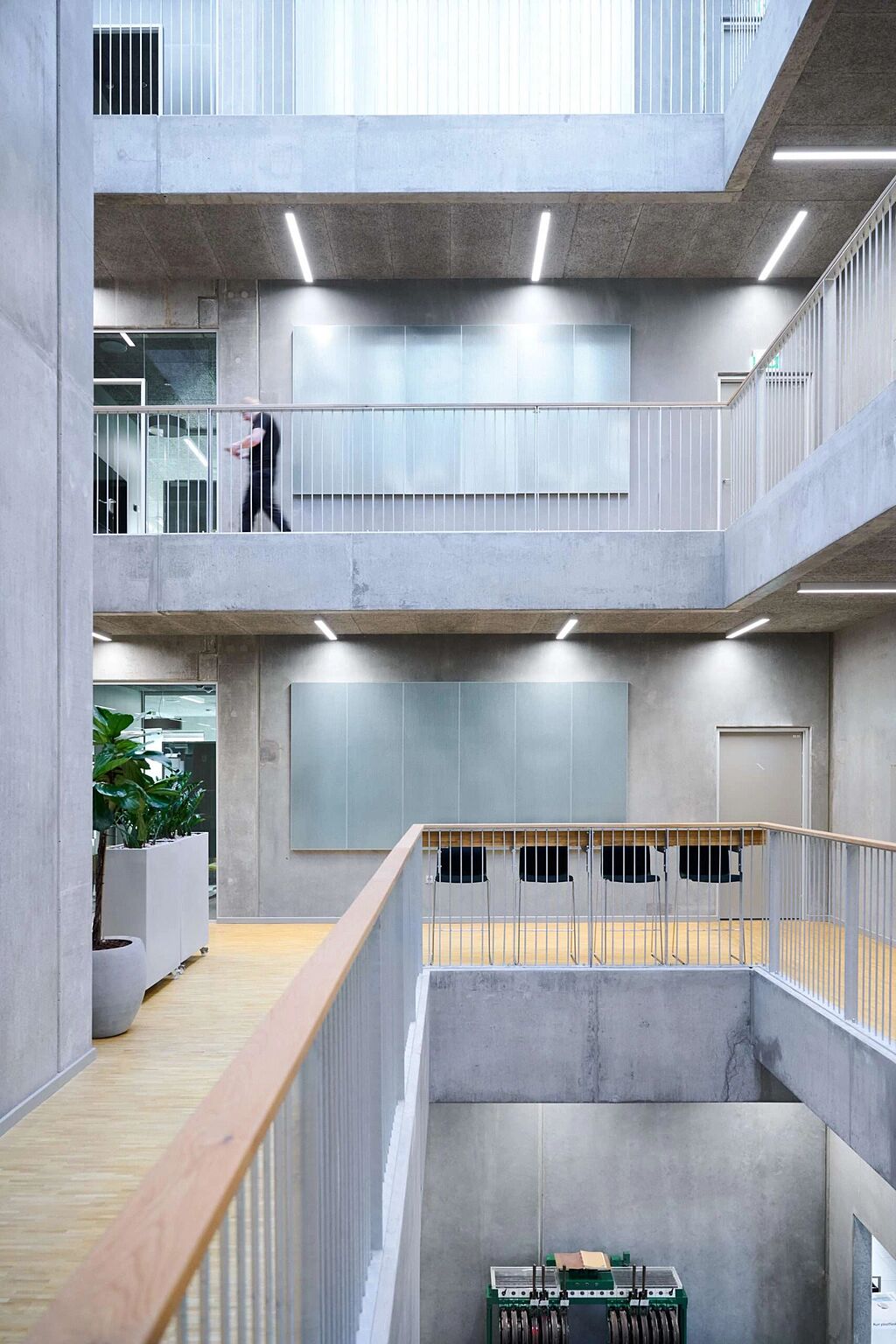
©DAMPA
The key to DAMPA's acoustic performance lies in its patented perforation process, which can simultaneously activate three mechanisms: porous sound absorption, membrane sound absorption, and resonant sound absorption. Porous sound absorption relies on the sound-absorbing felt material attached behind the panel, which converts sound energy into heat energy through fiber vibration, especially suitable for absorbing high-frequency noise; membrane sound absorption forms a closed cavity between the metal panel and the building foundation structure, neutralizing low-frequency sound waves through the action of air springs; resonant sound absorption achieves sound attenuation through the vibration of air columns inside the hole and the damping effect of the backing material, also optimized for low frequencies.
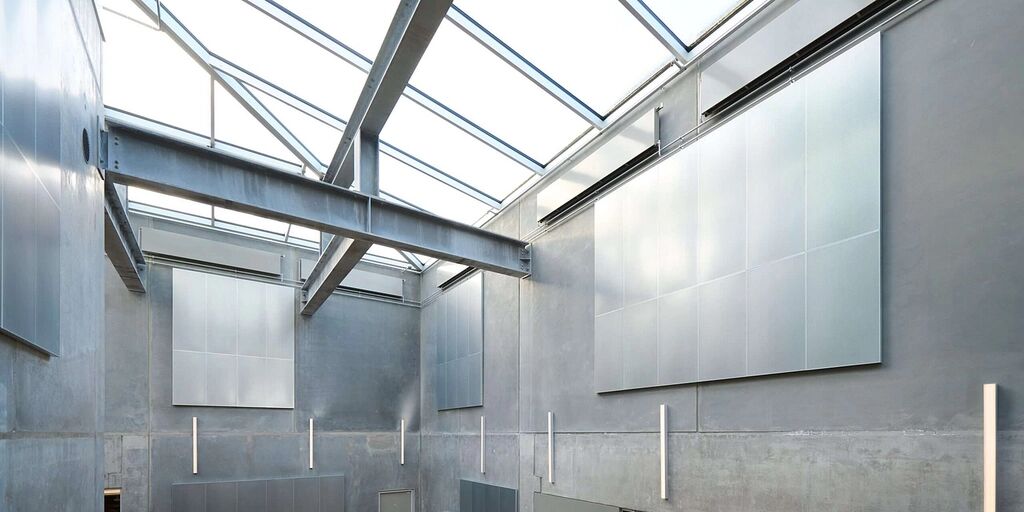
©DAMPA
The combination of these three mechanisms enables DAMPA to customize acoustic performance based on spatial use, such as controlling human noise in commercial spaces, while balancing speech clarity and noise control in educational or medical spaces.

©DAMPA
In terms of materials, metal not only has high mechanical strength and durability, suitable for long-term use in densely populated areas, but also has excellent hygiene performance - the surface is easy to clean and disinfect, which can meet the hygiene requirements of hospitals, schools, and catering venues. Meanwhile, metal supports diverse surface treatments such as color coating or digital printing, providing designers with ample freedom. From a sustainable perspective, although the energy consumption of primary metal smelting is high, the metal can be 100% recycled and reused. DAMPA promotes material closed-loop and reduces environmental footprint through strict source waste classification.
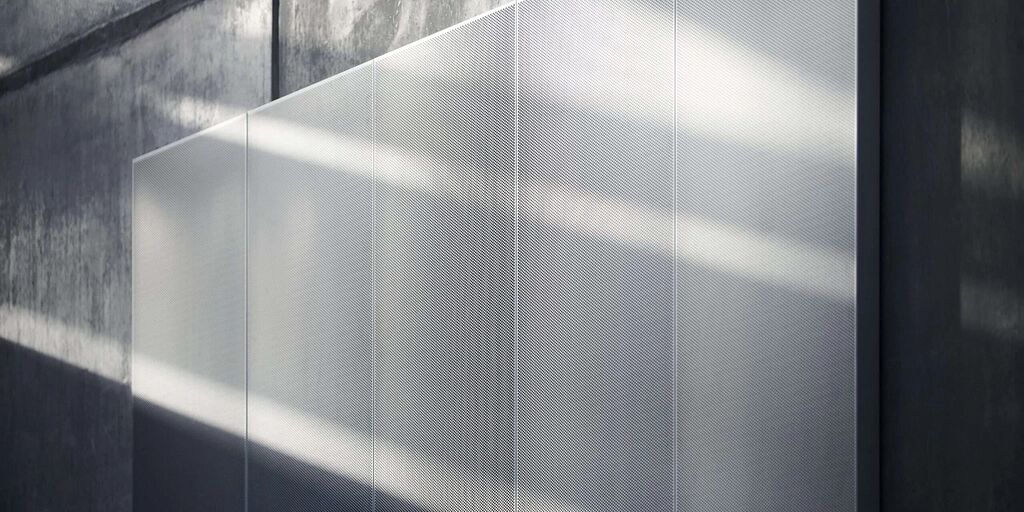
©DAMPA
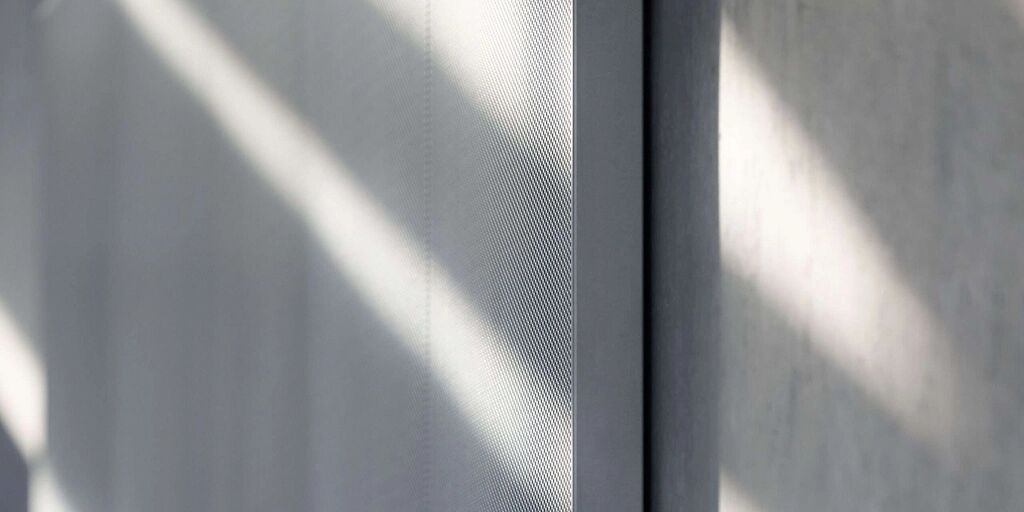
Perforation design is the core influencing factor of acoustic performance. DAMPA offers over 30 perforation options, including different aperture sizes, hole shapes, and arrangement patterns, but their selection requires comprehensive consideration of product type (such as the difference in perforation area between cassette sheets and lamenas strips), material mechanical properties, and target acoustic effects. It should be emphasized that the larger the perforation, the better the sound absorption effect: apertures larger than 10 meters will weaken resonance and membrane sound absorption mechanisms, and the acoustic function will degrade into "acoustic conversion" with only decorative value. DAMPA usually recommends controlling the aperture within 10 room meters to maintain a balance between acoustic efficiency and structural strength.
©DAMPA
In addition to acoustic advantages, perforated structures can also work in conjunction with diffuse ventilation and radiation temperature control systems. When creating a positive pressure environment above the ceiling, holes help to evenly spread air, avoid direct airflow, and improve indoor comfort. Combined with the DAMPA climate ceiling system, the high thermal conductivity of metals can accelerate thermal response and achieve efficient temperature regulation. This integrated design enables a single roof system to simultaneously address acoustic, ventilation, and temperature control requirements, balancing aesthetics and functionality, making it suitable for various building types such as office, medical, and education.

©DAMPA

High quality products, high-quality services and high-quality

Focus on us
HANBERT
Tel: 0757-22682270
Phone: +86-135 314 008 83
E-mail: info@hanbert-tech.com
Address: 1612,4th,building,ZhiyePlaza,Daliang,Foshan,Guangdong P.R.of china
Copyright © 2021-2026 HANBERT All Rights Reserved. 粤ICP备2021118030号  Power by:
 Hanelink.com