Minimalism originated from Western modernism in the early 20th century, and the famous quote "Less is more" by European modernist architect Ludwig Mies van der Rohe is considered to represent the core idea of minimalism.
Mr. Qi Baishi once said, "Artistic creation should be simple rather than complicated, and should be hidden rather than exposed." The minimalist design style, with its unique expressive techniques and rich connotations, interprets a new design concept for people. In architectural design, minimalist style is increasingly favored by people and has become a popular element in the design industry.
·Freiburg Mass Bank Park·
-Hadi Teherani Architects –
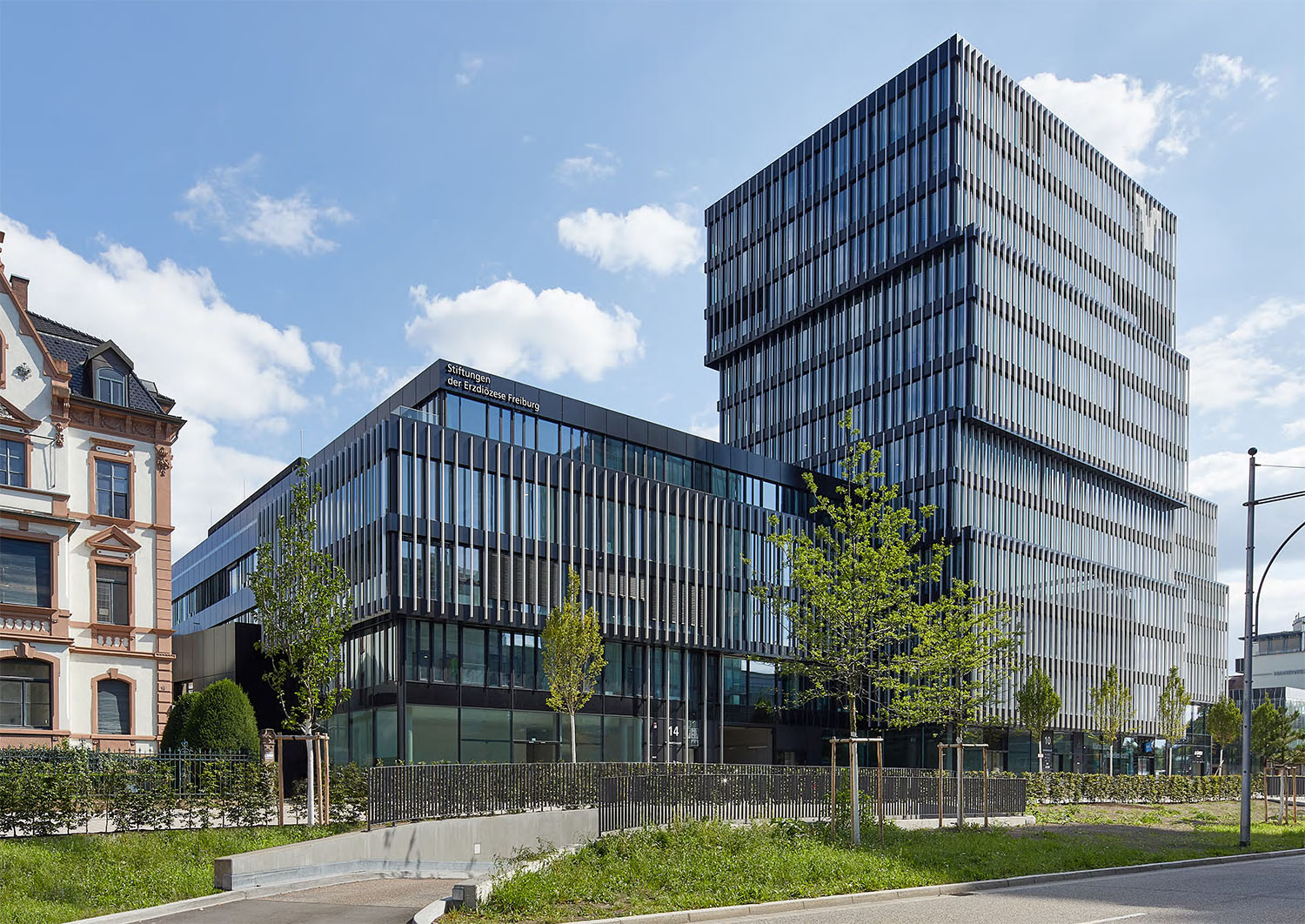
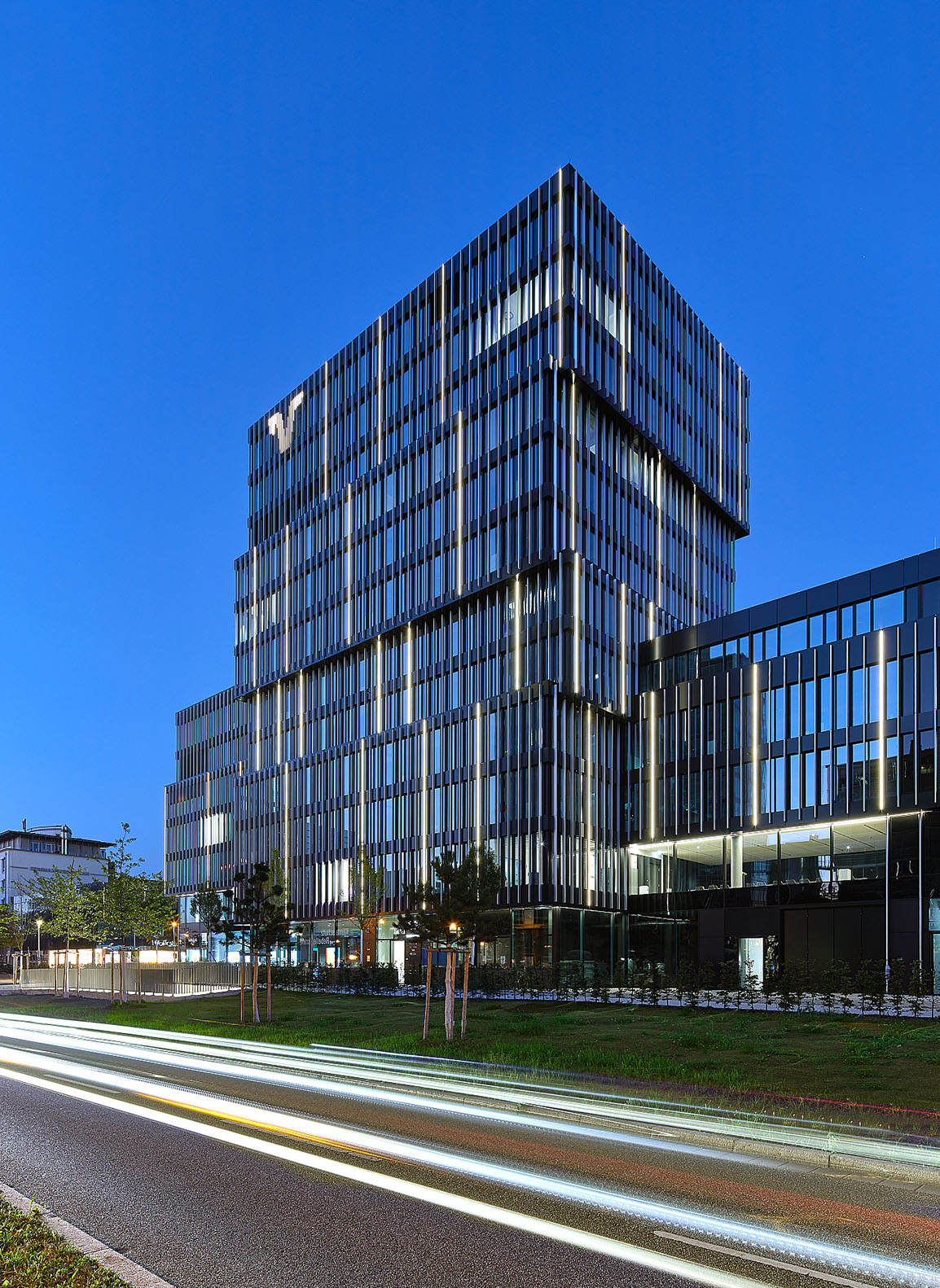
Volksbank Areal ©Jochen Stuber
The main reputation of Freiburg in the Bryschgau area comes from its idyllic old town center, innovative eco-friendly residential projects, and nearby Black Forest. However, Freiburg can also boast of its cutting-edge urban characteristics, as evidenced by the independent high-rise buildings in the surrounding area of the train station.
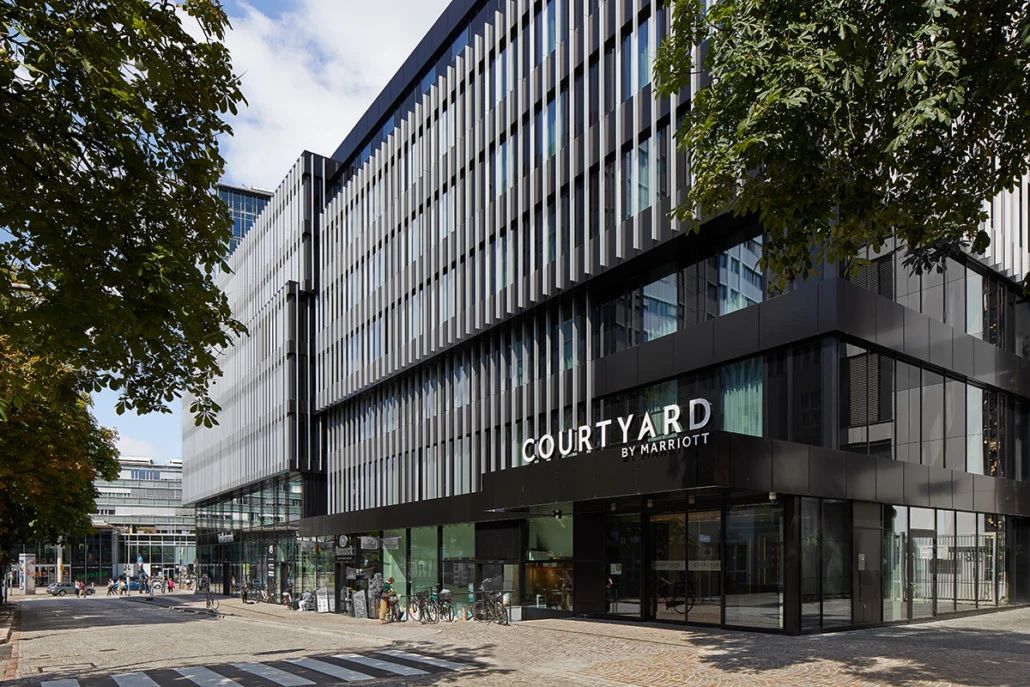
This group of buildings in Freiburg combines multiple functions: it is the location of Volksbank's office and customer service area, a liberal arts high school branch, an entire hotel, a supermarket, and a food court. The design proposal submitted by Hadi Teherani Architecture Firm won the competition.
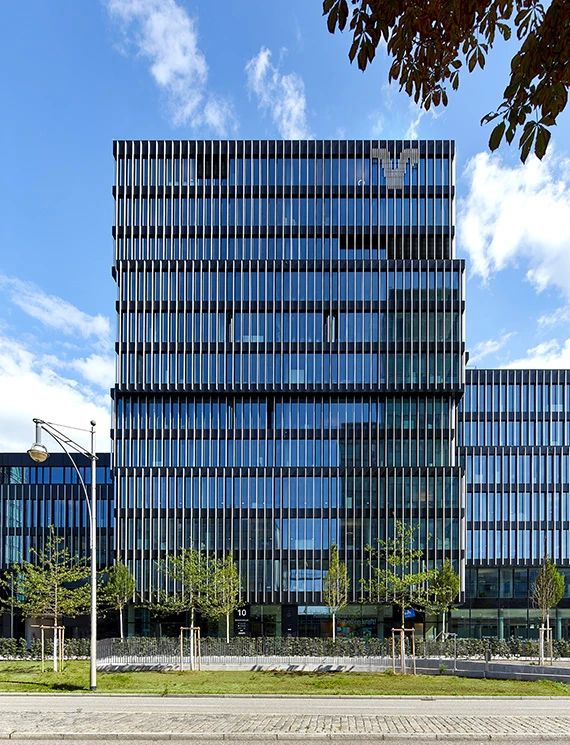
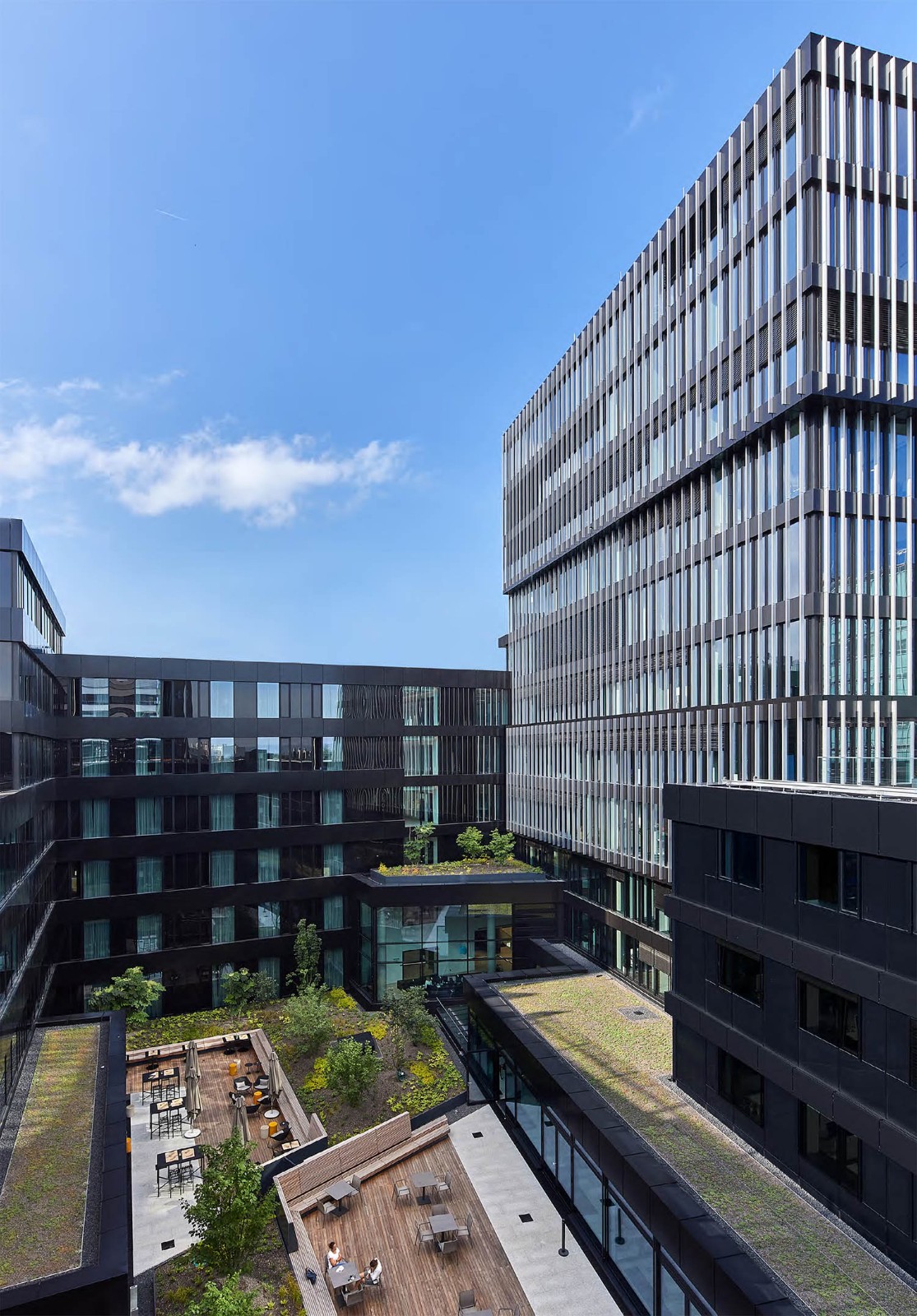
Volksbank Areal © Jochen Stiber
From the design drawings, due to significant differences in usage, this project appears to be an almost impossible task to complete. This plot of land covers an area of approximately 9000 square meters and is prominently located. You may think this is a very large site, but in reality, considering all the different places distributed on it, this piece of land is not really big at all.
On the one hand, architects have proposed appropriate sizes and forms for the diverse and somewhat scattered architectural styles in the surrounding area; On the other hand, their project conveys a modern, urban, and confident image. In addition, they have successfully achieved functional diversity internally, while integrating various parts of the building into a cohesive entity.
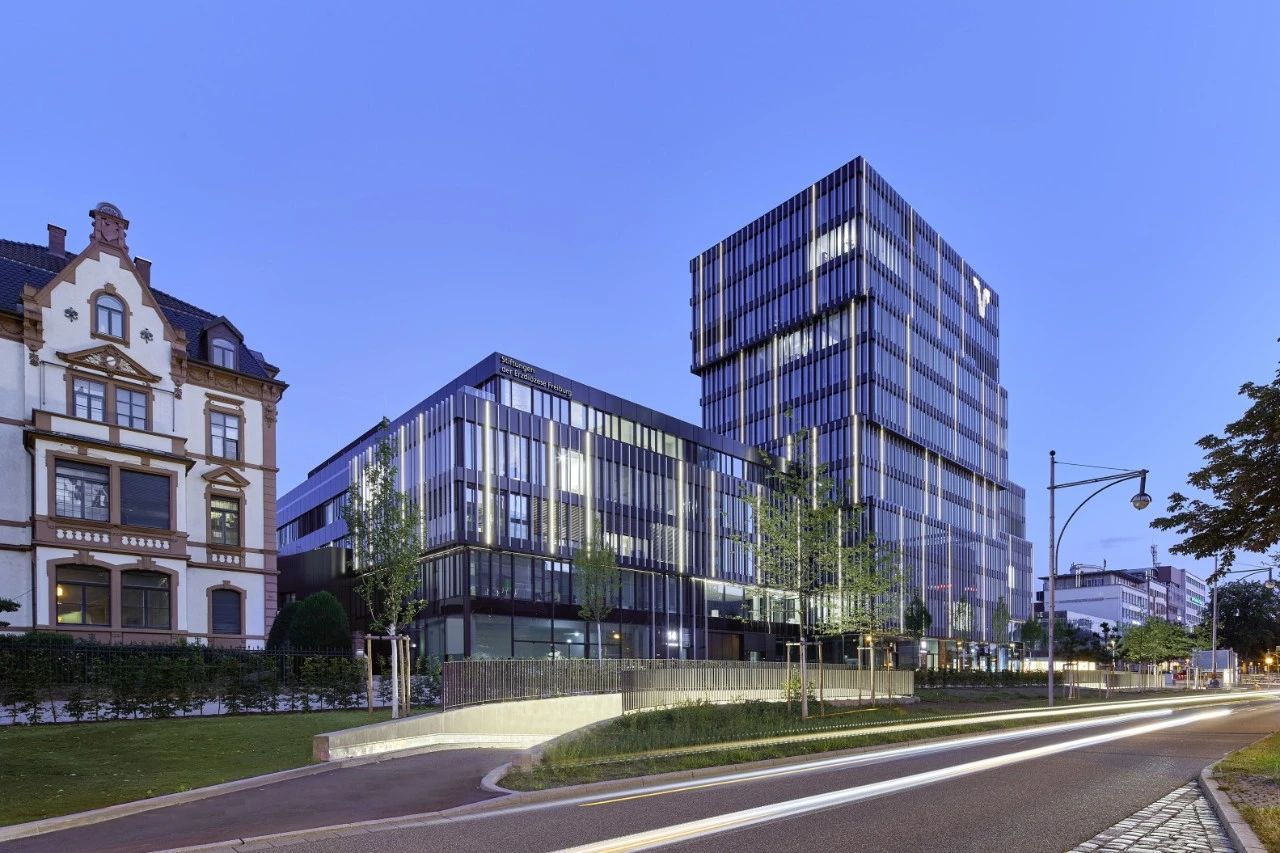
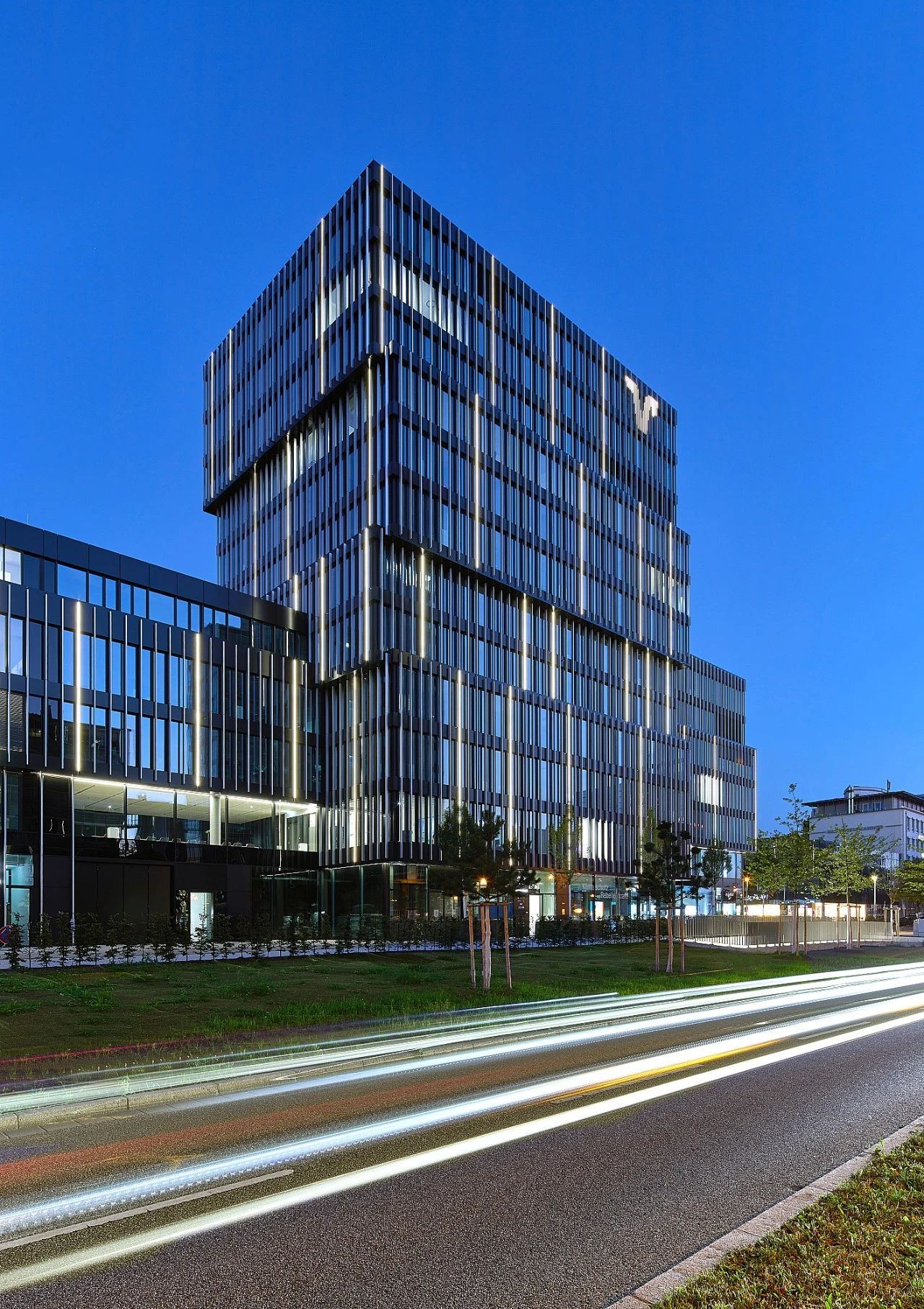
Volksbank Areal ©Jochen Stuber
They bundle various areas by stacking and connecting wings and floors. Placing these 'bundles' side by side or up and down, some moving forward and some moving backward, the final result perfectly illustrates how to unify different components in one place. By stacking floors into bundles and changing the height of different areas, architects were able to integrate the building into the surrounding architectural environment.
Finally, they covered the entire building complex with a unified facade. The dark toned strip shaped facade is made of glass and aluminum composite panels with a simulated anodized appearance and special colors. This effect is reminiscent of the classic international modernist style, like the American skyscraper designed by Mies van der Rohe, which is unrelated to any traditional South German style.

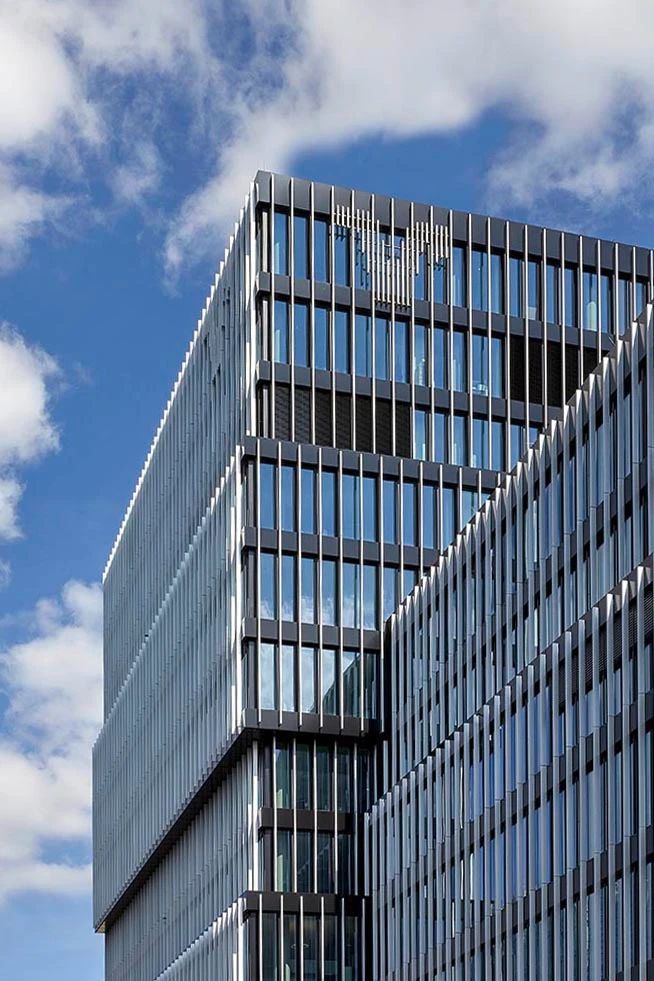
Volksbank Areal © Jochen Stiber
However, the architect believes that there are undeniable local elements embedded in it, as like the fir trees in the Black Forest, the light colored aluminum composite strips extend upwards into the sky against the background of the dark facade.
The interior walls and ceiling elements of this classic and modern building are made of wooden slats, echoing the tall and slender fir trunks. One thing is certain: thanks to the visible vertical and horizontal straight lines both inside and outside, the entire building complex is considered complete and successful in terms of functionality, design, and urban planning.
·Sqveras Business Office Park·
-Architectural BGN Partners-
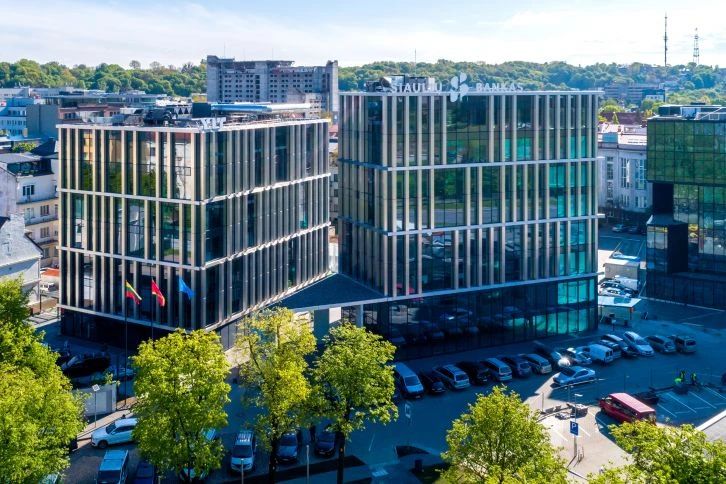
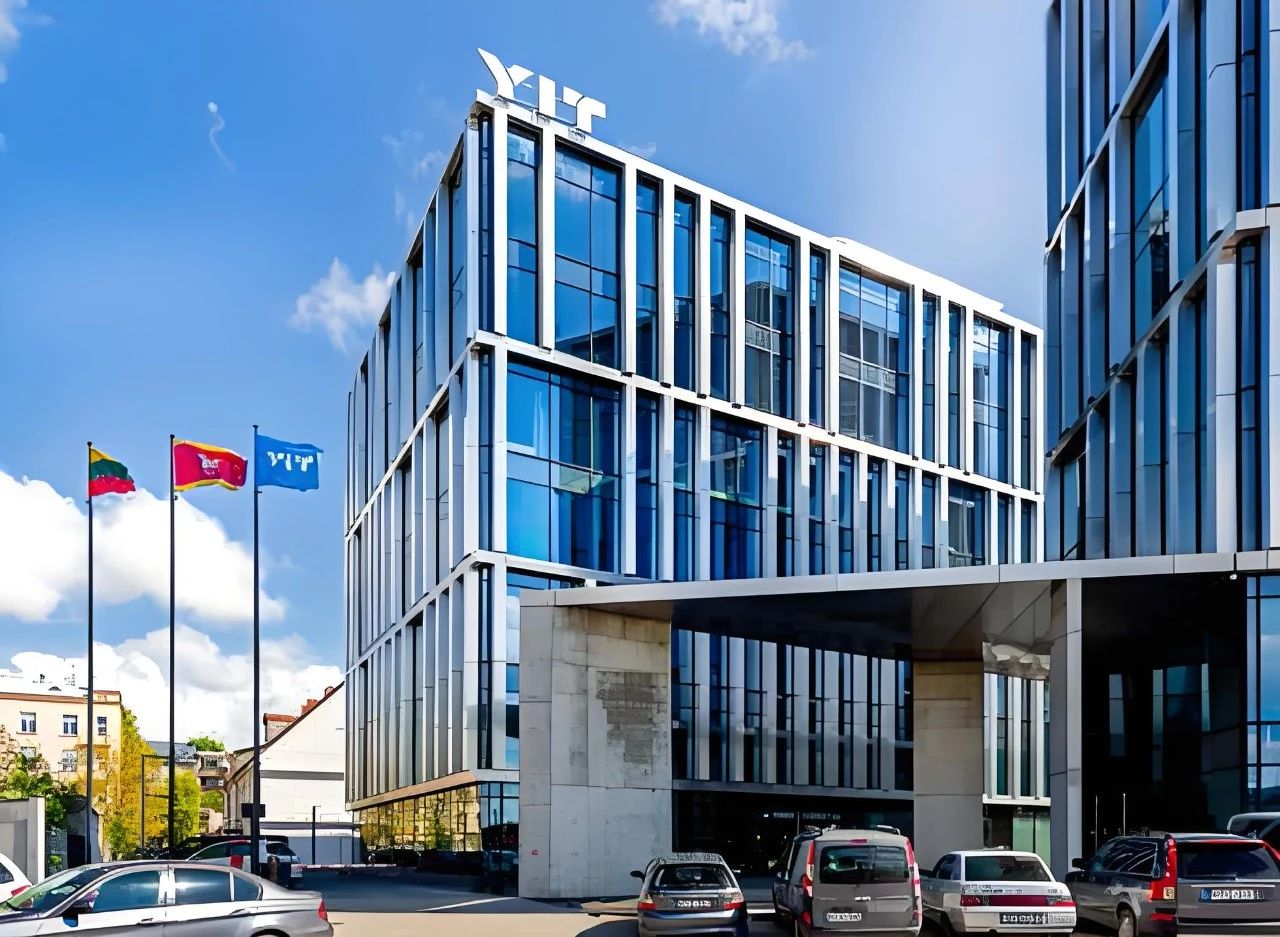
Sqveras Office © Evaldas Lasys
The architectural structure of Kaunas, Lithuania is diverse and complex, with representative works of cutting-edge technology, as well as noteworthy historical buildings and ordinary examples. All the current contradictory features of the Baltic states are showcased in Kaunas, and finding the appropriate architectural balance here is a daunting task. Architects must have faced this dilemma when dealing with this prominent brownfield.
The plot has two strategic directions: one side faces the river, and the other side overlooks a pedestrian bridge - which extends from the historic city center to a popular leisure area on a lush island in the river. The two sides of the plot belong to the urban area and are surrounded by a chaotic group of buildings. The architect chose to use the "replication" technique to ensure good recognition.
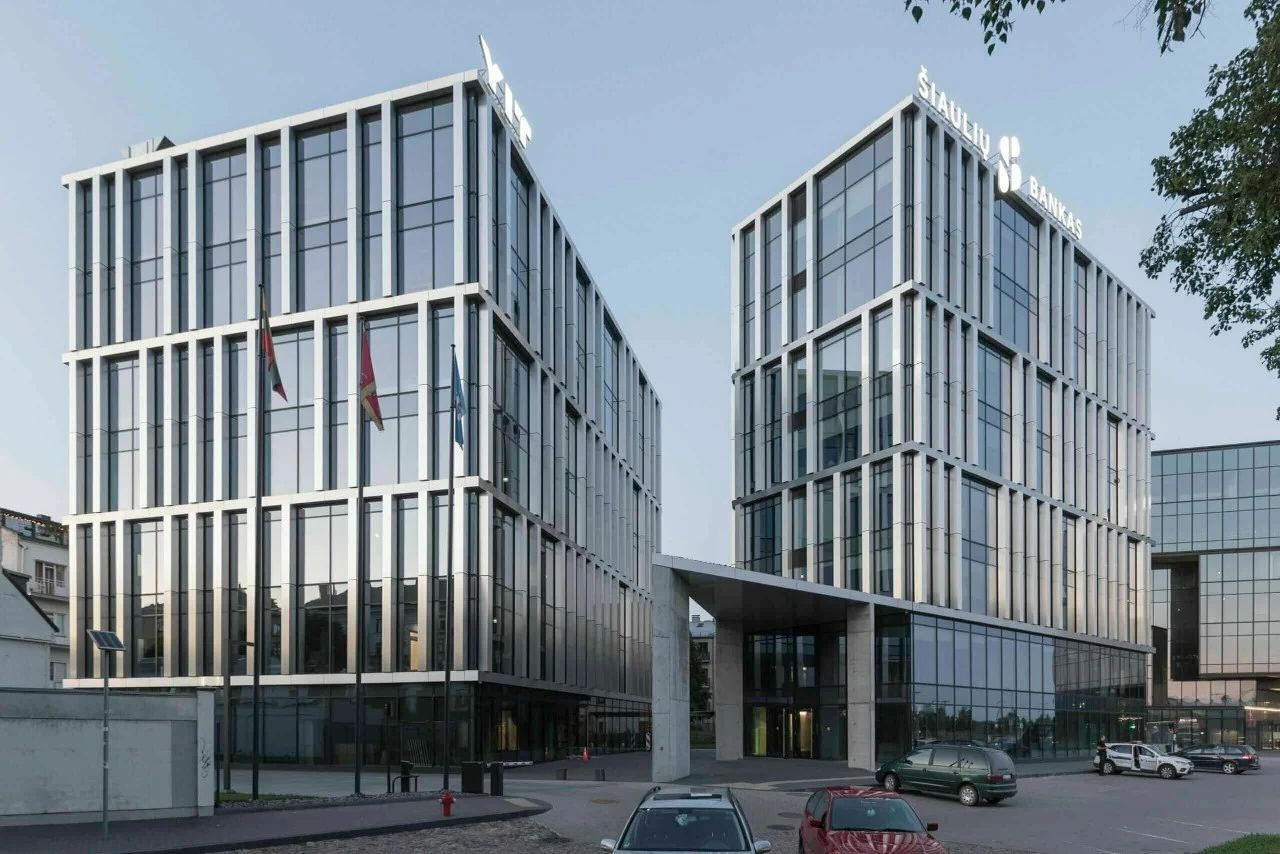
Sqveras Office © L.MYKOLAI
They planned two buildings, one seven story and one eight story, arranged slightly in a pivot shape, forming a facade parallel to the river on one side and extending along a road parallel to the river on the other side. Two buildings with different orientations are connected by a central square and bounded by a canopy.
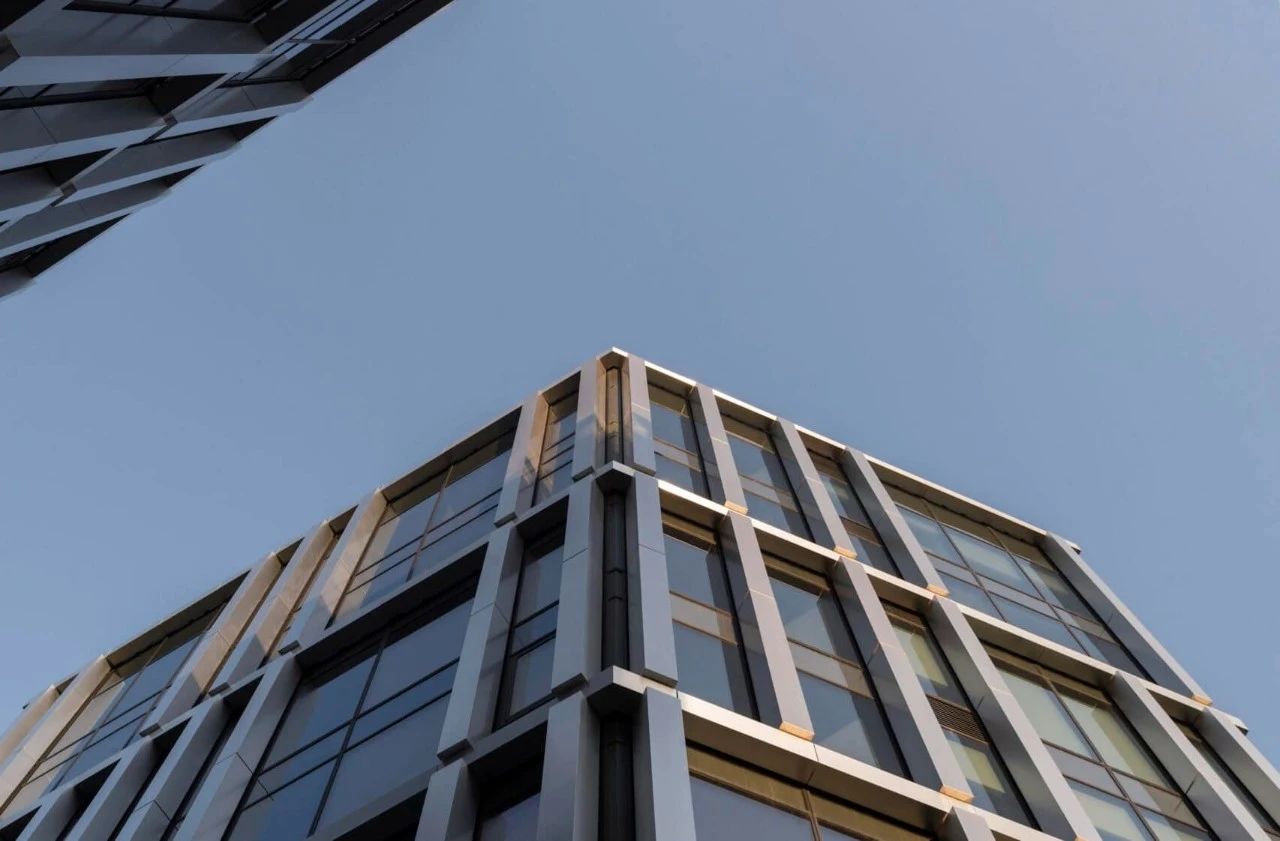
Due to the short winter sunshine hours in Lithuania, the architect covered both buildings with standard glass walls. In front of the glass wall, they set up pilasters covered with aluminum composite panels that mimic natural brushed stainless steel to construct the facade structure.
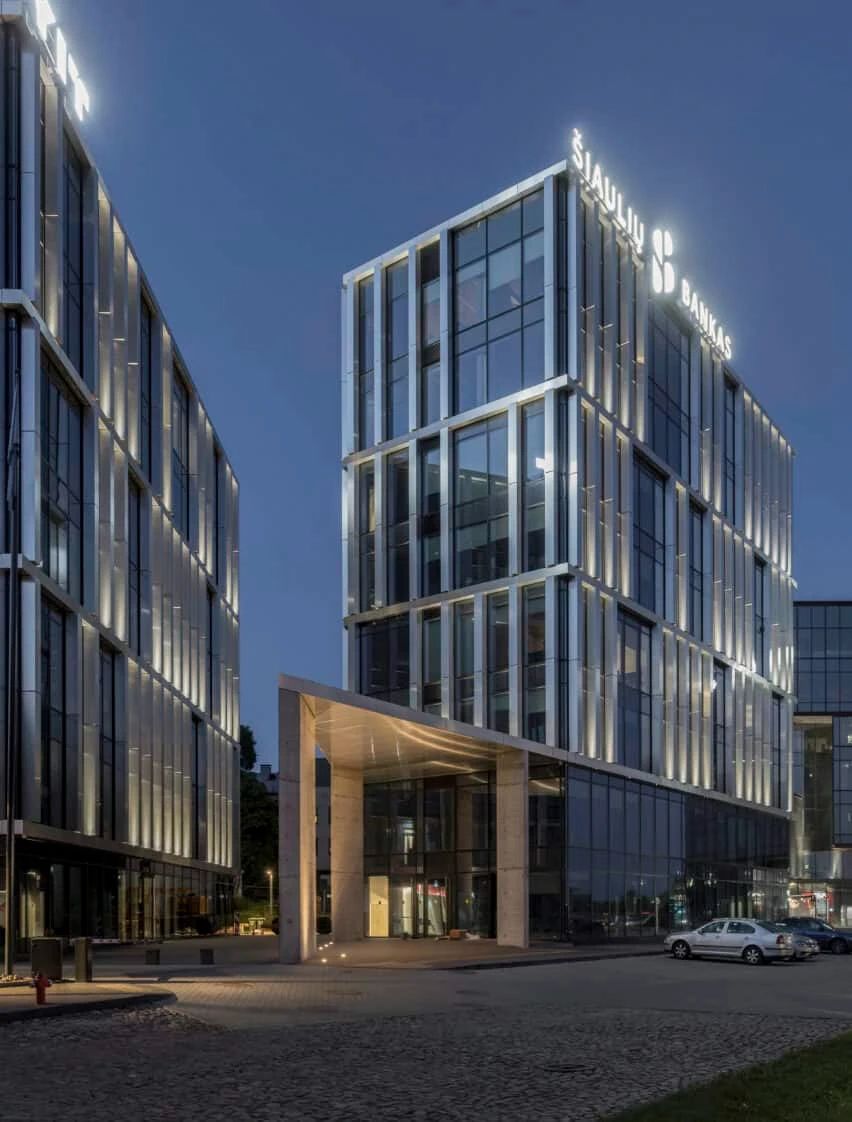

Sqveras Office © Evaldas Lasys/L.MYKOLAI
These pilasters combine the floors together in a "giant column style": they span two floors and merge them into one unit. In this way, these buildings do not seem too high on the skyline, but rather present a classic proportion of cubic stock balance. By doubling the building volume and adding rows of brushed matte pilasters, a low-key sense of tranquility is created in the urban landscape.
The color reflected by the aluminum material blends the architectural complex into the surrounding environment, while also giving it high recognition. The building serves as a harmony between the overall appearance of adjacent modern glass buildings and the historical plaster fa ç ade of the old city area.
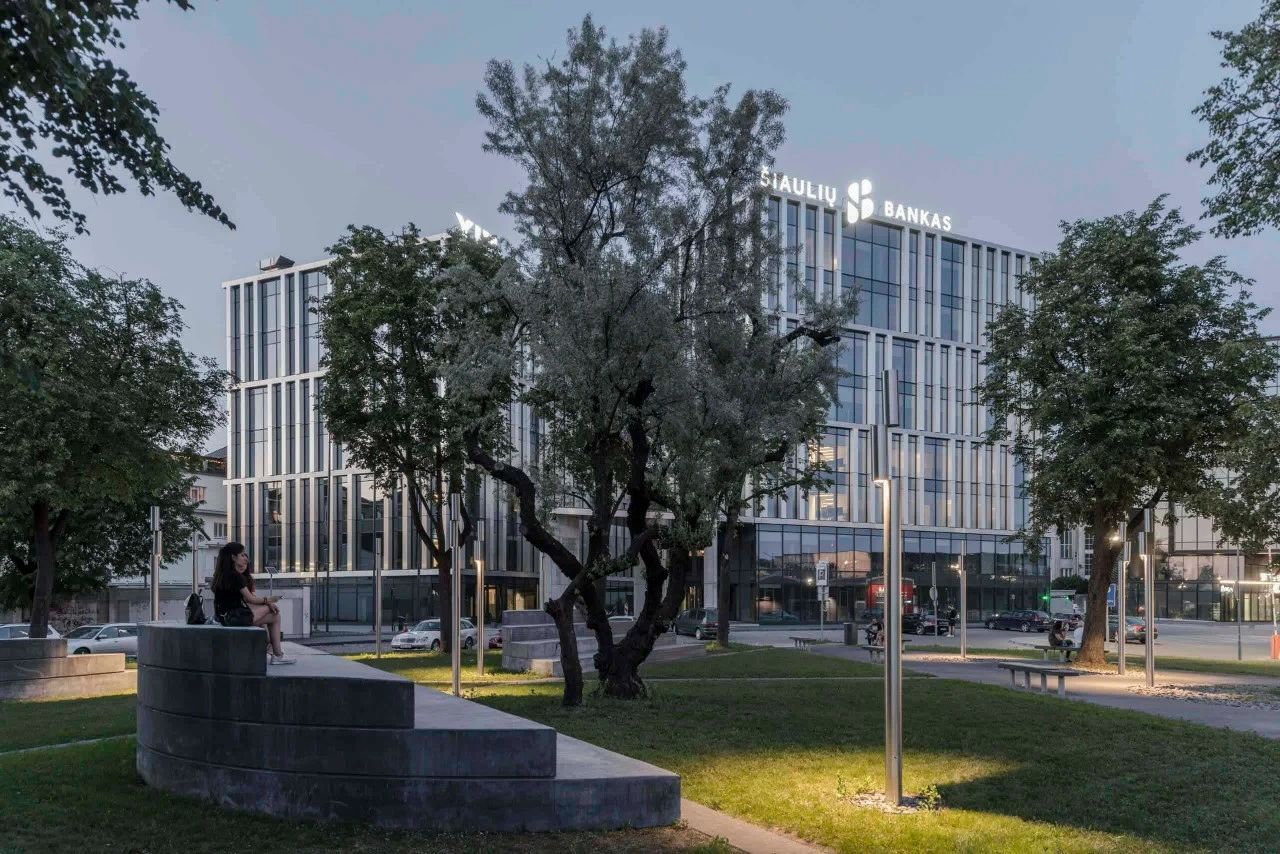
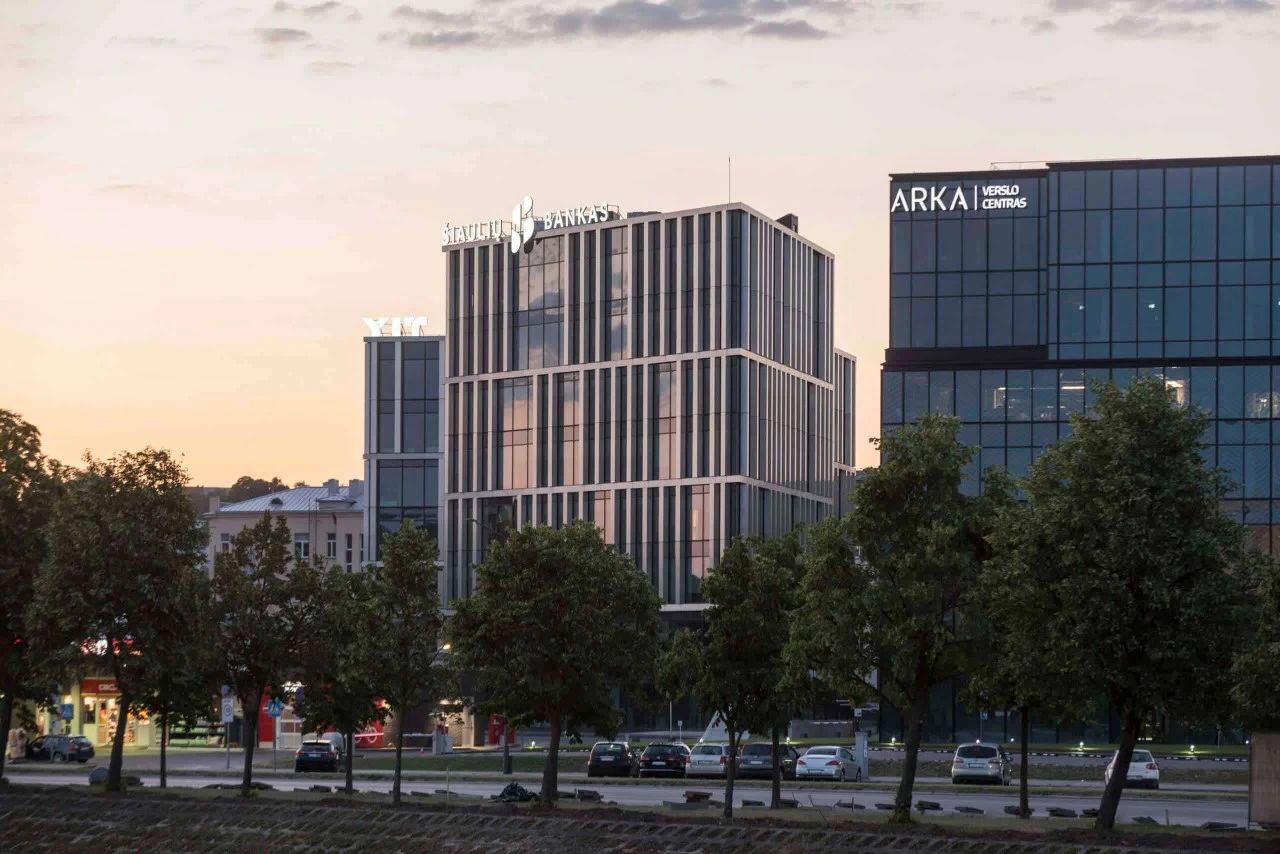
Sqveras Office © L.MYKOLAI
The architect also created a functional connection: the floor plan layout not only designed rental units of varying sizes, but also set up retail and dining spaces on the ground floor. Tranquil and flexible, this seems to be the perfect balance here. Because in Kaunas by the river, change is the only eternal wall.

High quality products, high-quality services and high-quality

Focus on us
HANBERT
Tel: 0757-22682270
Phone: +86-135 314 008 83
E-mail: info@hanbert-tech.com
Address: 1612,4th,building,ZhiyePlaza,Daliang,Foshan,Guangdong P.R.of china
Copyright © 2021-2026 HANBERT All Rights Reserved. 粤ICP备2021118030号  Power by:
 Hanelink.com